The air in the upper corridors of Whitehall doesn’t move like the air in the rest of London. It is heavy, filtered through centuries of limestone and the weight of decisions that shift the trajectory of nations. It is a place where a raised eyebrow carries more weight than a shouted command and where the word "advice" often functions as a polite synonym for "instruction."
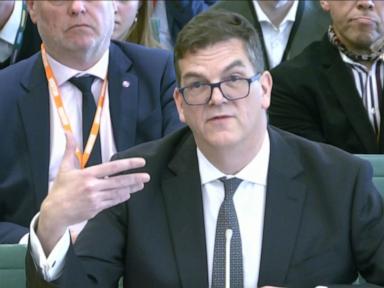
Sir Philip Barton, the man who sat at the very top of the UK’s diplomatic engine as the permanent under-secretary at the Foreign Office, recently pulled back the curtain on this world. He spoke to a group of MPs about a moment that sounds like a dry administrative hiccup on paper, but in reality, represents a profound tremor in the foundation of how a country is governed.
The name at the center of the storm is Peter Mandelson. Lord Mandelson. The "Prince of Darkness." A man whose political fingerprints are all over the last thirty years of British history. When his name was put forward for the role of British Ambassador to Washington—the most coveted, high-stakes diplomatic posting on the planet—it wasn't just a personnel choice. It was a test of the boundary between the professional civil service and the raw, hungry will of the political machine.
The Quiet Mechanics of Pressure
Imagine you are a guardian of a system designed to be impartial. Your entire career is built on the principle that the best person for the job should be chosen based on merit, experience, and the cold, hard requirements of the state. Then, the phone rings. Or a "note" arrives. Or a senior minister mentions, over a casual coffee, that the Prime Minister has a very specific preference.
Barton described a sensation that many in high-level administration recognize but few dare to name: political pressure.
It isn't usually a threat. It’s a persistent, atmospheric weight. It is the realization that the "independent" process you are overseeing has a pre-determined outcome, and your job is no longer to find the right answer, but to validate the one already chosen by the people in power.
In the case of the Washington embassy, the stakes couldn't be higher. The US-UK relationship is the "Special Relationship," a fragile dance of intelligence sharing, trade, and military cooperation. The person in that role needs to be a bridge, a listener, and a strategist. When a political heavyweight like Mandelson is pushed into that slot, the professional diplomats—the ones who have spent decades learning the nuances of foreign capitals—feel the ground shift.
They wonder: Is this about what’s best for the country, or what’s best for the party?
The Architecture of the Deal
To understand why this matters to someone who has never stepped foot in an embassy, consider the analogy of a master builder.
Suppose you hire an architect to ensure your house is structurally sound. You pay them for their expertise, their honesty, and their willingness to tell you when a wall is leaning. But as the work begins, the local council begins "suggesting" you use a specific contractor—someone who isn't the most qualified, but who happens to be a close friend of the mayor.
The architect knows the contractor is a risk. They know there are better options. But the council keeps calling. They mention that future permits might be "difficult" if this isn't handled correctly. Eventually, the architect sighs and signs the papers. The house gets built. It looks fine from the street. But every time the wind blows, the architect wonders if the foundation will hold.
Sir Philip Barton’s testimony suggests that in the halls of the Foreign Office, the wind is blowing very hard indeed. He admitted that while the process was followed, he felt the specific gravity of the political desire to see Mandelson in Washington.
It was a "pivotal" moment—a word I’ll avoid because it’s too small. It was a transformation. It was the moment the civil service realized that its role as a "check and balance" was being eroded by a government that views traditional boundaries as mere obstacles.
The Human Cost of Compliance
We often talk about "institutions" as if they are cold, inanimate buildings. They aren't. They are collections of people.
When a senior official like Barton admits to feeling pressure, he is speaking for thousands of junior staff members who watch these decisions from the sidelines. They see that the rules they are told to follow can be bent by the right hands. They learn that proximity to power is more valuable than decades of expertise.
The emotional core of this story isn't about Peter Mandelson's qualifications. He is, by all accounts, a formidable operator. The story is about the demoralization of the experts. It’s about the quiet erosion of trust.
When the people who are supposed to be the "adults in the room" feel they have to succumb to the whims of the politicians, the room becomes a very different place. It becomes a place where truth is secondary to optics.
Barton didn't shout. He didn't resign in a blaze of glory. He did what diplomats do: he spoke carefully, using the language of the establishment to describe a breach of the establishment’s soul. He admitted that the "independent" panel that approved Mandelson was aware of the Prime Minister's preference.
Aware.
That is the most dangerous word in the English language when it comes to governance. To be "aware" of a superior's preference is to have a thumb on the scale. It changes the way you look at the evidence. it changes the way you weigh the risks.
The Long Shadow
The appointment of an ambassador is a single event, but the "pressure" Barton described is a symptom of a much larger shift. We are moving toward a world where the line between the "State" (the permanent, professional machinery of the country) and the "Government" (the temporary, elected leaders) is blurring into nothingness.
In the United States, this is known as the "spoils system." To the victor go the spoils—including the right to hand out prestigious jobs to allies. The UK has long prided itself on avoiding this, maintaining a wall between the politicians and the professionals.
Barton’s admission suggests that wall is being dismantled, brick by brick.
If we lose the ability to have an independent civil service that can say "No" to a Prime Minister without fear of retribution, we lose the very thing that makes a democracy stable. We lose the "checks" in "checks and balances." We are left with a system where power is the only currency that matters.
The Sound of Silence
Think back to that quiet corridor in Whitehall.
The decisions made there affect the price of the food in your fridge, the safety of the soldiers in the field, and the reputation of the flag on your passport. When those decisions are influenced by "political pressure" rather than objective reality, the risk doesn't just fall on Sir Philip Barton or Peter Mandelson.
It falls on us.
We rely on the people in those corridors to be our scouts, our lookouts, and our honest brokers. We need them to be more afraid of being wrong than they are of being unpopular with their bosses.
As Barton finished his testimony, the room was quiet. There was no thunderous applause, no dramatic walkout. Just the soft rustle of papers and the realization that the invisible hand of politics had reached into one of the last truly independent corners of the British state.
The foundation is still there. The house still looks fine from the street. But the architect has spoken, and now we all know that the walls are starting to lean.
The pressure isn't gone. It’s just become part of the atmosphere.