The desert at dawn does not make a sound. Before the heat rises to blur the horizon, there is a cool, sharp stillness that belongs exclusively to the early risers. In the heart of old Dubai, long before the steel-and-glass spires of the modern skyline came to define the geography, a different kind of architecture was taking place. It was built from things you cannot see. Calloused hands. Softly spoken advice at midnight. The steady, unyielding presence of men who woke up in the dark so their children could walk in the light.
Every year, when the calendar turns to Father’s Day, a predictable wave of commercial sentimentality washes over the world. We are told to buy ties, to gift gadgets, to summarize decades of guidance into a greeting card. But in the United Arab Emirates, Father’s Day in 2026 arrived with a weight that felt entirely different. It didn’t feel like a Hallmark holiday. It felt like a reckoning with history.
When the nation’s leaders took to public platforms to honor their fathers, they did not speak in the detached vocabulary of statecraft. They spoke as sons.
Sheikh Mohammed bin Rashid Al Maktoum, Vice President and Prime Minister of the UAE and Ruler of Dubai, shared a sentiment that immediately cut through the usual digital noise. He looked at the towering achievements of the modern Emirates and traced their blueprints back to a single source: the fathers who laid the first stones. His message was stark in its simplicity: we are not just the inheritors of a land; we are what they built.
To understand why this phrase resonated so deeply across the country, you have to look past the oil metrics and the economic indexes. You have to look at the psychological infrastructure of a society that transformed from a pearl-diving coast to a global metropolis in the span of a single lifetime.
Consider a hypothetical young man standing on the banks of the Dubai Creek in the early 1970s. Let's call him Tariq. Tariq’s father didn't go to university. His hands were rough from the salt water and the rough ropes of the dhows. He didn't understand the complexities of global finance or artificial intelligence. But he understood sacrifice. He knew that every hour spent under a punishing sun was a deposit into a future he would likely never live to see.
When we look at the UAE today, we see the physical manifestations of that sacrifice. We see the Mars Mission. We see the financial hubs. But the real miracle isn't the concrete. It's the fact that the values of those early fathers survived the transition into unimaginable wealth.
That survival was not an accident. It was engineered.
Sheikh Mohamed bin Zayed Al Nahyan, President of the UAE, has frequently spoken about the foundational role of Sheikh Zayed bin Sultan Al Nahyan—not just as the political father of the nation, but as a literal parent who taught his children how to carry power without losing humility. The tribute paid by the nation’s leadership this year highlighted a universal truth that applies far beyond the borders of the Middle East. True leadership is a form of fatherhood, and true fatherhood is an act of quiet, unglamorous construction.
In a world that constantly chasing the new, the viral, and the immediate, fatherhood remains an stubborn outlier. It is a long-term investment with an incredibly slow rate of return. You plant a seed, you water it in the dark, and you accept that you might only ever be the shadow that protects the tree.
The leaders of the UAE chose this Father’s Day to remind their citizens that national identity is not something generated by government decrees. It is forged at the dinner table. It is passed down through the stories told when the lights are low. It is found in the discipline of a man who refuses to take the easy way out because he knows a smaller pair of eyes is watching his every move.
This realization brings a strange mixture of comfort and heavy responsibility. It means that none of us are truly self-made. The successes we claim as our own are often just the interest gathered on a principal amount invested by someone else decades ago. We walk through doors that were kicked open by men who didn't even know what was on the other side.
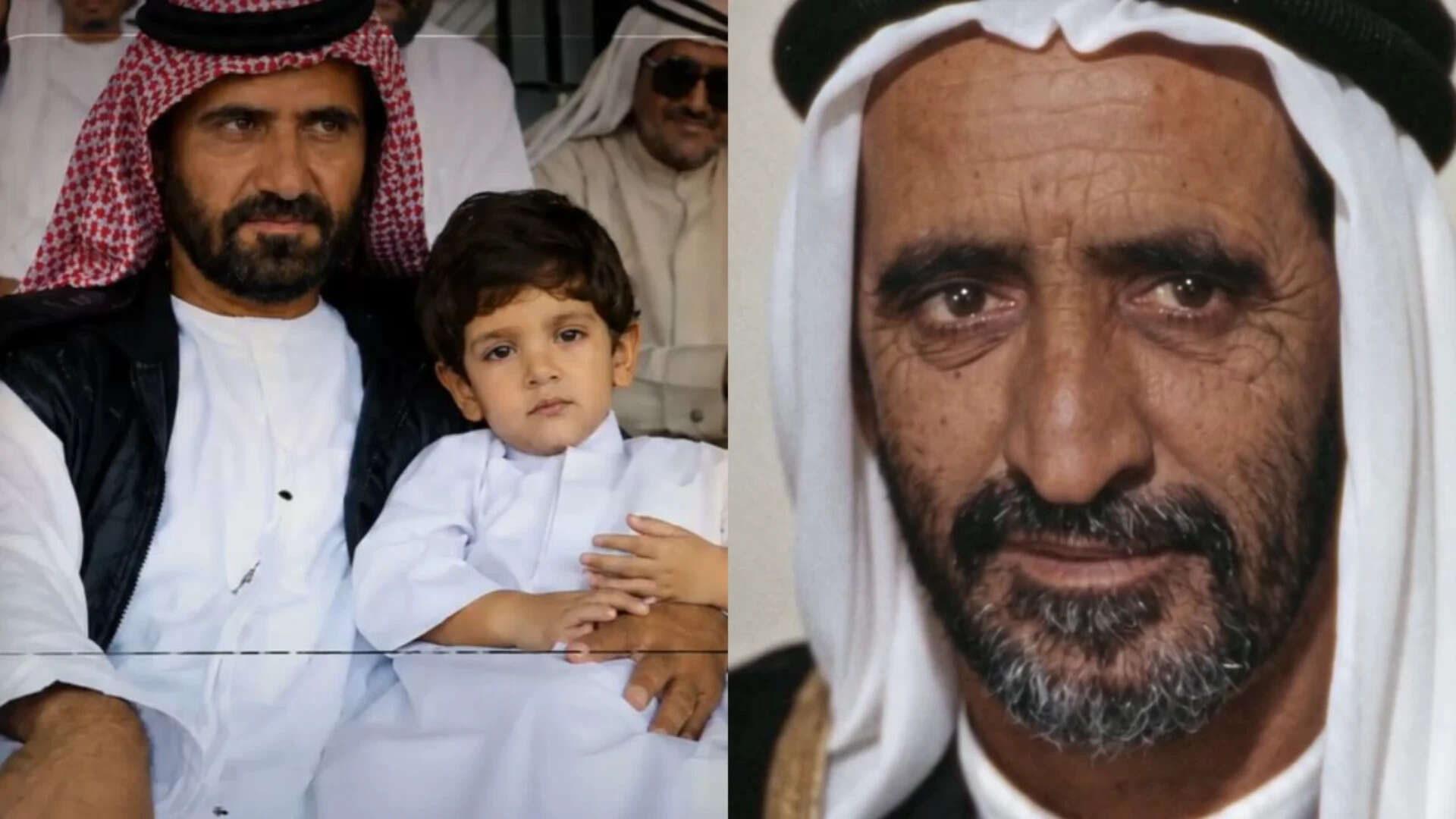
As the sun climbs higher into the sky, baking the tarmac of the cities and warming the sands of the interior, the tributes fade from the news feeds. The digital archives will store the emotional words of the rulers, the beautiful photographs of past eras, and the shared memories of a generation that bridges the old world and the new.
But the real tribute doesn't live online.
It lives in the way a new generation of fathers adjusts the rearview mirror to look at their own children in the back seat. It lives in the quiet determination to build something that lasts longer than a lifetime. The spires of the city will continue to reach for the clouds, but their stability will always depend on the deep, invisible roots planted by the men who came before.