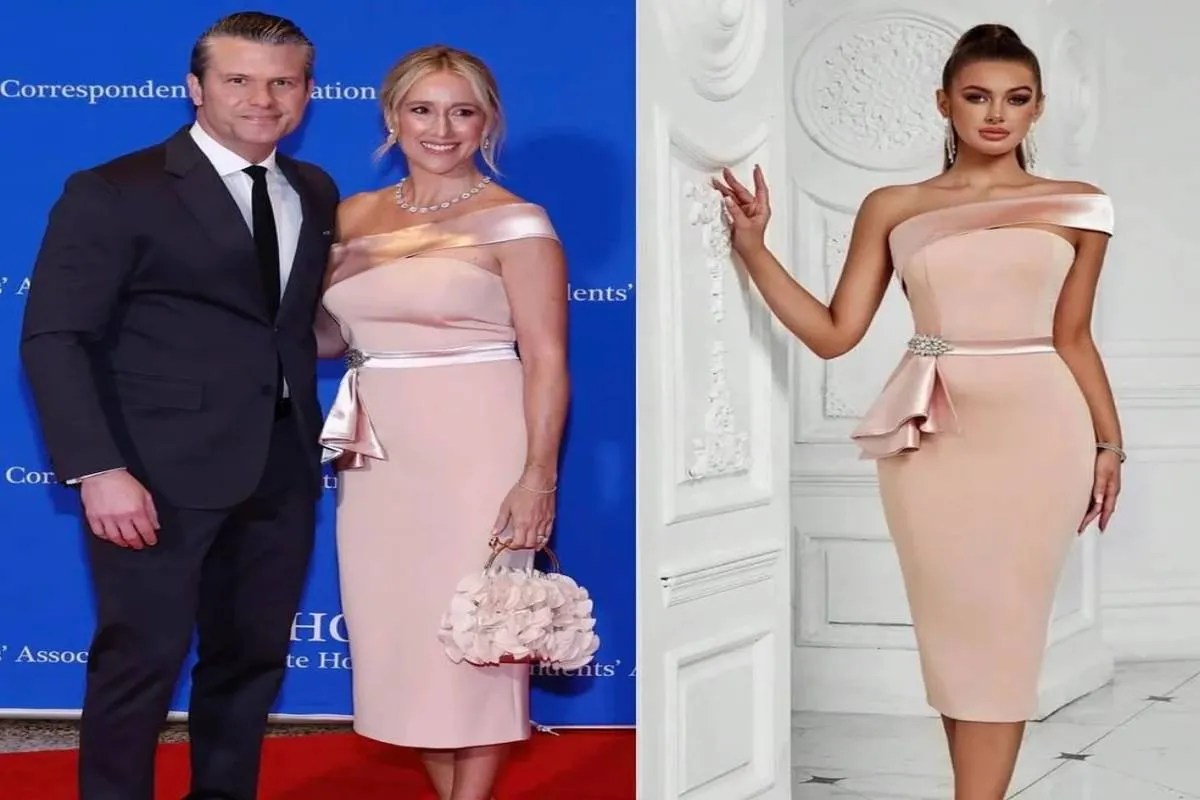
When images of the US Defense Secretary’s wife started circulating online, the reaction was instant. It wasn’t just a casual glance from social media users. It was a full-blown viral moment. In a world where political spouses usually fade into the background of dark suits and stiff etiquette, this particular fashion choice broke the mold. People weren’t just looking at a dress; they were reacting to a shift in how we perceive the personal lives of the most powerful people in Washington.
The dress itself became a lightning rod. Some called it bold. Others thought it was a bit much for the setting. But that’s exactly why it went viral. We live in an era where visibility is a currency. When someone connected to the Pentagon—an institution defined by rigid rules and uniform camouflage—steps out in something that screams individuality, the internet loses its mind.
The moment the US Defense Secretary's wife went viral
It happened during a high-profile event that would usually only get a mention in the back pages of a policy journal. Instead, the focus shifted entirely. Social media platforms like X and Instagram were flooded with snapshots of the outfit. You’ve probably seen the photos by now. The colors were vibrant, the cut was modern, and it stood in stark contrast to the sea of gray and navy blue that usually defines these gatherings.
Viral moments like this don't happen in a vacuum. They happen because of the juxtaposition. You have the Secretary of Defense, a man responsible for the most lethal military force on the planet, standing next to his wife, who decided to express herself through fashion. It creates a humanizing, albeit controversial, moment. Most people forget that these officials have families with their own tastes and personalities. This dress reminded everyone.
Why fashion choices in politics cause such a stir
Fashion has always been a political tool. Think back to Jackie Kennedy’s pillbox hats or Michelle Obama’s sleeveless dresses. Every choice is scrutinized because it’s seen as a reflection of the administration's values. When the wife of the US Defense Secretary picks a dress that leans into high fashion rather than traditional "Beltway boring," she's making a statement. Whether she intended to or not is irrelevant. The public decides what the statement is.
There's a specific expectation for military-adjacent figures. We expect sobriety. We expect a certain level of "hunker down" energy. When someone breaks that expectation with a pop of color or a daring silhouette, it feels like a disruption. That disruption is what fuels the algorithms. It's why your feed was likely full of opinions on whether it was "appropriate" or "refreshing."
The reality behind the viral photos
People love a good debate. The comments sections on these viral posts were a battlefield of their own. You had the traditionalists arguing for more conservative attire, claiming it distracted from the gravity of the Defense Secretary's role. On the other side, you had a younger, more style-conscious crowd cheering for the break from tradition.
I’ve seen this play out dozens of times. The internet picks a side, digs in, and uses a single piece of clothing to litigate larger cultural issues. It's rarely about the fabric. It's about what the fabric represents. In this case, it represented a modern woman refusing to be a background character. She wasn't just a "plus one." She was a person with a sense of style that didn't stop existing just because she was at a government function.
Breaking down the social media frenzy
The speed of the viral spread was impressive. Within hours, fashion bloggers were identifying the designer and price point. Political pundits were trying to find a way to link the dress to policy decisions—which is usually a stretch, but that's the world we live in. The photos were shared across international borders, proving that the fascination with American political life isn't just a domestic hobby.
The engagement numbers on these posts were through the roof. It’t a classic case of "the optics of power." When the image of power changes, even slightly, it generates friction. Friction generates heat. Heat generates clicks.
What this means for public figures in 2026
If you’re in the public eye, or married to someone who is, your wardrobe is now a PR asset. Or a liability. There’s no middle ground anymore. The Defense Secretary’s wife might have just liked the way she looked in the mirror that morning. But by the time she reached the venue, that dress belonged to the public.
This incident shows that the "rules" of political dressing are being rewritten in real-time. The younger generation of voters and observers doesn't care as much about stuffy traditions. They want authenticity. Even if that authenticity comes in the form of a dress that some might find "too much," it feels more real than a carefully curated, boring outfit designed by a committee of image consultants.
Dealing with the scrutiny of the spotlight
Being the spouse of a high-ranking official is a thankless job. You’re expected to be there, but not too "there." You’re expected to support, but not overshadow. This viral moment proves how difficult it is to walk that line. One choice—a single dress—can overshadow a year of policy work or diplomatic travel.
It’s a reminder that in the digital age, everything is content. There is no such thing as a "private" public appearance. If there’s a camera in the room, there’s a chance you’ll be the top trending topic by dinner.
The best way to handle this kind of attention is to own it. The most successful public figures are the ones who don't apologize for their personal style. They let the internet talk while they keep doing the work. Whether you loved the dress or hated it, you’re talking about it. And in the world of influence, that’s a win.
If you're watching these trends, keep an eye on how other political spouses react. We're likely to see more "risks" being taken as the old guard's rules continue to crumble. The era of the invisible political spouse is over. Fashion is just the most visible way that change is happening. Keep your eyes on the next gala; it’s bound to happen again.



