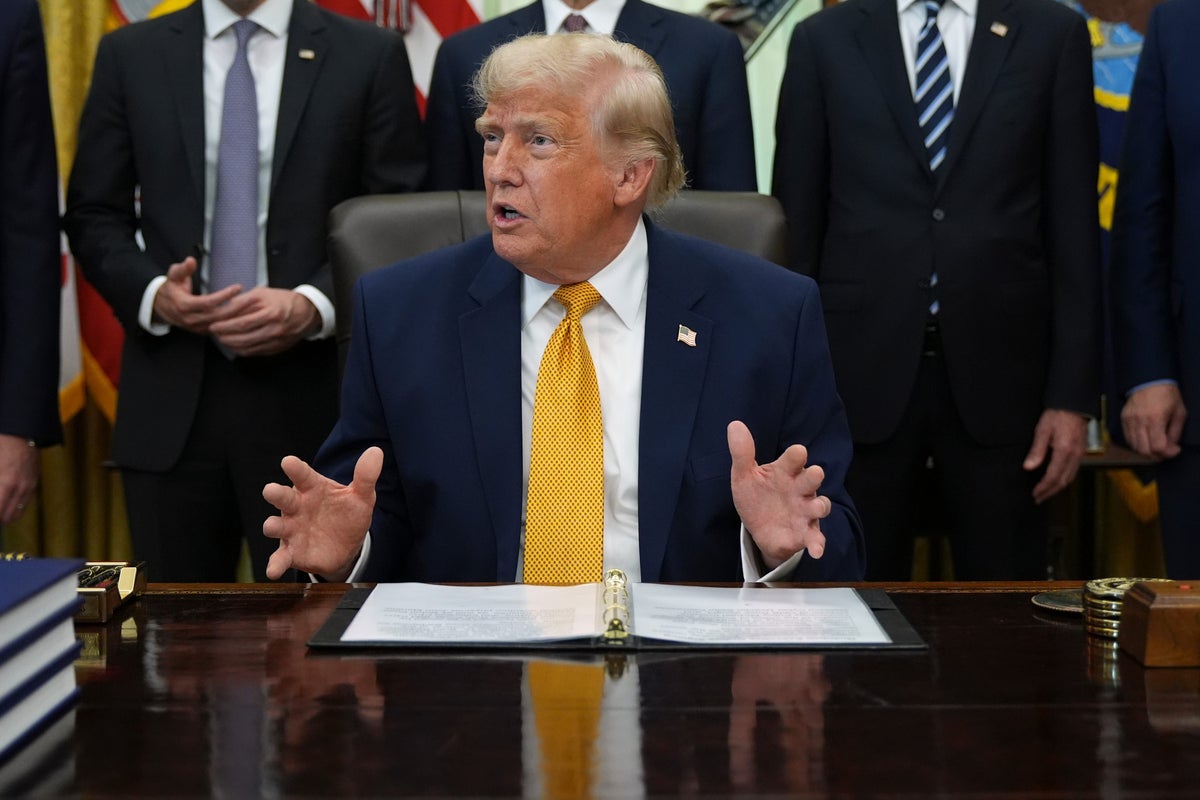
A federal court just dismantled the executive branch's quiet attempt to nationalize voter eligibility checks. U.S. District Judge Sparkle Sooknanan halted the Trump administration's sweeping overhaul of the Systematic Alien Verification for Entitlements database, a tool repurposed to screen millions of American voters for citizenship. The ruling directly stops a federal plan to merge Social Security data with immigration records, a high-stakes strategy that critics proved was actively purging legitimate U.S. citizens from voter rolls. This legal defeat exposes a deeper, institutional friction between white house orders and statutory privacy laws that federal agencies simply ignored.
The conflict centers on how bureaucratic systems handle personal identity. For decades, the federal government maintained separate pools of data for distinct purposes. Tax records, immigration statuses, and social security numbers existed in separate legal silos. Breaking down those walls seemed like an efficient way to clean up voter lists. It backfired completely.
The Friction of Mass Verification
The administration tried to turn an administrative lookup tool into an aggressive screening engine. Established in 1986, the original system helped state agencies verify that noncitizens applying for public benefits were eligible to receive them. It was never built to police the voting booth.
When the administration expanded the database by cross-referencing Department of Homeland Security immigration files with Social Security Administration records, the math failed. Government databases are notoriously lagging networks. A person who naturalizes as a U.S. citizen on a Tuesday might not see their status updated across federal networks for months, or even years.
Naturalized citizens became immediate targets. Because their initial entry into the country was marked under foreign passports or green cards, the automated system frequently flagged them as noncitizens. Texas ran its voter files through this updated database. The state scanned millions of names. Dozens of legal, naturalized citizens received notices demanding they prove their citizenship or face immediate removal from voter rolls.
The legal challenge exposed severe procedural shortcuts. To build the centralized voter screening infrastructure, federal agencies bypassed mandatory transparency reviews. The Privacy Act requires agencies to publish public notices and allow for scrutiny before combining sensitive datasets. The administration skipped this. The rush to comply with an executive directive overrode established administrative procedures.
The Mechanics of Database Collisions
Every database relies on unique identifiers to match individuals across systems. When you link two massive, unrelated systems, minor discrepancies create chaos. A missing middle initial, a hyphenated last name, or an old address can cause a system match to fail.
When a match fails or produces an outdated result, the system defaults to a red flag. In the context of voting, a red flag means a citizen loses their voice. The court found that federal officials knew their citizenship records were unreliable for mass voter screening. They pushed forward regardless.
The Justice Department argued in court that the number of mistakenly flagged citizens was statistically minor. The judge rejected that defense entirely. In the American legal system, treating the wrongful removal of a voter as acceptable collateral damage is an untenable position. Labeling a legal citizen as an illegal voter carries severe defamatory weight. It implies the individual is committing a federal felony.
A Constitutional Boundary Reaffirmed
The executive branch does not possess the power to rewrite election mechanics by decree. The Constitution places the authority to run elections squarely in the hands of state governments and Congress. Presidents can issue directives to federal agencies, but those directives cannot override federal statutes.
This ruling exposes the limits of governing through executive orders. When an administration attempts to reshape national systems without legislative backing, it inevitably collides with existing laws. Judge Sooknanan pointed out that Congress had explicitly forbidden the creation of centralized national identity databases. The administration tried to build one through the backdoor by re-engineering an old immigration tool.
States that rushed to adopt the federal system are now left exposed. At least 25 states had integrated the modified database into their routine voter roll maintenance. Local election supervisors now face the logistical nightmare of unwinding automated flags and restoring wrongly canceled registrations.
The Cost to Local Election Offices
Local election officials are the ones who bear the burden of federal policy failures. They sit on the front lines. When an automated system flags a voter, local clerks must mail out notices, process responses, and handle frantic phone calls from angry citizens.
Resources are finite. Money spent mailing warning letters and auditing faulty database matches is money diverted from training poll workers, upgrading physical security, and maintaining voting machines. The chaotic rollout of the federal screening tool drained county budgets across multiple states.
The Funding Leverage Maneuver
The defeat of the database overhaul disrupts a broader strategy to nationalize election rules. The administration had been quiet about plans to tie federal homeland security grants to state election policies. The Department of Homeland Security was preparing rules that would require states to use the modified database to secure federal funding.
That leverage is gone. Because the underlying database modifications have been ruled unlawful, the government cannot mandate their use as a funding condition. This stops a powerful financial mechanism that would have forced compliance from hesitant state governors.
The legal battle is far from over. The administration will almost certainly appeal the decision to the D.C. Circuit Court of Appeals. The core arguments will shift from database accuracy to the scope of executive authority over agency data sharing.
The Unresolved Problem of Roll Maintenance
Voter rolls do need regular maintenance. People move, change names, and pass away. Removing ineligible names is a standard administrative task required by federal law under the National Voter Registration Act. The problem is not the goal of clean lists, but the blunt instruments used to achieve it.
Existing legal frameworks already provide tools for list maintenance. The Electronic Registration Information Center, a state-led data sharing cooperative, helps states track voters who move across state lines. It relies on official motor vehicle department records and vital statistics, which are far more accurate than cross-referenced federal immigration logs.
The rush to deploy an unverified federal tool reflects a political obsession with immediate, sweeping results over systemic accuracy. Automated purges disproportionately impact young voters, low-income citizens, and naturalized immigrants. These groups move more frequently and are more likely to have discrepancies in government files.
The court's 75-page opinion serves as an institutional warning. Federal agencies cannot be leveraged as tools to bypass the constitutional division of powers, no matter how pressing the political mandate. The administration gambled that speed would outrun judicial review. They lost.


