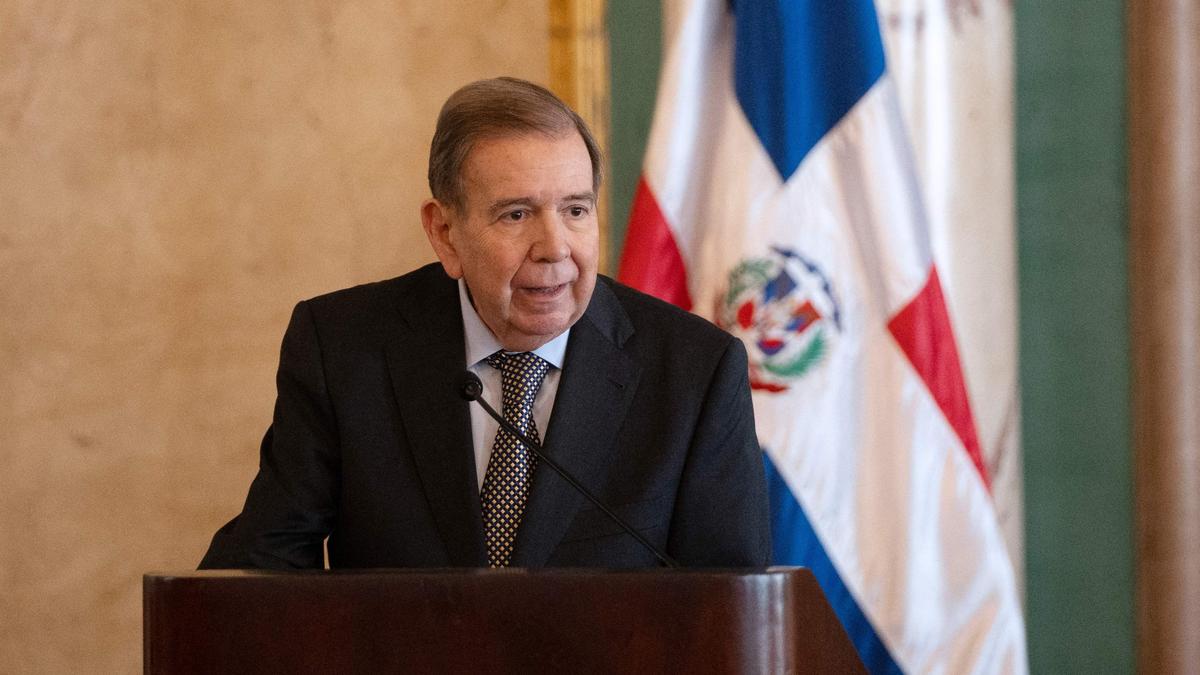
Edmundo González Urrutia has broken his silence to demand immediate presidential elections in Venezuela, challenging the status quo five months after a stunning U.S. military intervention upended the nation. The 76-year-old former diplomat, widely recognized by international observers as the true winner of the disputed July 2024 election, issued his call from exile in Spain as the interim administration of Delcy Rodríguez approaches its five-month mark.
By demanding an urgent return to the ballot box, González is attempting to force a hard reset on a fast-evolving geopolitical landscape. His statement directly confronts the reality in Caracas, where the initial euphoria of Nicolás Maduro’s ouster has given way to a complicated, economically driven compromise between Washington and Maduro’s former vice president. Read more on a connected subject: this related article.
The Washington Compromise and the Shadow Presidency
The removal of Nicolás Maduro in early January did not pave the way for the democratic transition many Venezuelans had envisioned. Instead, it birthed a pragmatism that sidelined the traditional opposition.
When U.S. forces intervened and arrested Maduro and his wife, Cilia Flores, the incoming administration of Donald Trump opted for continuity over a messy political vacuum. They recognized Delcy Rodríguez, Maduro’s long-standing ally and vice president, as the sole head of state. Further analysis by USA Today delves into comparable views on this issue.
The move was transactional. Within weeks, the interim administration in Caracas and Western energy syndicates began carving up the country’s vast oil reserves.
- Sanctions Relief: Washington systematically dismantled primary sanctions on Petróleos de Venezuela (PDVSA).
- Capital Inflows: Major U.S. and European energy corporations secured expanded operating licenses.
- Financial Re-institutionalization: Access to Western clearing banks was restored to the central government, stabilizing the immediate fiscal crisis but locking out the opposition.
This economic stabilization has created an uncomfortable paradox for the Unitary Platform. For decades, the opposition argued that economic ruin was the inevitable byproduct of Chavismo. Today, the pipes are pumping, the currency is artificially pegged, and the interim government is receiving a steady stream of American dollars, all while retaining the administrative architecture of the old regime. González, speaking from Madrid, is watching the window for a genuine democratic transition close as international partners prioritize logistical predictability over democratic governance.
The Anatomy of an Outmaneuvered Opposition
The core of the current crisis lies in a fundamental misalignment of leverage. González asserts his authority as the "guardian" of the July 2024 mandate, an election where parallel vote tabulations overwhelmingly demonstrated his victory over Maduro. However, moral authority carries little weight in an environment governed by realpolitik.
The real power dynamics are split across three distinct factions:
| Faction | Primary Objective | Current Strategy |
|---|---|---|
| The Rodríguez Administration | Consolidation and survival | Presenting itself to the West as a stable, non-ideological partner capable of managing energy assets. |
| The U.S. Administration | Resource security and migration control | Maintaining the current interim framework to keep oil flowing while executing deportation protocols. |
| The Unitary Platform | Structural democratic transition | Relying on international treaties, statements from exile, and historical electoral mandates. |
González is facing a bitter reality. The opposition’s internal unity is fraying under the weight of prolonged displacement. While María Corina Machado continues to hold strategic meetings with regional leaders in Panama, advocating for her own eventual return to run for office, her influence within Caracas has been systematically blunted. The current administration has maintained the institutional bans on key opposition figures, rendering their statements abstract.
Non-Negotiable Conditions Meets Absolute Inertia
The roadmap outlined by González demands a complete overhaul of the electoral apparatus before any vote can occur. He is calling for independent referees, comprehensive international observation, political pluralism, the immediate release of political prisoners, and an absolute cessation of state-sponsored persecution.
These demands are logically sound but operationally impossible under the current framework.
The National Electoral Council remains staffed by bureaucratic loyalists who survived the January transition. For the interim government, cleaning house in the electoral branch would be tantamount to political suicide. They understand that a truly free and fair election, held under international scrutiny, would likely wipe out the remaining Chavista apparatus.
Furthermore, neither Washington nor Caracas has dropped a single hint that an election is on the horizon. The silence is telling. The current arrangement functions too well for the parties holding the capital and the capital contracts.
To illustrate how such institutional deadlocks function, consider a hypothetical scenario where a major corporate board undergoes a hostile takeover, yet the incoming investors decide to keep the CFO and the accounting staff of the old, corrupt management simply because they are the only ones who know where the ledgers are kept. The minority shareholders can demand an independent audit all they want, but as long as the dividends are paid to the majority partners, the old staff stays in place. This is precisely what is happening to Venezuela’s democratic infrastructure.
The Long Road from Madrid to Caracas
The structural flaw in González's strategy is geography. Dictating the terms of a national resurrection via social media from Western Europe has a long history of failure in Latin American politics. The Maduro administration’s 2024 arrest warrant for González on charges of conspiracy and usurpation of functions remains active under the Rodríguez government, keeping him physically isolated from the population he claims to lead.
The strategy of the interim administration is clear: normalize the economy, ignore the exiled leadership, and let time erode the relevance of the 2024 mandate. As the five-month mark passes, the narrative of a stolen election is being replaced by the mechanics of oil production schedules and debt restructuring negotiations.
González is fighting against historical amnesia. The international community’s recognition of his victory in 2024 was a diplomatic high-water mark, but in diplomacy, fresh oil beats old tallies. Unless the opposition can find a way to disrupt the economic symbiosis currently developing between Caracas and Western financial markets, the call for new presidential elections will remain an echo in an empty chamber.