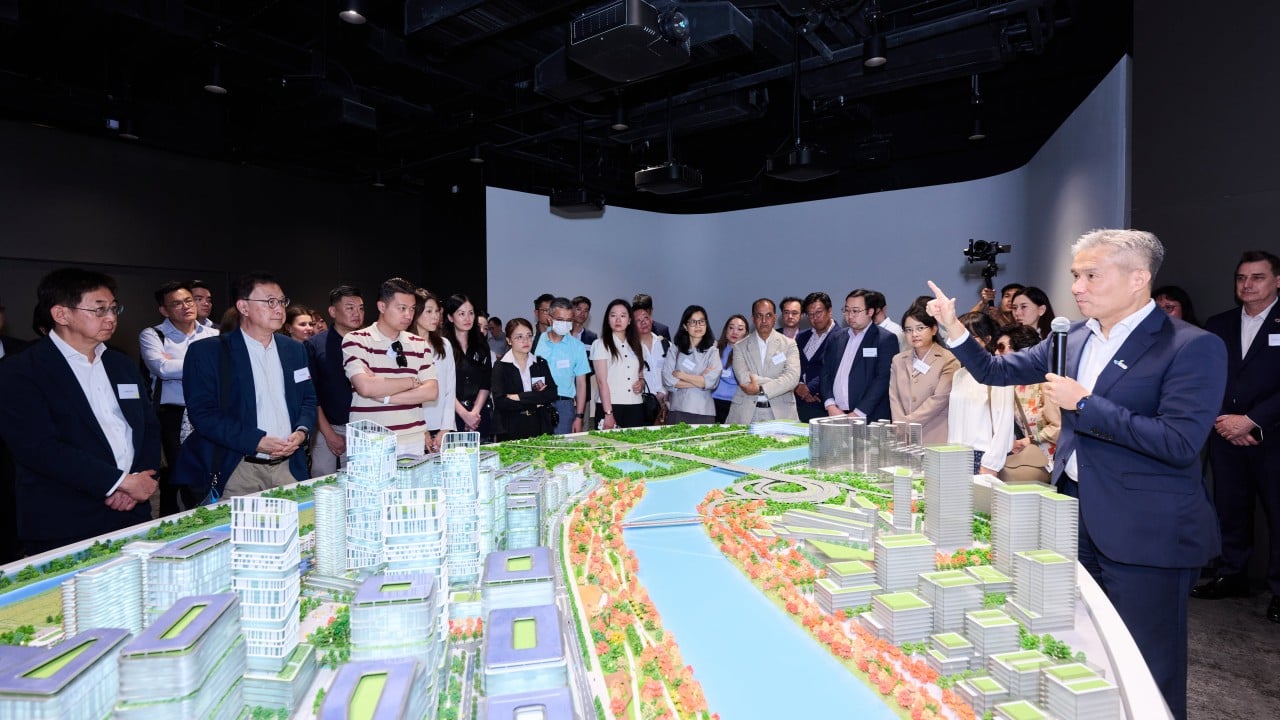
The official narrative framing Hong Kong’s Northern Metropolis as a seamless gateway connecting Southeast Asia to the Greater Bay Area ignores deep geopolitical, fiscal, and structural realities. Government delegations routinely lead regional business leaders on carefully choreographed tours of the 30,000-hectare planning zone, pitching the multi-billion-dollar border development as the ultimate launchpad for companies in the Association of Southeast Asian Nations looking north. Yet this vision of a frictionless economic corridor overlooks a fundamental friction. The border between Hong Kong and Shenzhen remains a hard regulatory, legal, and systemic frontier that cannot be dissolved by building physical tech parks on protected wetlands. For Southeast Asian corporations assessing the project, the primary challenge is not a lack of infrastructure, but the complex task of navigating two entirely different legal and economic regimes under the shadow of a highly centralized national economic policy.
The Northern Metropolis is an ambitious effort to shift Hong Kong's economic center of gravity away from Victoria Harbour and directly onto the mainland border. It is a massive project designed to house 2.5 million people and generate 650,000 jobs over two decades. On paper, the project serves as a key priority under China’s national economic planning. In practice, the pitch to Southeast Asian markets is a defensive economic maneuver. As traditional Western capital flows look elsewhere, Hong Kong is looking to Southeast Asia to justify the immense cost of its northern expansion. In related news, we also covered: Why DeepSeek Swallowing Billions in New Capital Changes Everything.
The High Cost of Shifting Borders
The financial reality of the Northern Metropolis is increasingly complex. The project requires an immense capital outlay at a time when Hong Kong's fiscal reserves face real pressure. To keep construction moving forward, the government announced an additional 150 billion Hong Kong dollar transfer from the Exchange Fund to bankroll major infrastructure works. Public spending has become the primary driver keeping the city's construction sector afloat.
This heavy reliance on state-backed financing underscores a deeper issue. Private sector commitment remains highly uneven. While the government presents the San Tin Technopole as an innovation hub, international developers are hesitating. Local developers are already managing high interest rates and a soft property market, making them cautious about committing massive capital to unproven northern borderlands. The Wall Street Journal has provided coverage on this important subject in great detail.
The government is relying heavily on state-led development models. Financial officials have openly suggested that Hong Kong should look to mainland models like the Xiong’an New Area for planning, construction, and attracting industrial investment. For an international business community accustomed to Hong Kong's historical market-driven approach, this pivot toward state-directed urban planning represents a fundamental change in how the city operates.
The Dual Regime Dilemma
The primary selling point for Southeast Asian firms is the idea of a dual-advantage zone where companies can access mainland supply chains while operating under Hong Kong’s common law system. The reality on the ground is far more complicated than the official brochures suggest.
+-------------------------------------------------------------------+
|               THE NORTHERN METROPOLIS REGULATORY SPLIT            |
+-------------------------------------------------------------------+
|  HONG KONG JURISDICTION            |  SHENZHEN / MAINLAND CHINA   |
|  - Common Law System               |  - Civil Law System          |
|  - Freely Traded Currency (HKD)    |  - Capital Controls (RMB)    |
|  - Open Capital Account            |  - Closed Data Regime        |
|  - International Data Access       |  - Great Firewall Restraints |
+-------------------------------------------------------------------+
This regulatory division creates immediate operational challenges. A technology firm based in Singapore or Jakarta cannot simply set up shop in the Lok Ma Chau Loop and expect a seamless flow of data, capital, and staff across the border.
- The Data Wall: Mainland China’s strict data security laws govern every byte of information crossing into Shenzhen. Despite pilot programs inside the Hetao innovation zone, true data convergence remains blocked by national security frameworks.
- Capital Barriers: While Hong Kong maintains an open capital account, the mainland side operates under strict capital controls. Profits generated within the wider Greater Bay Area cannot move freely back into Hong Kong without navigating intense regulatory scrutiny.
- The Talent Bottle-neck: Moving engineers and researchers between Shenzhen's manufacturing hubs and Hong Kong's universities still requires visas, permits, and border checkpoints.
Local Pushback and Environmental Obstacles
The physical construction of this new tech corridor faces significant local and environmental resistance. The plan to build out the San Tin Technopole involves reclaiming substantial portions of protected wetlands, an approach that drew opposition from 80 percent of public submissions during consultation periods. Environmental organizations warn that destroying these ecosystems undermines the green credentials the project uses to attract international sustainability funds.
At the same time, land acquisition has run into legal challenges from local villagers. Legal disputes over land rights under the small house policy highlight the friction between top-down urban planning and established local interests. These domestic entanglements add unexpected timelines and legal risks to a project that foreign investors expect to move forward efficiently.
The Reality of Southeast Asian Engagement
Trade between Southeast Asia and Hong Kong remains substantial, with merchandise trade reaching 1.67 trillion Hong Kong dollars. However, this historical trade relationship is built on Hong Kong's traditional identity as an independent, highly transparent financial center.
As national security legislation centralizes economic policy, international corporate risk assessments are shifting. The U.S. Department of State’s recent conditions report highlighted how changing legal frameworks have altered the city’s operational environment. For Southeast Asian conglomerates, choosing to base operations in the Northern Metropolis means accepting a closer alignment with the mainland’s regulatory environment.
Furthermore, Southeast Asian nations are successfully building their own domestic tech corridors and industrial hubs. Countries like Malaysia, Vietnam, and Indonesia do not necessarily need a northern Hong Kong gateway to access China. Many of these nations already maintain direct economic ties with Shenzhen and Guangzhou, bypassing the need for a high-cost intermediary zone altogether.
The Northern Metropolis is moving forward because it has total political backing, but physical infrastructure alone cannot bridge the gap between two incompatible economic systems. Companies looking at the border project must recognize that the gateway functions in both directions. While it offers a path into the Chinese market, it also exposes international businesses to the exact regulatory and political frameworks they traditionally used Hong Kong to avoid. Success will not come from believing the marketing, but from carefully managing the complex regulatory divide along the Shenzhen border.