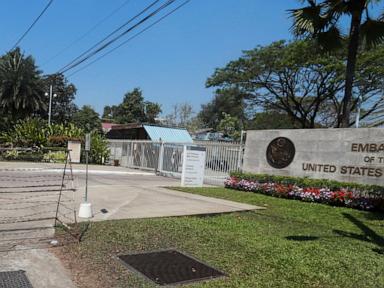
An American diplomat lies dead in a military-ruled nation, his body recovered from a high-security residential compound with stab wounds to his head and neck. A foreign national, a Thai woman, sits in a concrete cell facing a potential death penalty under a judicial system controlled by a brutal military junta. Yet, the response from Washington is total silence. The US State Department refuses to even release the name of the dead public servant, hiding behind boilerplate privacy statements while a geopolitical crisis brews behind closed doors in Yangon.
When a government worker dies under violent circumstances on foreign soil, it is standard operating procedure to see a flurry of official updates, demands for transparency, and diplomatic pressure. In Myanmar, the opposite is happening. The silence is deafening, and it points to a much deeper crisis regarding how the West manages its personnel in war zones and how it handles justice when local courts are run by dictators.
The Crime Scene at Sakura Residence
The timeline of the killing remains obscured by bureaucratic delays, but independent legal sources inside Myanmar confirm the body was discovered on May 11 at the Sakura Residence and Hotel. This facility is not a typical tourist stop. Located just a mile from the fortified American Embassy in Yangon, it serves as a highly secure long-term rental complex favored by Western diplomats, international aid directors, and wealthy foreign corporate executives.
The security at such a facility is meant to be absolute. Visitors are logged, cameras monitor the perimeters, and private guards patrol the grounds. Despite these layers of protection, an attacker managed to inflict fatal stab wounds to the diplomat's head and neck inside his own living quarters.
Local police treated the case as a homicide immediately, but they did not release the information to the public. It took nearly a month for news of the death to leak out, primarily through whispering campaigns within the tight-knit expatriate community in Yangon. The military government, which routinely throttles internet access and jails journalists, ensured that no local media outlet breathed a word of the incident.
A Secret Court and the Threat of the Noose
On Thursday, the investigation moved to the Kamayut Township Court. A Thai woman, whose name has been withheld by both Thai and Myanmar officials, appeared before a magistrate to face formal murder charges. She also faces separate counts under the country's strict immigration code, which gives Myanmar sweeping jurisdiction over foreign nationals who commit criminal acts on its soil.
The hearing took place under conditions of extreme secrecy. Two local defense attorneys, speaking on condition of absolute anonymity to protect their lives from military retaliation, confirmed that it remains unclear whether the woman has been granted legal representation or if she was forced to enter a plea without a lawyer present.
Under the penal code enforced by the military junta, a murder conviction carries a minimum sentence of ten years in prison. The maximum penalty is death by hanging.
The involvement of a Thai citizen complicates an already tense regional dynamic. Thailand's Foreign Ministry confirmed it has provided basic consular assistance and notified the woman's family, but it has refused to answer questions about her relationship with the deceased diplomat or the circumstances that led her to his apartment.
The Geopolitical Nightmare of Junta Justice
The real reason Washington is burying its head in the sand is the absolute illegitimacy of the host government. Ever since the military seized absolute power in a 2021 coup—toppling the democratically elected leader Aung San Suu Kyi—the country has spiraled into a horrific civil war. The military junta uses the courts as a weapon, executing political dissidents and locking up anyone who challenges its authority.
This puts the United States in an impossible position.
If the State Department demands a thorough, transparent investigation, it must cooperate directly with a military regime it does not officially recognize as legitimate. To send American federal investigators into Yangon would mean coordinating with police forces that are currently accused of crimes against humanity in the countryside.
Conversely, if the US steps back and lets the local legal process play out, it leaves the fate of an investigation into an American official's death entirely in the hands of a corrupt, unchecked military court. There are no fair trials in Yangon. The judiciary serves the generals, and a high-profile murder trial involving a foreign diplomat and a foreign suspect provides the junta with significant leverage over both Washington and Bangkok.
The Pattern of Bureaucratic Deflection
The official response to this tragedy has been a masterclass in institutional stonewalling. When pressed for details, the State Department issued a single, brief statement confirming the "death of a U.S. government employee" assigned to the embassy in Yangon. They anchored their refusal to elaborate on "respect for the privacy of the family."
When reporters reached out to the Asia Pacific Media Hub on Thursday to ask if American observers were present at the woman's court appearance, officials passed the buck to the U.S. Embassy in Myanmar. The embassy, in turn, cut and pasted the original State Department press release and told reporters to ask the local Myanmar authorities.
Those local authorities are unreachable. The duty officer at the police station responsible for the Kamayut district refused to speak with journalists, hanging up the phone immediately when asked about the case. The management at the Sakura Residence issued a blanket refusal to comment, terrified of structural closure or arrest by military authorities if they speak out of turn.
This systemic silence serves all three governments involved. The junta avoids scrutiny over its inability to keep a premier diplomatic neighborhood safe. Thailand avoids an explosive public scandal involving one of its citizens abroad. The United States avoids a public debate over why its personnel are stationed in an increasingly volatile war zone with little to no legal protection when things go wrong.
The body of the unnamed diplomat has likely already been flown back to American soil, wrapped in a flag and hidden behind closed doors. Meanwhile, a broken court system in a broken country decides who pays the price, away from the eyes of the world.