When the Iranian national soccer team steps onto the grass at SoFi Stadium in Inglewood to face New Zealand, the multi-billion-dollar spectacle of the World Cup will collide with a geopolitical powder keg. For the millions of Iranian Americans watching, this opening match is not a celebration of the beautiful game. It is a painful reminder of a brutal domestic crackdown, a recent military conflict, and a systemic effort by Tehran to weaponize international sports for political survival. Outside the gates, the largest Iranian diaspora in the world is preparing a massive demonstration, transforming a Group G fixture into an international battleground over national identity and human rights.
The casual sports fan sees an underdog football squad trying to advance past the group stage. The reality on the ground in Southern California reveals an agonizing rift within the community, a standoff over banned revolutionary flags, and a national team walking a tightrope under the watchful eye of the Islamic Revolutionary Guard Corps (IRGC).
The Myth of the Apolitical Athlete
Team officials have tried to maintain a carefully constructed narrative. Team captain Mehdi Taremi stated that the players do not get involved in politics and are only in the United States to bring joy to all Iranians.
That narrative is completely detached from reality. In a highly centralized authoritarian state, sports are never just sports.
The Iranian regime has long viewed international athletic success as a powerful tool for global public relations. Opponents of the regime point out that selection for the national squad requires more than just athletic prowess; it requires compliance. The squad shifted its training base to Tijuana, Mexico, after facing intense logistical pressure, including visa denials for key soccer officials from the U.S. Department of Homeland Security due to suspected ties to the IRGC.
For decades, the national team was affectionately known as "Team Melli"—the team of the people. Today, that title is fiercely contested. Many activists now openly dismiss the squad as "Team Islamic Republic." The distinction matters because the current roster represents a government that carried out a bloody domestic crackdown on dissidents following nationwide protests, compounded by the economic fallout of recent military strikes.
The Battle of the Banned Flag
The most visible flashpoint of this confrontation will not involve a soccer ball. It centers on a piece of cloth.
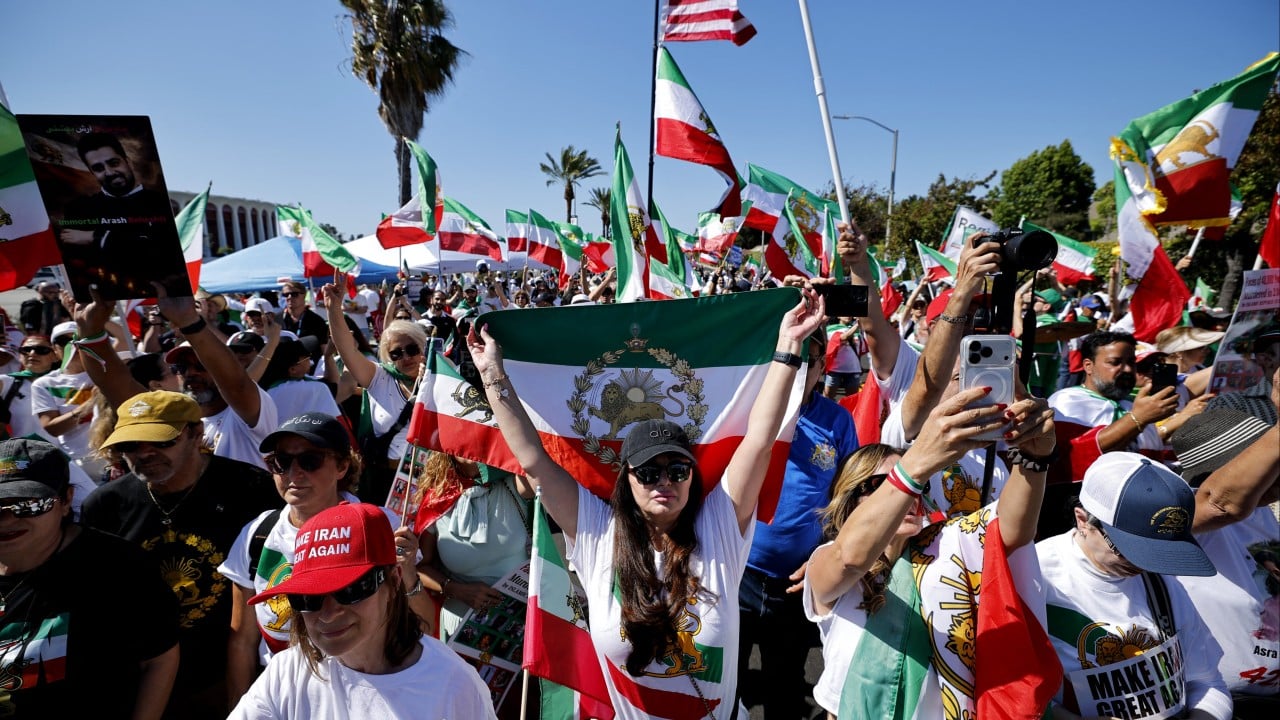
Activists and fans are organizing a coordinated effort to smuggle thousands of pre-revolutionary Iranian flags into the stadium. This banner, featuring a prominent lion and sun motif over green, white, and red stripes, stands as the ultimate symbol of opposition to the current theological government.
This presents an immediate administrative crisis for stadium security and global coordinators.
- The FIFA Mandate: Governing bodies strictly prohibit apparel, banners, or flags containing overt political messages inside tournament venues. The lion-and-sun standard falls under this ban.
- The Tehran Ultimatum: The Iranian soccer federation has explicitly threatened to halt matches and walk off the pitch if unofficial flags are displayed or anti-regime slogans are chanted by the crowd.
- The Free Speech Conflict: A California non-profit organization has already pursued legal avenues to prevent private security forces from restricting fans' first amendment rights outside and inside the venue.
If hundreds of these flags are unfurled simultaneously on global television, FIFA will face an impossible choice. Enforcing the ban means forcibly removing peaceful fans in front of a live audience, effectively doing the dictatorial regime's dirty work on American soil. Allowing the flags to fly risks a chaotic walkout by the Iranian team, sabotaging a prime-time broadcast.
A Diaspora Divided by Pain
The tension in Southern California—often referred to as "Tehrangeles"—is palpable. The community is not a monolith, and the arrival of the national team has reopened deep emotional wounds.
Some expatriates refuse to buy tickets, choosing to protest outside the stadium gates alongside images of Iranian athletes who were jailed or executed for opposing the government. They argue that buying a ticket or cheering for the team legitimizes a governing body that uses sports to mask domestic atrocities.
Others feel an immense, quiet empathy for the individual players. These fans recognize that the athletes live under constant surveillance and face severe retaliation against their families back home if they show any sign of dissent. During previous tournaments, players showed subtle resistance by remaining silent during the national anthem. This year, under the shadow of a devastating domestic crackdown, the stakes are too high for internal rebellion. The players have been instructed that even minor gestures of solidarity with protesters will result in severe consequences upon their return.
Speculation on the Chaos
The anticipated instability of the match has even spilled over into modern digital markets. Financial speculation platforms, including decentralized prediction networks like Polymarket, have seen a surge in volume surrounding specific prop wagers on the Iran match. Users are not just betting on the final score against New Zealand. They are wagering capital on whether the match will be delayed by protests, whether a pitch invader will disrupt play, or if the Iranian team will execute a mid-game walkout.
The intersection of high-stakes corporate sponsorships, international sanctions, and political unrest has turned a routine group-stage match into something unpredictable. The beautiful game has been thoroughly subverted by geopolitical realities. When the whistle blows in Los Angeles, the true drama will not be found in the tactical formations on the pitch, but in whether the stadium can contain the fury of a diaspora demanding to be heard.