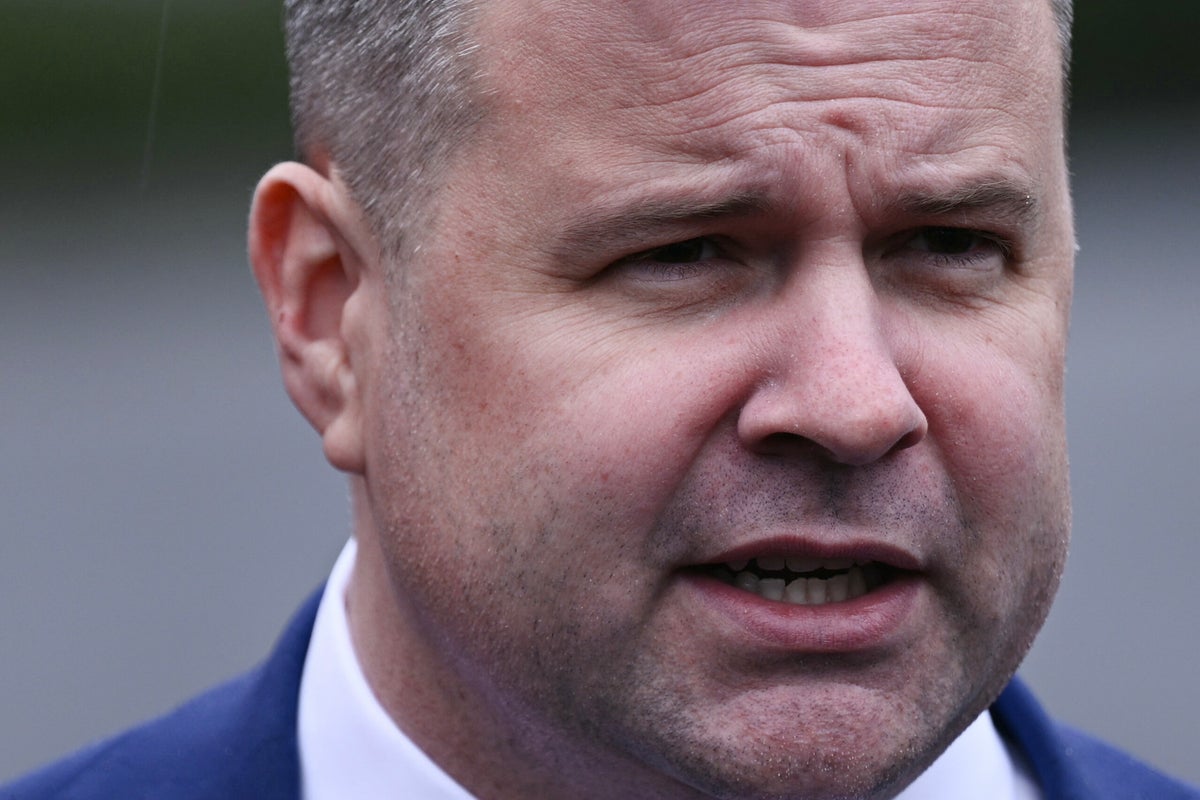
President Donald Trump has chosen Federal Housing Finance Agency director Bill Pulte to serve as the acting director of national intelligence, installing a fiercely loyal real estate scion to oversee the country's spy agencies despite his complete lack of national security experience. Pulte replaces Tulsi Gabbard, who resigned to care for her husband following a cancer diagnosis amid whispers of policy friction with the White House. The decision moves an aggressive administrative knife fighter from the mundane world of mortgage regulation into the inner sanctum of global espionage, signaling a structural transformation in how American intelligence will be managed.
By putting the man who oversees Fannie Mae and Freddie Mac in charge of the United States intelligence community, the White House is prioritizing absolute loyalty and bureaucratic disruption over traditional statecraft. Also making news lately: The Collateral Damage Fallacy Why Strategic Attrition is Mistaken for Aimless Terror.
The Subprime Spy Chief
Pulte is not a spy, a diplomat, or a military strategist. He is a 38-year-old corporate heir and private equity investor who spent his formative professional years navigating the family homebuilding empire, PulteGroup, before jumping into federal regulation. To his supporters, his lack of institutional ties to the Central Intelligence Agency or the National Security Agency is an asset. To his critics, it is a dangerous vulnerability at a time when the nation is navigating a war with Iran and complex cyber threats from global adversaries.
The statutory framework established after the September 11 terrorist attacks explicitly states that the director of national intelligence should possess extensive national security expertise. By utilizing the Federal Vacancies Reform Act to install Pulte as an acting official, the administration bypasses the immediate need for another grueling Senate confirmation battle. Additional details on this are covered by NPR.
He can hold the post for up to 210 days. That runway keeps him in power into early 2027 without a single congressional hearing regarding his fitness for the role.
Weapons of Mass Regulation
To understand what Pulte brings to the Office of the Director of National Intelligence, one must look at his controversial tenure at the housing finance agency. Since taking the reins in early 2025, Pulte did not just manage the government-sponsored enterprises. He weaponized them.
Under his leadership, the housing agency took the unprecedented step of firing off criminal referrals to the Department of Justice, accusing prominent political adversaries of mortgage fraud. The targets read like a White House enemies list:
- New York Attorney General Letitia James
- Senator Adam Schiff
- Federal Reserve Governor Lisa Cook
- Former Representative Eric Swalwell
The nonpartisan Government Accountability Office launched an ongoing investigation into whether Pulte misused his federal authority to orchestrate a campaign of political retribution. That probe is not expected to yield results until late 2026 or early 2027. By then, Pulte will have spent months holding the keys to the most sensitive surveillance data on earth.
For an administration that views the traditional intelligence apparatus as a hostile deep state, Pulte represents a proven commodity. He has demonstrated an eagerness to use obscure regulatory machinery to punish opponents. Moving him to an agency that coordinates 18 separate intelligence entities expands his toolkit from domestic financial audits to global wiretaps and classified files.
The Dual Portfolio Threat
Trump noted on Truth Social that Pulte will retain his current responsibilities, continuing to oversee more than $10 trillion in housing-related assets while simultaneously running the intelligence community. This arrangement is logistically unprecedented and structurally bizarre.
Managing Fannie Mae and Freddie Mac is a full-time, high-stress economic balancing act that dictates American mortgage liquidity and loan pricing. Overseeing global intelligence operations requires around-the-clock attention to shifting military fronts, covert assets, and top-secret briefings. No human being can effectively execute both roles during a period of geopolitical volatility.
[Structure of the Modern DNI Oversight Network]
          ┌──────────────────────────────────┐
          │  Director of National Intelligence │
          └────────────────┬─────────────────┘
                           │
       ┌───────────────────┼───────────────────┐
       │                   │                   │
┌──────┴──────┐     ┌──────┴──────┐     ┌──────┴──────┐
│     CIA     │     │     NSA     │     │   Defense   │
│  Logistics  │     │ Cyber/Signals │     │ Intelligence│
└─────────────┘     └─────────────┘     └─────────────┘
The decision to let him keep both jobs suggests that the White House does not want Pulte to delve into the operational minutiae of human intelligence or satellite reconnaissance. They want an auditor. They want a gatekeeper who can control the flow of information to the Oval Office and ensure that incoming intelligence matches the administration's policy goals.
The Looming Document War
Pulte inherited a fractured office. Gabbard’s exit, while officially attributed to personal family matters, followed months of friction regarding the handling of sensitive intelligence assessments.
High on the list of internal disputes is a highly classified report concerning Anomalous Health Incidents, frequently referred to as Havana Syndrome. Career intelligence officials have long resisted efforts to alter or selectively release findings that contradict established consensus.
With an institutional outsider at the helm, the firewall between raw intelligence data and political messaging collapses. When analytical conclusions clash with political narratives, a loyalist manager can simply order the analytical parameters to be rewritten. Inconvenient facts do not get debated; they get managed out of the final draft.
The Real Estate Mindset on a Global Stage
There is a distinct corporate logic to this appointment that traditional national security analysts miss. In the private equity environment where Pulte cut his teeth, success is measured by asset optimization, headcount reduction, and the elimination of institutional drag.
The administration has made no secret of its desire to streamline what it views as a bloated intelligence bureaucracy. For decades, the intelligence community has operated under the assumption that its primary duty is to speak truth to power, offering unvarnished, objective assessments regardless of the political fallout. Pulte's career suggests he operates on a different philosophy: the primary duty of an executive is to execute the vision of the principal.
Senate Intelligence Committee Chairman Mark Warner warned that the appointment represents a direct effort to politicize the country's security apparatus. The danger is not that Pulte will mismanage a specific covert operation. The danger is that the analytical product itself becomes compromised, leaving decision-makers blind to real-world threats because the intelligence reports have been scrubbed to please the viewer.
This appointment turns the director of national intelligence position into an administrative outpost of the White House political operation. The mortgage collector has arrived at Langley, and the inventory is about to change.