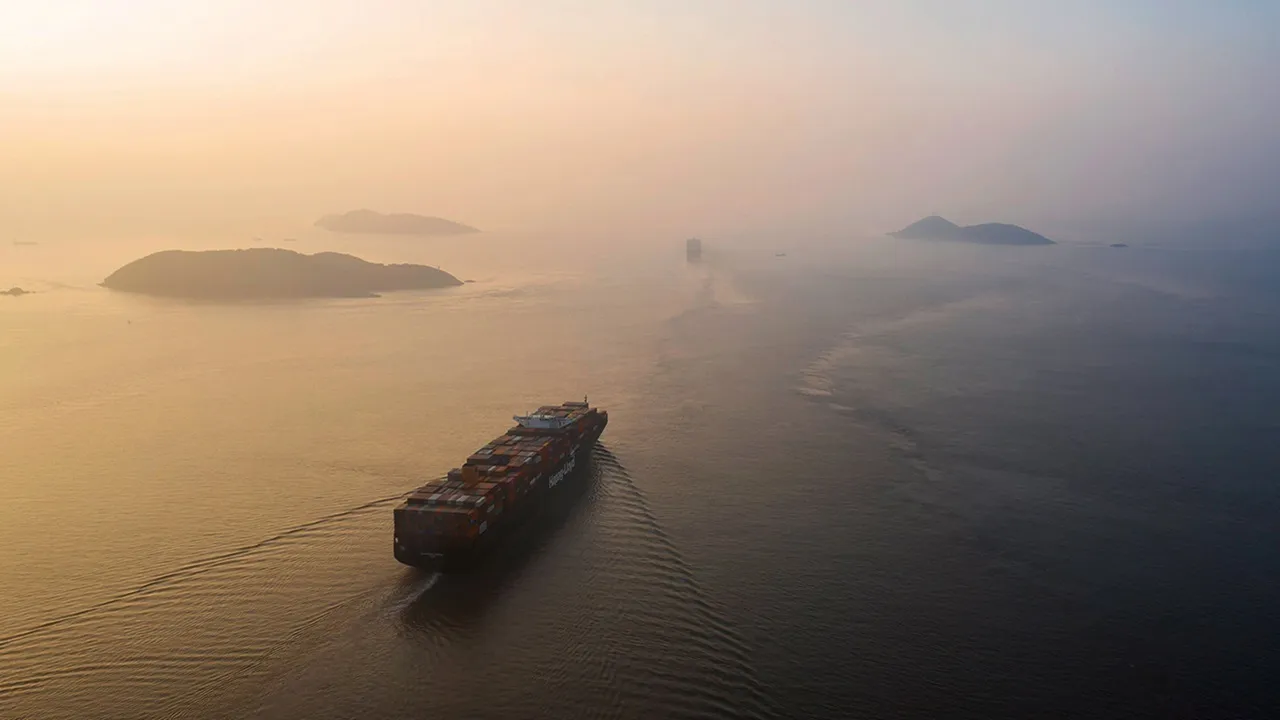
The maritime world just witnessed a ghost ship emerge from a war zone. For five days, the Greek-managed Suezmax tanker Shenlong vanished from global tracking screens after entering the Persian Gulf, only to reappear Monday morning near the Indian coast. It was carrying one million barrels of Saudi crude through the Strait of Hormuz, a waterway currently choked by a 91% collapse in commercial traffic following the outbreak of hostilities between the U.S.-Israeli coalition and Iran.
While the return of the Shenlong to the grid is being framed by some as a sign of resilience, it actually signals a terrifying new norm for global energy logistics. Shipping in the Gulf hasn't just slowed down; it has gone "dark." Reputable owners are no longer operating on schedules or safety protocols. They are operating on luck, shadows, and the hope that disabling their Automatic Identification System (AIS) transponders will make them invisible to the drones and anti-ship missiles currently hunting the chokepoint.
The Financial Blockade Behind the Kinetic War
Most analysts are focused on the missiles, but the real barrier in the Strait of Hormuz is the sudden evaporation of the private insurance market. By March 5, most Protection and Indemnity (P&I) clubs had effectively withdrawn coverage for the region. War risk premiums have spiked to 1.3%, a more than tenfold increase from previous levels.
When insurance vanishes, the mainstream fleet vanishes with it. What remains is a "dark fleet" mentality spreading to legitimate operators. The Shenlong, managed by George Prokopiou’s Dynacom Tankers, is not a rogue vessel. It is a high-end asset. Yet, to move Saudi oil to Mumbai, its masters felt compelled to treat the voyage like a smuggling run. This shift suggests that even the world’s most established maritime players no longer trust the U.S. Navy’s "Operation Epic Fury" to provide a safe corridor.
The Illusion of Control
Over the weekend, U.S. Energy Secretary Chris Wright attempted to project confidence, noting that tankers were successfully making the journey. His optimism is detached from the reality on the water. Between February 28 and March 8, the United Kingdom Maritime Trade Operations (UKMTO) reported 13 separate security incidents. These aren't just threats; they are hits.
Vessels like the Skylight and MKD Vyom have been struck by projectiles and drone boats, resulting in seafarer fatalities. When the IRGC claims "complete control" of the strait, they aren't just talking about naval presence. They are talking about their ability to saturate the area with GPS spoofing and electronic interference.
More than 1,650 ships in the Gulf reported GNSS disruption on March 7 alone. This digital fog is intentional. It forces captains to choose between two suicidal options: stay on AIS and be a literal blip on a target screen, or go dark and navigate a crowded, high-traffic graveyard using only radar and visual bearings while the ground beneath them is being electronically shifted by Iranian jammers.
China's Privileged Passage
Perhaps the most overlooked factor in the Shenlong transit is the emerging hierarchy of who is allowed to move and who is not. On March 4, reports surfaced that Tehran would grant safe passage primarily to Chinese-affiliated vessels. We are already seeing the results. Bulk carriers like the Iron Maiden are now broadcasting "CHINA OWNER" in their AIS status as a digital talisman against attack.
The Shenlong may have succeeded not because it was "dark," but because of the specific geopolitical calculus of its cargo and destination. It was carrying Saudi oil to India—two nations Iran is loath to alienate completely. Contrast this with the Stena Imperative, a U.S.-flagged tanker struck twice while moored in Bahrain. The "blockade" is surgical, not absolute. It is designed to bleed Western economies while maintaining a trickle of liquidity for Eastern partners.
The Failure of the Reinsurance Band-Aid
The White House recently announced a $20 billion maritime reinsurance facility through the DFC to jumpstart traffic. It is a massive sum, yet the markets have barely blinked. Money cannot replace the "right of refusal" now being exercised by crews. Under current high-risk zone declarations, seafarers have the legal right to decline entering the Gulf.
No government-backed insurance policy can compensate for a crew that refuses to sail into a zone where the Sonangol Namibe was just hit by a massive explosion at anchor. The Shenlong is the exception that proves the rule. For every Greek tanker that slips through the darkness, fifty more are sitting at anchor outside the Gulf of Oman, waiting for a peace that isn't coming.
The reality of March 2026 is that the world's most critical energy artery is now a game of electronic hide-and-seek. If more owners follow the "dark transit" model of the Shenlong, the risk of catastrophic collisions in the narrow strait increases exponentially. We are one steering failure or one misidentified radar blip away from a disaster that could send oil prices toward the $200 mark Tehran is already threatening.
The Shenlong didn't break the blockade. It just showed how much of our global energy security now depends on ships that officially don't exist.