The clock is ticking on a 48-hour ultimatum that could redefine the global energy map and plunge the Middle East into a total blackout. Donald Trump has shifted from talk of "winding down" military operations to a scorched-earth threat against Iran’s domestic power grid. His demand is blunt: fully reopen the Strait of Hormuz to all traffic, without interference, or face the systematic destruction of the country's electricity infrastructure.
"We will hit and obliterate their various power plants, starting with the biggest one first," Trump declared via social media late Saturday. This is not merely a tactical shift; it is a move toward targeting the civilian-industrial heart of a nation already reeling from three weeks of high-intensity conflict. By naming the power grid as the next target, the White House is signaling that the era of "proportional" military-on-military strikes has ended.
The Chokehold on the World Economy
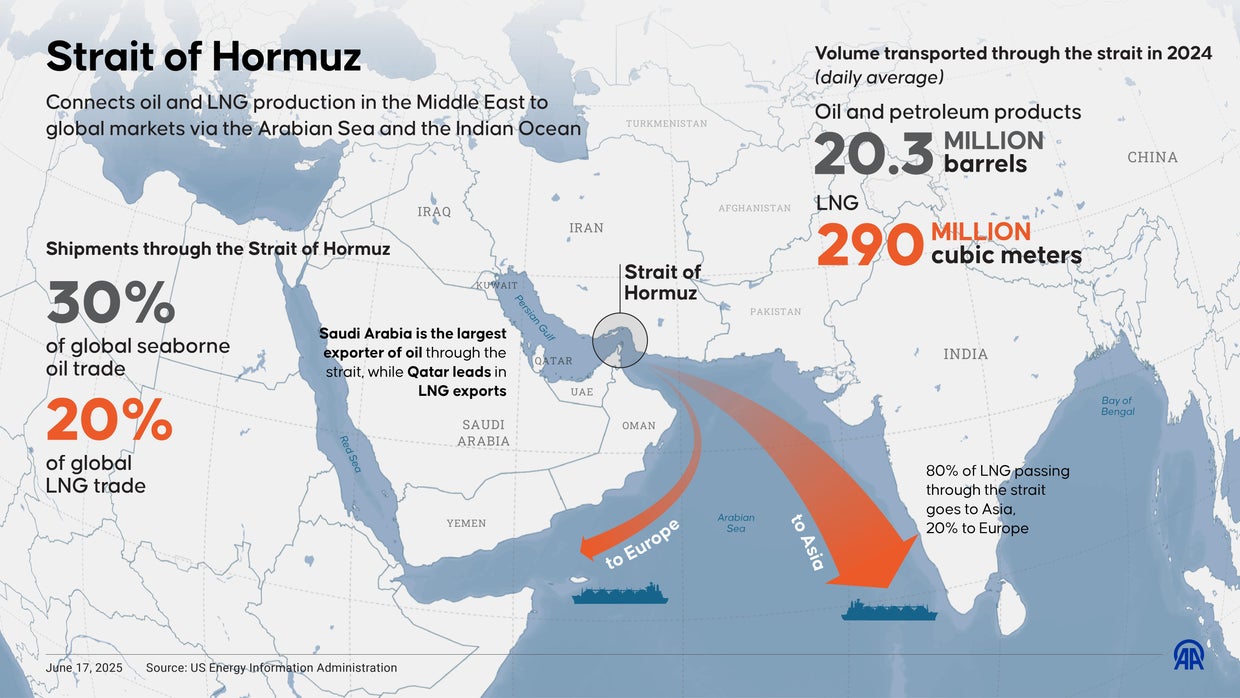
The Strait of Hormuz is the world's most sensitive carotid artery. Roughly 20% of the global oil supply and a massive portion of liquefied natural gas (LNG) pass through this narrow waterway. Since the outbreak of hostilities on February 28, Tehran has utilized its geographical advantage to effectively shutter the passage for any vessel it deems "hostile."
This has not been a simple blockade. Iranian forces have reportedly been considering a "transit fee" system—a move to monetize their control over the waterway while simultaneously using it as a shield. The result is a global supply shock that has sent Brent crude skyrocketing and pushed American gas prices up by more than 33% in less than a month.
Trump’s ultimatum seeks to break this leverage. For weeks, the administration has tried to assemble a "coalition of the willing" to escort tankers through the Gulf. That effort has largely stalled, with many European and Asian allies hesitant to join what they see as an unpredictable escalation. By threatening the power plants, Trump is bypassing the need for a naval coalition, attempting to force Iran's hand through the threat of domestic collapse.
A Regime Fighting for Air
Inside Iran, the situation is increasingly desperate. The initial US-Israeli "decapitation" strikes on February 28 claimed the life of Supreme Leader Ali Khamenei, leaving a power vacuum that his son, Mojtaba Khamenei, has struggled to fill. Rumors persist that Mojtaba himself was severely wounded in subsequent strikes, leaving the Islamic Revolutionary Guard Corps (IRGC) as the de facto governing body.
The IRGC has responded to Trump’s 48-hour warning with its own grim promise. Military commanders in Tehran stated on Sunday that any hit on their power plants would result in immediate, reciprocal strikes on "all energy, information technology, and desalination infrastructure" belonging to the US and its regional partners.
This is the "eye for an eye" doctrine of the 21st century. If Iran loses its lights, it intends to take the Gulf’s water and data with it. In a region where life is sustained by desalination plants, this is an existential threat to millions.
The Failure of Missile Defense
The urgency of this moment was underscored by a series of devastating Iranian missile strikes on southern Israel over the weekend. For the first time since the war began, Iranian projectiles successfully bypassed the vaunted "Arrow" and "Iron Dome" systems in significant numbers.
Impacts in the towns of Arad and Dimona—the latter home to Israel’s primary nuclear research facility—wounded over 100 people and left craters in residential neighborhoods. The psychological impact of these hits cannot be overstated. It proved that despite three weeks of bombardment, Iran retains a "second-strike" capability that can penetrate some of the most sophisticated air defenses on the planet.
This failure of interception is likely what triggered Trump’s shift in rhetoric. If the US and Israel cannot fully protect their own skies, their only remaining lever is the threat of total infrastructure destruction.
The Grid as a Battlefield
If the 48-hour deadline passes without a stand-down, the primary target is expected to be the Damavand Combined Cycle Power Plant near Tehran, the largest in the country. Military analysts suggest that a coordinated strike on just five key nodes in the Iranian grid could trigger a nationwide "black start" failure, a condition where the entire electrical system collapses and requires weeks, or even months, to recover.
The humanitarian implications are staggering. Without power, water pumps stop. Hospitals revert to limited generator fuel. The IRGC, which relies on digital command and control, would be blinded, but the civilian population would bear the immediate brunt of the misery.
The Hard Truth of the 48-Hour Clock
There is a growing sense that both sides are now trapped by their own escalations. For the Iranian regime, reopening the Strait under a US ultimatum would be a total loss of face at a time when they are already fighting for survival against domestic protests and external bombardment. For Trump, backing down after such a specific, public threat would shatter the "strength" narrative he has cultivated throughout the conflict.
The global market is already pricing in the worst-case scenario. Shipping insurance rates have hit levels not seen since World War II, and many tankers have simply dropped anchor in the Indian Ocean, refusing to enter the Gulf until the 48-hour window closes.
This is no longer a localized conflict over regional influence. It has become a high-stakes gamble with the world's energy security as the pot. If the lights go out in Tehran on Monday night, the shockwaves will be felt in every gas station and boardroom across the globe.
Would you like me to track the specific movements of the US carrier groups currently positioned near the Strait of Hormuz?