The Democratic Republic of Congo is once again the epicenter of a public health emergency of international concern, with the official Ebola death toll abruptly climbing past 204 amid 867 suspected cases across three provinces. But the numbers tell only a fraction of the story. While international health agencies sound alarms over the potential spread to Uganda and ten other African nations, the terrifying reality on the ground is not just the virus itself. It is the invisible mechanics of a medical containment effort that is actively collapsing.
This is the 17th time the nation has faced Ebola since the virus was discovered here in 1976. Yet, this particular crisis breaks the established protocol of modern epidemic response. The current outbreak is driven by the Bundibugyo strain, a variant of the virus for which there is zero approved vaccine, zero established therapeutic treatment, and an estimated mortality rate that tracks between 30% and 50% even with medical intervention.
We are not looking at a routine regional flare-up. We are witnessing a systemic breakdown where conflict, deep-seated institutional distrust, and a medically naked viral strain have converged to create a perfect epidemiological storm.
The Zero Vaccine Trap
During the massive 2018–2020 Ebola outbreak in the eastern Congo, which claimed nearly 2,300 lives, international responders relied heavily on the Ervebo vaccine to ring-fence infections. It was a massive medical shield.
The Bundibugyo strain strips that shield away. Because the genetic architecture of Bundibugyo differs significantly from the more common Zaire strain, existing stockpiles of vaccines are completely useless.
Global health leaders at the World Health Assembly are currently debating whether to deploy highly experimental, unproven treatments that are still early in the development pipeline. It is a desperate gamble. Without a medical safety net, the entire containment strategy hinges exclusively on old-fashioned, brutal public health measures: total isolation, exhaustive contact tracing, and the immediate, forced separation of the sick from their families.
When you take away the promise of a cure or a preventative shot, the treatment centers stop looking like places of healing to the local population. They start looking like places where people go to die alone.
War Zones and Missing Patients
Epidemics do not happen in sterile environments. The current epicenter sits in the northeast’s Ituri province and has already slipped into North Kivu and South Kivu. These regions have been systematically chewed apart by three decades of armed conflict involving dozens of rebel groups.
In South Kivu, the dominant presence is M23, a Rwandan-backed insurgent group that possesses no institutional framework for managing a highly contagious hemorrhagic fever. In Ituri, basic state services have been functionally non-existent for decades. The recent intensification of fighting since late 2025 has newly displaced over 100,000 civilians.
Displacement is the absolute best friend a virus can have. When thousands of people are fleeing burning villages, they do not stop at border checkpoints to get their temperatures checked. They run.
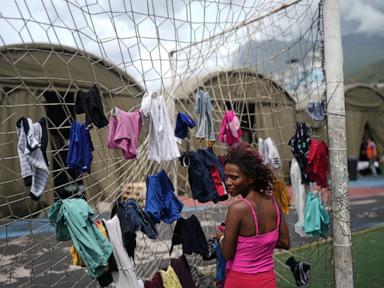
This chaos has ignited open rebellion against the health workers themselves. In the eastern Mongbwalu region, local anger reached a boiling point when residents burned down a temporary tent clinic, an action that allowed 18 suspected Ebola patients to escape directly back into the community. Days later, a similar clinic fire erupted in Lwampara. The catalyst for these arsons is almost always the same: communities resisting the strict, alien protocols that forbid them from handling and burying the bodies of their loved ones.
The Timeline Shift
The crisis is likely far more advanced than official metrics suggest. The International Federation of Red Cross and Red Crescent Societies recently confirmed that three of its local volunteers died in Ituri after contracting the virus. Crucially, these volunteers were conducting standard humanitarian body management all the way back on March 27, long before an official outbreak was ever declared.
They were working without personal protective equipment because nobody knew the virus was there. This means the Bundibugyo strain was quietly circulating under the radar for at least six weeks before the official May 15 declaration.
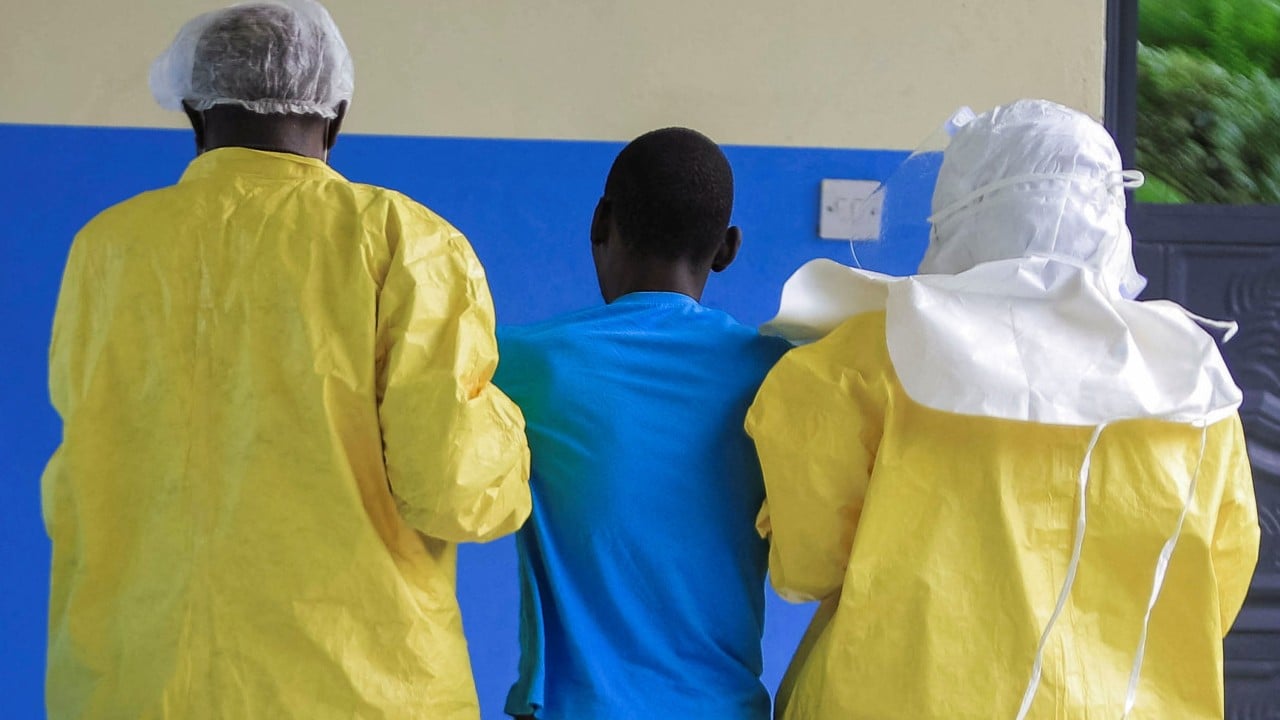
Medical teams are flying blind. Health workers in rural clinics are treating patients without basic gloves, masks, or protective goggles. The virus has already entered health facilities, turning the very places meant to halt transmission into vectors of amplification. When health workers die, the frontline collapses.
The Threat to the Frontier
The World Health Organization has elevated the national risk level for the Congo to "very high." The regional threat across central Africa is officially "high." This is no longer an isolated internal Congolese problem; it is a porous-border crisis.
The Africa Centers for Disease Control and Prevention has explicitly warned that ten neighboring nations are sitting directly in the path of transmission. The list is extensive: Angola, Burundi, the Central African Republic, the Republic of Congo, Ethiopia, Kenya, Rwanda, South Sudan, Tanzania, and Zambia.
Uganda has already confirmed five cases, including a fatal imported case that reached the capital city of Kampala. The cross-border mechanics are mundane but deadly. One of the newly infected individuals in Uganda is a truck driver who shared a vehicle with an undiagnosed Congolese national. Another is a local Ugandan health worker who treated that same patient before anyone realized they were dealing with Ebola.
Uganda responded by suspending public transport across the border, but the economic realities of East Africa make total isolation impossible. Thousands of traders, truckers, and refugees cross these borders through informal dirt paths every single day.
If the virus makes a firm foothold in South Sudan or the Central African Republic, nations with fragile health infrastructures already buckling under domestic crises, containment becomes an epidemiological impossibility. The window to choke out this outbreak at its source in eastern Congo is closing rapidly, and the global health apparatus is running out of options, time, and trust.