The World Health Organization recently declared the rapidly expanding Ebola outbreak in the eastern Democratic Republic of the Congo a Public Health Emergency of International Concern. This emergency declaration follows an exponential surge in cases that doubled to more than 500 suspected infections and 130 deaths within a mere 94-hour window. This is not just another recurring medical crisis in Central Africa. It is a severe administrative and biological blind spot. The epidemic is driven by the rare Bundibugyo ebolavirus strain, a variant for which there are no approved vaccines or targeted antiviral therapeutics, exposing a catastrophic failure in international preparedness and localized surveillance.
For decades, the global health apparatus operated under the assumption that its hard-won victories against the Zaire strain of Ebola had brought the disease to heel. The deployment of the highly effective Ervebo vaccine during previous outbreaks created a false sense of security among international donors. When symptoms first appeared in Ituri province in late April, local diagnostic labs ran automated tests tailored specifically for the Zaire strain. The results came back negative. Because the virus did not match the expected biological profile, early cases were misdiagnosed, patients remained unisolated in community clinics, and infected individuals continued to travel across porous provincial and national borders.
By the time the Institut National de Recherche Biomédicale in Kinshasa conducted advanced genetic sequencing to identify the Bundibugyo virus, the pathogen had already established a firm foothold. It has since expanded from the mining hubs of Mongbwalu and the crowded neighborhoods of Bunia straight into major transit corridors, including the rebel-contested city of Goma and across the frontier into Kampala, Uganda. The current catastrophe is the direct, predictable result of aggressive international funding cuts combined with an over-reliance on medical tools that are completely useless against this specific genetic variant.
http://googleusercontent.com/image_content/196
The Blind Spot of Western Medical Intervention
The international response to viral hemorrhagic fevers has long suffered from a form of technological hubris. Western governments and philanthropic organizations heavily fund the manufacturing and stockpiling of countermeasures for pathogens that pose the highest perceived threat to international aviation hubs. This strategy prioritizes the Zaire ebolavirus while virtually ignoring its biological siblings.
The Bundibugyo strain behaves with an insidious subtlety during its initial clinical presentation. The standard textbook symptoms of Ebola, such as severe external hemorrhaging and systemic organ failure, often do not manifest until late in the course of the infection. For the first four to five days, an infected patient presents with non-specific ailments including mild fever, profound fatigue, and gastrointestinal distress. In a region where malaria, typhoid, and cholera are entirely endemic, these symptoms spark no immediate alarm.
Local clinicians, lacking advanced laboratory infrastructure, treat these patients with standard antimalarials or antibiotics. The delay in accurate identification allows the viral load in the patient to replicate exponentially. When severe symptoms like nosebleeds and internal bleeding finally surface, the patient is already highly contagious, and their bodily fluids pose an extreme biological hazard to everyone in their immediate vicinity.
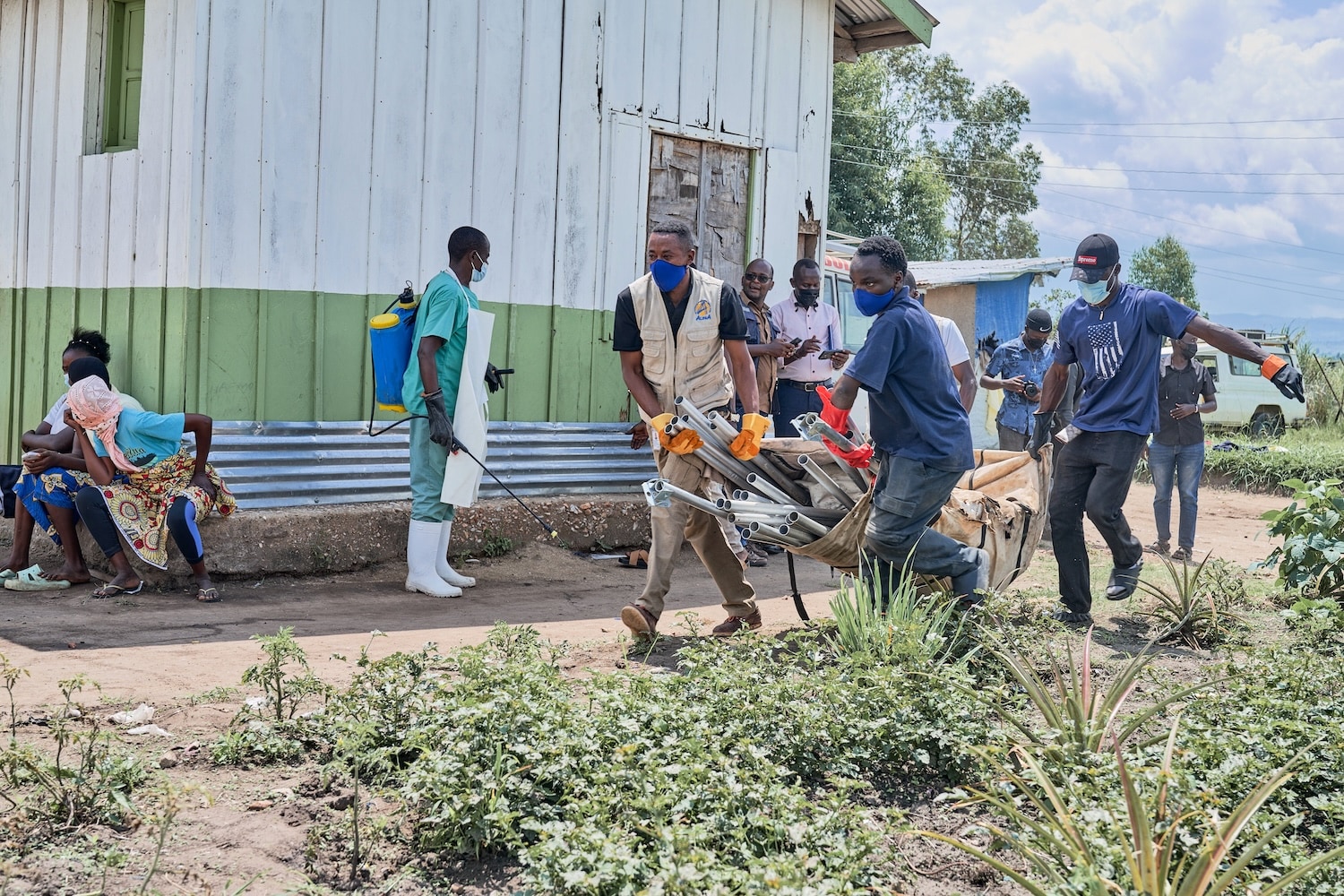
Furthermore, the lack of an approved vaccine removes the primary psychological shield used by frontline health workers. During the massive 2018-2020 Zaire outbreak in North Kivu, medical teams could rely on ring vaccination to protect themselves and create a buffer zone around active clusters. Today, doctors and nurses in Ituri province are walking into isolation wards with nothing but thin layers of personal protective equipment between them and an untreatable pathogen. At least four healthcare workers have already died after contracting the virus in clinical settings, a grim metric that invariably triggers a collapse in local medical attendance as staff flee facilities to save their own lives.
How Funding Cuts Deployed a Pathogen
The rapid escalation of this outbreak cannot be blamed solely on the biology of the virus. The geopolitical ledger reveals a more cynical narrative of bureaucratic abandonment.
In March 2025, a series of sweeping budget reallocations by major Western state donors led to a drastic reduction in financial support for non-governmental organizations operating in the eastern Democratic Republic of the Congo. Among the hardest hit was the International Rescue Committee, which saw its frontline health and outbreak preparedness budgets gutted. Before these cuts, the organization maintained active disease surveillance, triage infrastructure, and clean water stations across five distinct health zones in Ituri province.
Following the withdrawal of these funds, operational presence was scaled back to just two areas. The consequences of this retreat were immediate and devastating:
- Vanishing Triage Points: Handwashing stations, isolation tents, and specialized waste disposal units at informal medical centers were abandoned or fell into disrepair.
- Blind Surveillance: Mobile health workers who previously monitored remote communities for unusual clusters of sickness or sudden deaths were laid off.
- Informal Healthcare Exploitation: As formal, subsidized clinics closed down, desperate populations turned to a vast network of unregulated, informal health kiosks that lack basic infection prevention protocols.
When a health worker died in Bunia in late April, the lack of an integrated surveillance framework allowed the family to transport the highly infectious corpse back to Mongbwalu for a traditional funeral. In a profound display of grief, family members reopened the coffin to replace it with one they deemed more honorable, directly exposing dozens of attendees to highly contagious post-mortem bodily fluids. Without active surveillance teams to track the contacts of those funeral attendees, the transmission chains multiplied invisibly across the region.
| Date (2026) | Suspected Cases | Confirmed Cases | Suspected Deaths | Key Epidemiological Milestones |
|---|---|---|---|---|
| April 24 | 1 | 0 | 1 | Index case (health worker) dies in Bunia; body moved to Mongbwalu. |
| May 5 | Unquantified | 0 | Unquantified | WHO alerted to an unusual cluster of high-mortality illnesses in Ituri. |
| May 14 | 246 | 8 | 65 | INRB Kinshasa confirms Bundibugyo virus via genetic sequencing. |
| May 15 | 246 | 9 | 80 | DRC declares official outbreak; Uganda confirms first imported case. |
| May 17 | 310 | 13 | 95 | WHO designates the epidemic a Public Health Emergency of International Concern. |
| May 19 | 500+ | 30 | 130 | Outbreak confirmed in urban centers of Goma, Butembo, and Kampala. |
The Illusion of Containment in Conflict Zones
Western administrative models for outbreak control rely on the assumption of a stable domestic environment. They require clear lines of communication, freedom of movement for epidemiological teams, and an underlying trust between the civilian population and state authorities. None of these conditions exist in the eastern Democratic Republic of the Congo.
The provinces of Ituri and North Kivu are complex logistical minefields characterized by active military operations, shifting rebel alliances, and millions of internally displaced persons living in squalid, high-density camps. When international agencies attempt to implement aggressive containment measures, they frequently run into intense community resistance. This friction is not driven by ignorance, but by a justified historical suspicion of outside intervention.
When militarized health teams arrive in a village accompanied by state security forces, the local population often perceives the intervention as a punitive campaign rather than a medical rescue. If coercive tactics are deployed, the outbreak simply goes underground. Families begin concealing sick relatives in their homes, hiding bodies from containment teams, and bypassing formal checkpoints by utilizing dense forest tracks.
The geography of the current hotspot exacerbates this issue. Mongbwalu is a major hub for informal, artisanal gold mining. The labor force here is highly transient, comprised of young men who move constantly between remote wilderness mines and major urban centers like Bunia or Butembo based on fluctuating gold prices. An individual exposed at a funeral in an artisanal mining camp can easily board a motorbike taxi and travel dozens of miles within a single afternoon, carrying the virus into dense urban environments before their first symptoms even manifest.
The Failed Logistics of Alternative Treatments
With standard vaccines like Ervebo ineffective against Bundibugyo, the global health community is scrambling to find an alternative. The current strategy discussed by advisory groups involves fast-tracking experimental candidates or repurposing broad-spectrum antivirals. This plan is fraught with immense operational hurdles.
Even if an experimental vaccine is cleared for emergency use, the physical infrastructure required to deploy it across a conflict zone is virtually non-existent. Traditional ebolavirus vaccines require an uninterrupted ultra-cold chain, with storage temperatures maintained between -60 degrees and -80 degrees Celsius. In a region where the centralized electrical grid is non-existent and fuel for generators must be transported through territories controlled by armed militias, maintaining such temperatures is an logistical impossibility.
"If we use coercive measures and the population does not agree, we will see bodies disappear. We will see suspected cases refusing to come to the hospitals and health facilities."
— Dr. Anne Ancia, WHO Representative to the Democratic Republic of the Congo
The alternative approach—relying entirely on supportive clinical care and experimental monoclonal antibodies—demands a massive influx of trained personnel and highly specialized equipment. To lower the mortality rate of a Bundibugyo infection, clinicians must aggressively manage patient dehydration, electrolyte imbalances, and secondary bacterial infections. This requires clean, continuous water supplies, automated blood chemistry analyzers, and intensive nursing care.
Currently, fewer than 50 international health professionals are on the ground in Ituri to support a population facing hundreds of active transmission lines. The current medical footprint is completely inadequate to handle the scale of the crisis.
The international community must abandon the comfortable illusion that infectious diseases can be managed through a reactive, vaccine-first methodology. Until long-term, predictable funding for basic community disease surveillance and localized lab infrastructure is restored to pre-2025 levels, the global health framework will remain perpetually behind the mutation curve of emerging pathogens. The virus will continue to exploit these administrative fractures, transforming local policy failures into international biological emergencies. Contagion cannot be negotiated with, and it does not respect a balanced ledger.