The Pentagon is quietly importing Ukrainian technology to plug massive gaps in its air defenses, a move that exposes a jarring reality: the world’s most well-funded military has been outpaced by the necessity of a survival-driven insurgency.
While political rhetoric in Washington often suggests American self-reliance, the operational reality on the ground tells a different story. In recent weeks, the U.S. military has deployed a Ukrainian command-and-control platform known as Sky Map at Prince Sultan Air Base in Saudi Arabia. This deployment, confirmed by sources familiar with the matter, is a desperate measure to stop Iranian-developed drones from destroying American aircraft and killing service members. It is not a choice made out of convenience, but out of a failure to modernize at the speed of the modern battlefield.
The Sky Map Contradiction
Only a month ago, the official line from the White House was one of dismissive confidence. On March 6, President Donald Trump told Fox News that the United States did not need Ukrainian help with drone defense. Behind the scenes, however, Ukrainian military officials were already arriving at Prince Sultan Air Base to train American warfighters on how to use the very systems the administration claimed were unnecessary.
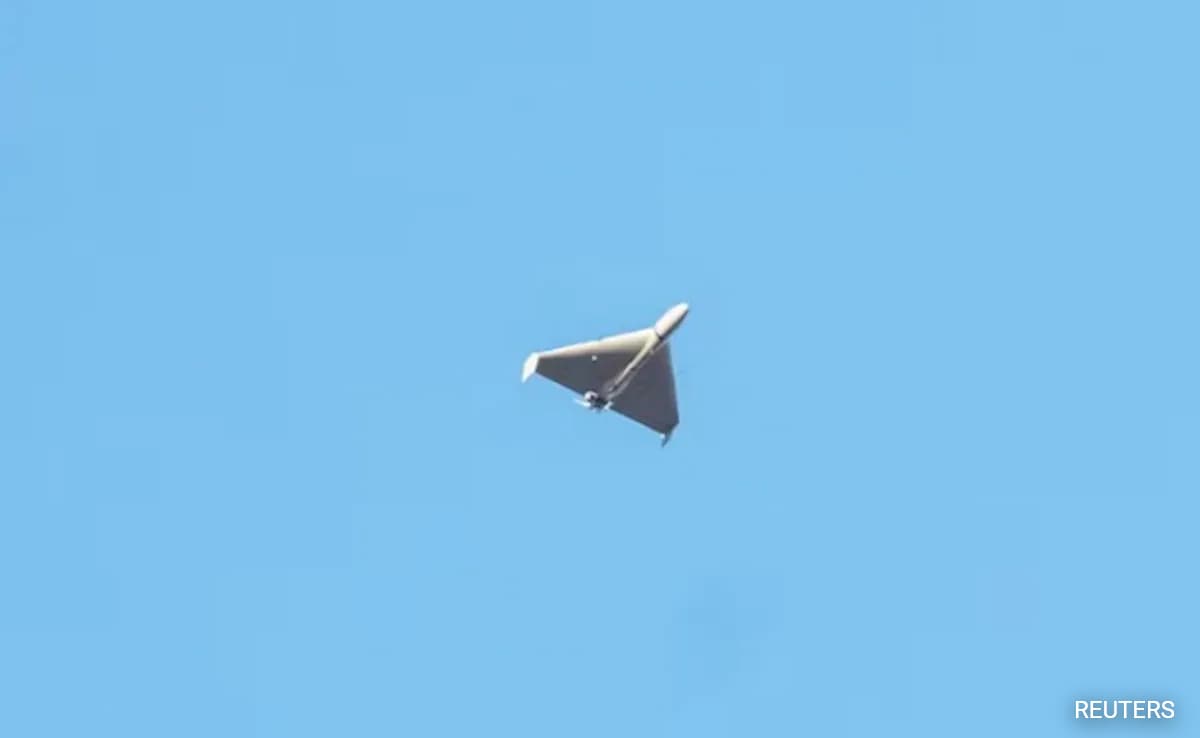
The software in question, developed by the Ukrainian firm Sky Fortress, was born in the basements and trenches of a four-year war against Russia. It doesn't rely on the multi-billion dollar, slow-moving procurement cycles of the American defense industry. Instead, it uses a network of thousands of acoustic sensors and diverse data feeds to create a unified picture of the airspace. This allows for the detection of low-flying, "quiet" drones like the Iranian Shahed—threats that traditional U.S. radar systems frequently miss.
Why Billion Dollar Radars Are Failing
For decades, U.S. air defense was built on the assumption that threats would come in the form of high-altitude jets or ballistic missiles. These systems, like the Patriot or the Forward Area Air Defense (FAAD) platform, are exceptional at hitting what they were designed for. But they are poorly equipped for a "swarm" of $20,000 plastic drones flying just above the treeline.
The problem is one of both physics and economics.
- Sensor Blindness: Traditional radar often filters out small, slow-moving objects to avoid clutter from birds or weather.
- The Cost Curve: Using a $2 million interceptor missile to down a $30,000 drone is a mathematical road to bankruptcy.
- Mass: American systems are designed for high-quality, low-quantity engagements. Ukraine has learned to fight high-quantity, low-cost wars.
To address this, the Army is now scaling the Merops, a low-cost interceptor drone first battle-tested in Ukraine. Army Secretary Dan Driscoll recently admitted that the service purchased 13,000 of these units in just eight days. The Merops costs roughly $15,000—finally putting the U.S. on the "right end of the cost curve."
The Rise of the Acoustic Net
Sky Fortress didn't just build a better radar; they realized radar wasn't enough. By deploying over 10,000 acoustic sensors across Ukraine, they created a "digital ear" that hears the distinctive buzz of a Shahed engine before it ever appears on a screen. This data is fed into Sky Map, allowing interceptors to be launched with surgical precision.
The U.S. deployment of this tech in Saudi Arabia is a tacit admission that the RTX-made Coyote and other domestic interceptors need better "eyes and ears" to be effective. While the Coyote has been used to fry drone electronics with microwaves, it is only as good as the tracking data it receives.
Operation Epic Fury and the Procurement Trap
The Pentagon's Joint Interagency Task Force 401 recently committed $350 million to Operation Epic Fury, an effort to harden defenses at frontline bases. But money isn't the primary hurdle; it's the culture of the American defense complex.
Ukrainian innovation is funded by Brave1, an agency that prioritizes speed over paperwork. A software update in Kyiv can be deployed to the front in hours. In the U.S., a similar change can take months of testing and contract negotiations. This lag time is a luxury the military no longer has when bases 400 miles from Iran are enduring waves of "suicide" drones.
The deployment of Sky Map at Prince Sultan Air Base is a pilot program for a new era. If the Ukrainian systems successfully stop the next Iranian-backed strike, the pressure to integrate this "insurgent" tech across all U.S. Central Command assets will become overwhelming.
The Brutal Truth of Modern Combat
We are seeing the end of the era where superior wealth guaranteed superior defense. The war in Ukraine has turned the country into the world's most advanced laboratory for unmanned systems. The U.S. military, despite its massive budget, is currently the student, not the teacher.
This isn't just about a single base in Saudi Arabia. It's about a systemic vulnerability in how the Western world protects its borders and its people from the democratization of precision-guided munitions. The "silver bullet" doesn't exist. Instead, the future of defense looks like a messy, fragmented, and rapidly evolving web of software, cheap drones, and acoustic sensors—most of which was designed in a country currently fighting for its life.
The Pentagon is no longer just buying weapons; it is buying time.