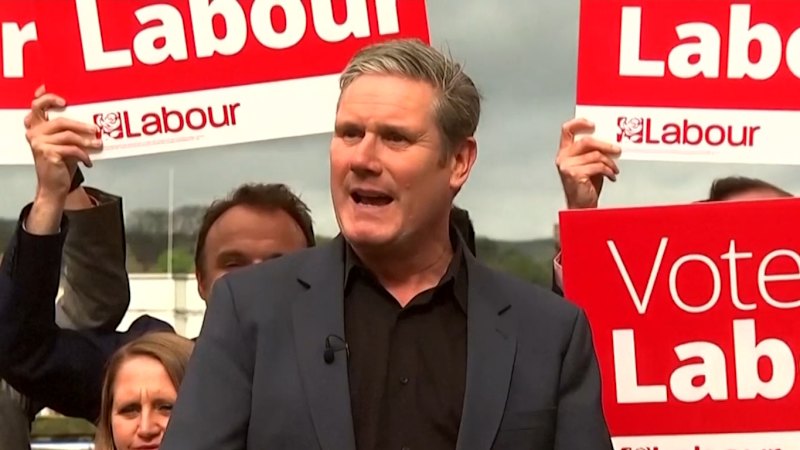
British Prime Minister Keir Starmer is on the precipice of resigning because his own parliamentary party has systematically severed his political lifeline, rendering his remaining in office untenable. While public focus remains fixed on the dramatic entrance of regional heavyweight Andy Burnham into the House of Commons, the real structural collapse occurred behind closed doors over the weekend at Chequers. A coordinated ultimatum delivered by cabinet loyalists fractured Starmer's resolve, transforming a public vow to fight any leadership challenge into an orchestrated withdrawal plan expected to emerge as early as Monday.
The immediate catalyst is straightforward arithmetic. In the British parliamentary system, a Prime Minister only rules as long as they command the confidence of their congressional colleagues. When that evaporated, the machinery of party management simply seized up.
The Midnight Ultimatum at Chequers
The conventional political narrative framing Starmer's downfall attributes it to a sudden wave of unpopularity or a singular bad night at the polls. That interpretation misunderstands how power actually functions within the modern Labour Party. The collapse was not a sudden explosion; it was a controlled demolition executed by the very people who built his cabinet.
On Friday night, senior ministers who had formed the core of Starmer’s inner circle shifted from offering counsel to delivering a stark choice. They informed the Prime Minister that he had until the end of the weekend to establish a clear, structured timetable for his departure. The alternative was a public, coordinated mutiny at Tuesday’s cabinet meeting.
This was not an ideological coup driven by the party's traditional left wing. It was a cold, pragmatic calculation made by centrist pragmatists and right-leaning organizers who realized that their own seats were in jeopardy if they entered the next electoral cycle under Starmer's banner.
The speed of this shift caught Downing Street entirely unprepared. Just days prior, Starmer was defiantly telling reporters that he would stand in any leadership contest, asserting he would not walk away. That defiance hit a wall of cold math. Once the whips informed Number 10 that the threshold of letters required to trigger a formal vote of no confidence was within reach, the choice shifted from an honorable exit to an ugly, public ousting.
The Burnham Shadow and the Makerfield Lever
To understand why this happened now, one must look at the mechanics of the Makerfield special election. Andy Burnham, the high-profile regional politician who has long operated as a de facto leader-in-waiting from outside parliament, secured his seat as an MP last week. He will be sworn into the House of Commons on Monday.
Burnham’s return to Westminster creates an immediate, physical alternative to Starmer's leadership. For months, disgruntled Labour lawmakers lacked a unified figurehead around whom they could coalesce. Burnham provides that center of gravity. His allies have spent the last 48 hours collecting pledges of support, aiming for a smooth coronation that would bypass a prolonged, divisive leadership contest.
Labour Party Internal Trajectory (2024 - 2026)
[July 2024: 174-Seat Landslide] -> [Policy U-Turns & Poll Slump] -> [June 2026: Burnham Enters Parliament] -> [Cabinet Ultimatum] -> [Resignation Timetable]
This rapid consolidation of power has created immense anxiety among other ambitious cabinet figures. Foreign Secretary Yvette Cooper and other potential contenders are suddenly forced to decide whether to mount a frantic counter-campaign or accept the Burnham momentum to keep the government from grinding to a halt.
The Three Structural Cracks that Broke the Premiership
Starmer took office with a massive 174-seat majority, a mandate that should have guaranteed a decade of stable rule. The fact that he is facing an exit just two years later points to deep, unaddressed vulnerabilities in his governing strategy.
The Washington Ambassador Blunder
No single decision alienated the parliamentary party faster than the appointment of Peter Mandelson as the UK Ambassador to the United States. Mandelson’s historical associations with Jeffrey Epstein triggered intense, sustained backlash from backbench lawmakers. For a Prime Minister who built his entire political brand on prosecutorial integrity and cleaning up public life, the stubborn defense of this appointment looked less like loyalty and more like a hypocritical double standard. It destroyed Starmer's moral authority within his own ranks.
The Winter Fuel Extinguisher
In an attempt to prove fiscal responsibility to the financial markets, the government chose to restrict winter fuel payments for older citizens. It was a political disaster. The policy alienated the party's core working-class base while providing easy ammunition to rivals on both the left and right. Backbenchers watched their constituency inboxes fill with rage, realizing they were being asked to defend an deeply unpopular policy for a government that couldn't articulate its long-term economic vision.
The Multi-Front Electoral Squeeze
The electoral coalition that delivered Labour's 2024 victory was incredibly fragile. Over the past two years, that coalition split apart. Liberal, climate-conscious voters migrated in large numbers to the Green Party, furious over government policy shifts. Simultaneously, working-class communities defected to Reform UK, the anti-immigration party led by Nigel Farage that has been consistently surging in national opinion polls. Trapped between these two forces, Labour lawmakers panicked, concluding that Starmer was a liability who could not protect their majorities.
The Modern Mechanism of British Political Churn
If Starmer steps down, he will become the sixth British Prime Minister to leave office in the space of a decade. This extraordinary level of instability is often blamed on personality flaws or specific crises, but the root cause is systemic.
The rules governing leadership challenges in British politics have democratized the process of removing a leader, making it incredibly responsive to short-term polling data. MPs are hyper-aware of public sentiment, and because they can change the executive without triggering a national general election, the threshold for panic is incredibly low.
"Under the current rules, a British Prime Minister behaves more like a corporate CEO accountable to a volatile board of directors than a head of state with a fixed mandate."
This structural reality means that a landslide majority is no longer a shield against internal rebellion. The moment a leader's poll numbers drop below the survival threshold for backbenchers, the machinery of removal activates automatically.
The Reality of an Autumn Handover
The immediate plan being discussed at Chequers involves an announcement on Monday that sets out a transition timetable, likely concluding around the autumn party conference. This is designed to give the illusion of stability and allow Starmer a dignified period to finalize minor policy legacies, such as the recently announced restrictions on youth social media.
However, a prolonged handover is rarely clean. A lame-duck Prime Minister quickly loses control of the legislative agenda. Civil servants begin looking past the current resident of Downing Street to curry favor with the incoming administration. For the next three months, British governance will effectively be on pause while the Labour Party figures out how to hand the keys to Andy Burnham without tearing itself apart in the process.
The tragedy of the Starmer premiership is that his downfall was entirely manufactured by his own strategy. By prioritizing technocratic caution over a bold, transformative economic program, he left himself without a loyal base of defenders when the poll numbers turned sour. When the end comes on Monday, it will not be because the public marched on Downing Street, but because his own ministers quietly told him that the math of survival no longer added up.
Sky News report on Peter Kyle's comments provides a closer look at how senior cabinet ministers are publicly handling the immense internal pressure building around the Prime Minister's future.


