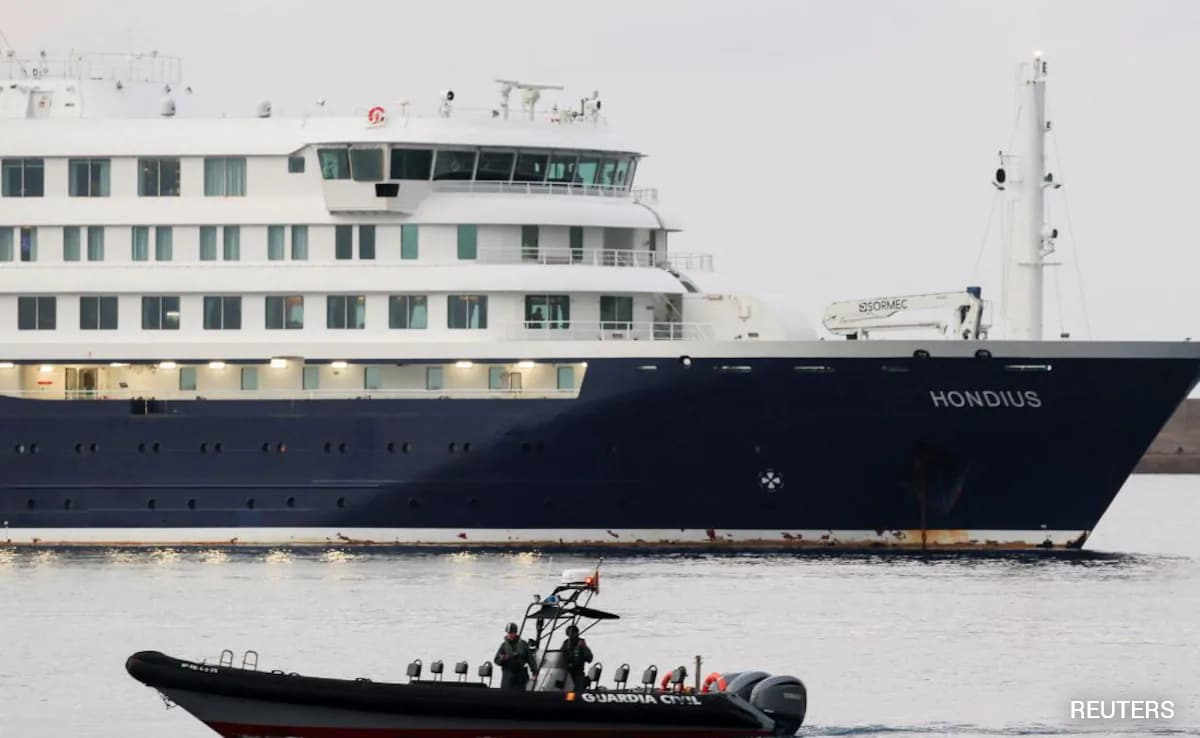
The maritime industry just collided with a biological wildcard. When the MV Hondius slipped into the Port of Rotterdam, it brought an end to a frantic, trans-oceanic scramble that has quieted the travel sector and put international health authorities on high alert. The Dutch-flagged vessel, now sitting under heavy guard among the harbor windmills, is the epicenter of the first recorded hantavirus outbreak on a commercial cruise liner. Eleven cases are confirmed or suspected across multiple nations. Three passengers are dead.
While public health officials insist the immediate threat to the general population remains minimal, the crisis exposes a terrifying vulnerability in luxury expedition travel. It is a stark reminder of what happens when high-end tourism pushes deeper into the world’s most isolated environments, bringing affluent travelers into direct contact with localized, lethal pathogens before sealing them inside a closed air system.
The Floating Incubator
The MV Hondius is not your standard Caribbean mega-ship. It is an ice-strengthened polar expedition vessel built to carry adventurous, wealthy travelers to the literal ends of the earth. Its recent itinerary took it to the pristine landscapes of Antarctica and the rugged southern tips of Argentina and Chile.
Epidemiologists tracking the outbreak believe the nightmare did not start on the ship itself. Hantaviruses are zoonotic, typically jumping to humans who inhale dust contaminated by the urine or droppings of infected wild rodents. The working hypothesis from the World Health Organization (WHO) is that a Dutch couple, who later became the outbreak’s first casualties, contracted the virus during a land excursion in South America.
They boarded the ship feeling entirely healthy. That is the trick of the Andes strain of hantavirus. It features an incubation period that stretches anywhere from one to eight weeks. By the time the first symptoms of headache, fever, and severe abdominal pain mimic a standard seasonal flu, the pathogen has already spent weeks quietly hitchhiking across international waters.
What happened next represents a disturbing shift in what scientists knew about the disease.
Most hantaviruses are strictly dead-end infections; they do not pass from person to person. The Andes strain, however, is a notorious exception. It can spread through close, prolonged human contact. Inside the tightly sealed, recirculated air environments of a modern passenger vessel, a localized wildlife infection transformed into an active shipboard cluster.
As the ship journeyed north, the virus moved through the guest registry. A French national tested positive. An American passenger fell ill. On Sunday, Canadian health officials confirmed another infection in an isolated passenger. The virus even managed to jump the ship’s perimeter before the full quarantine fell into place, with a flight attendant suffering symptoms after a brief interaction with a passenger during an early disembarkation window.
The Rotterdam Quarantine
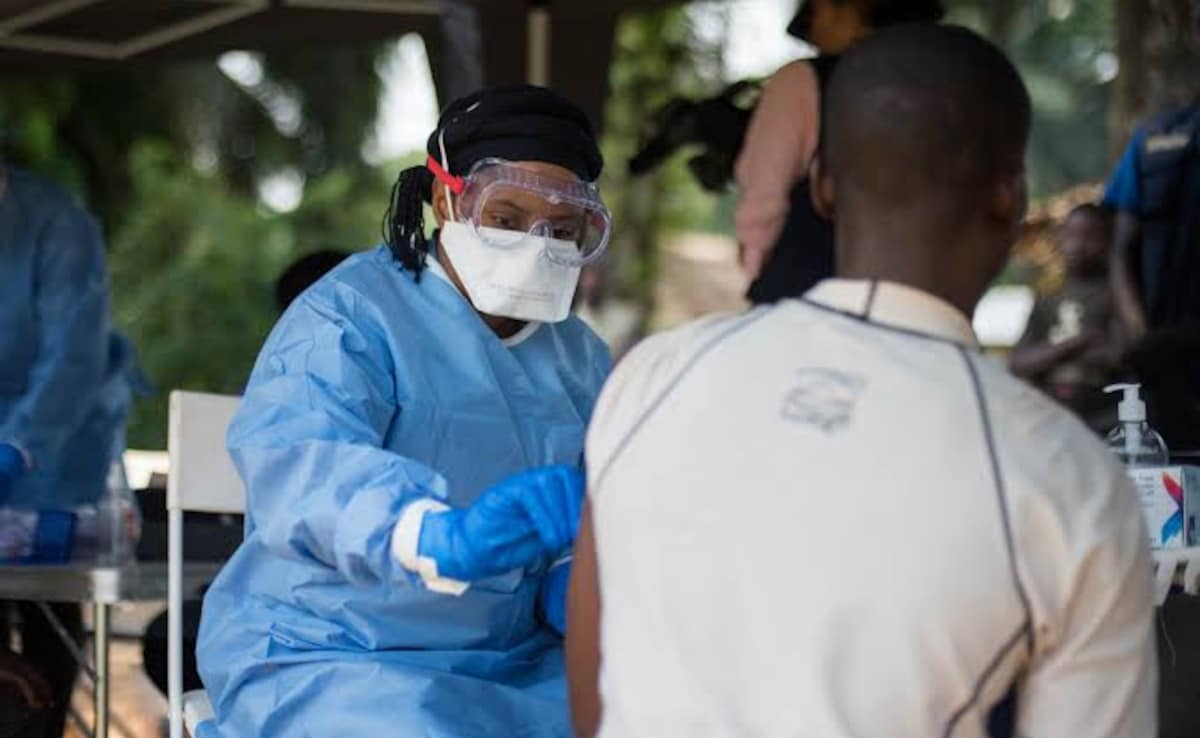
The scene at Europe’s largest port resembles a military operation. Specialized teams in white, positive-pressure hazmat suits have boarded the vessel. Along the pier, authorities erected a stark line of 25 white modular containers equipped with satellite internet and catering. This is where the remaining 25 crew members—hailing from the Philippines, Ukraine, Russia, and Poland—will spend a minimum of several weeks in strict isolation if they cannot be immediately repatriated to their home countries.
Rotterdam Harbor Master René de Vries took a pragmatic stance on receiving the biological hot potato. The ship was in need, the crew was potentially exposed, and turning away a Dutch-flagged vessel at sea was deemed an unacceptable humanitarian risk.
The immediate task is a brutal, painstaking decontamination process slated to take at least a week. Unlike standard maritime cleaning operations that rely on automated fogging machines to combat common cruise nuisances like norovirus, hantavirus decontamination requires manual precision. Teams must systematically strip out all bedding and soft furnishings, treating them as hazardous bio-waste. Every square inch of the vessel's ventilation shafts, staterooms, and common galleys must be scrubbed by hand with high-grade viral disinfectants.
The molecular structure of the virus makes it highly vulnerable to standard disinfectants once it sits on a hard surface. The challenge is not the resilience of the viral particle itself, but the sheer number of hidden nooks, fabric folds, and air ducts where aerosolized particles can linger before the deep clean is complete.
Industry Denial and the Race to the Arctic
The response from the cruise line sector has been predictably defensive. Oceanwide Expeditions, the Dutch operator of the MV Hondius, issued statements indicating they do not foresee long-term operational changes. In fact, the company still has an Arctic itinerary scheduled for the very same vessel, departing from Keflavik, Iceland.
That leaves a mere 11 days to turn a lethal bio-hazard zone into a safe luxury environment.
This breakneck scheduling highlights the intense economic pressure under which the expedition cruise market operates. These vessels have short seasonal windows to generate millions of dollars in revenue. Admitting that an itinerary might be compromised by an exotic pathogen is an existential threat to their business model.
Independent maritime safety analysts are skeptical of the quick turnaround. While the Pasteur Institute in France successfully sequenced the virus from a French patient and confirmed it lacks any new mutations that would increase its transmissibility, the logistical reality of certifying a vessel safe after an active Andes virus outbreak is unprecedented. Public health officials must inspect and sign off on every system before a single new passenger steps aboard.
The broader travel market has largely ignored the structural warning signs of this crisis. The industry has spent years designing ships that act as self-contained ecosystems, optimizing air filtration to keep microscopic entities out. Yet, no filtration system can mitigate the risk of human-to-human transmission once an exotic pathogen is carried past the gangway by a passenger who has been hiking through rodent-heavy wilderness.
The Reality of Expedition Risk
The MV Hondius crisis blows apart the illusion of risk-free adventure travel. When consumers pay tens of thousands of dollars to visit remote regions, they expect the comforts of a five-star hotel alongside the thrill of the wild. They rarely consider that the remote locations they visit feature distinct biological realities.
The Andes virus carries a terrifying case fatality rate of roughly 40 percent. It attacks the lungs and heart with frightening speed, causing intense inflammation that leads to rapid respiratory failure. In the middle of the ocean, thousands of miles from a tertiary care hospital with extracorporeal membrane oxygenation (ECMO) machines, a hantavirus infection is effectively a death sentence.
The three passengers who died on this voyage are a testament to that geographic vulnerability.
The industry will likely treat the Hondius as a fluke. They will call it a statistical anomaly, a bizarre alignment of an incubation period and a specific South American virus strain. But as climate patterns shift and rodent populations fluctuate across global wilderness areas, the overlap between luxury tourism and isolated zoonotic reservoirs will only increase.
The immediate crisis in Rotterdam will eventually end. The containers will be dismantled, the crew will be scattered to their home countries, and the ship will be scrubbed until it smells of bleach and fresh paint. But the systemic vulnerability remains entirely unaddressed. The next time an exotic pathogen boards a cruise ship in the bloodstream of an asymptomatic traveler, the industry may not have six days of open ocean to figure out a response.