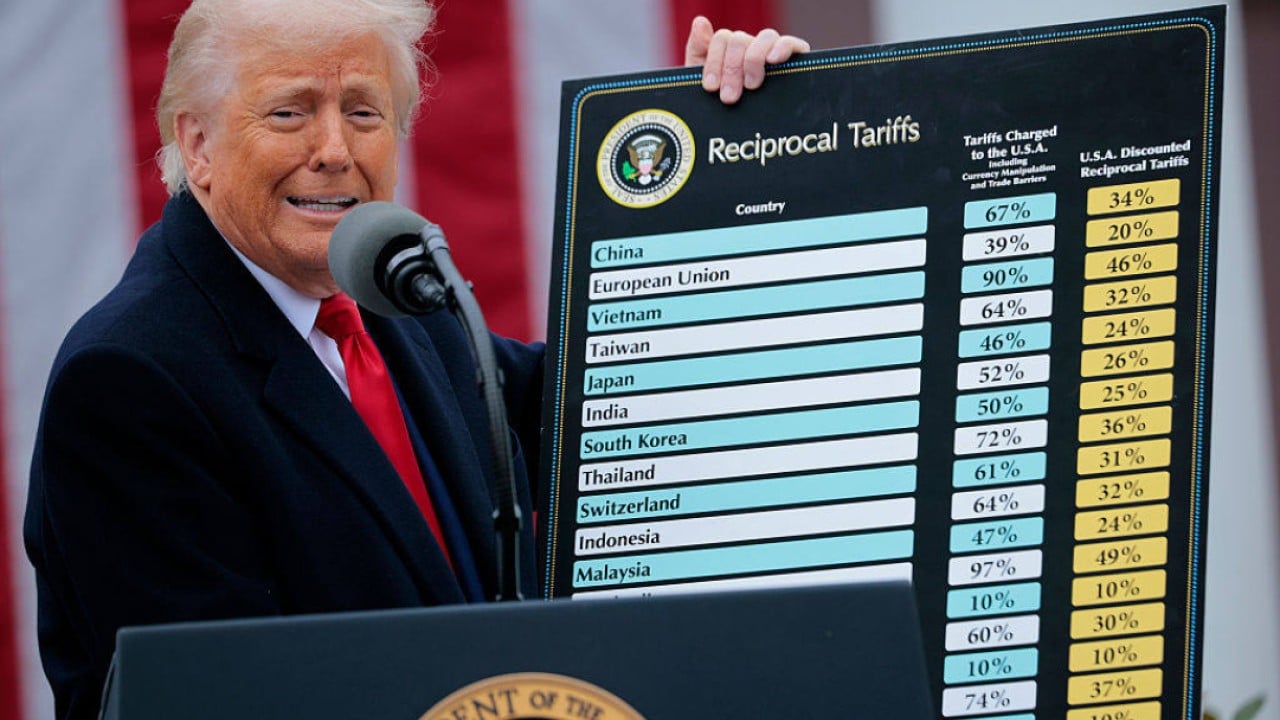
The federal government is quietly fighting a rearguard action to keep billions of dollars in illegal tax revenue, and almost no one outside the executive suites of major importing firms has noticed. When the Supreme Court struck down a sweeping web of global tariffs earlier this year, declaring that the White House had overstepped its constitutional authority by using emergency powers to bypass Congress, it created a massive financial hangover. Importers suddenly had the legal right to claw back an estimated $166 billion in unlawfully collected duties. Yet a fierce procedural war has erupted over who actually gets to walk through the door and claim their money.
U.S. Customs and Border Protection managed to return roughly $20.6 billion through an initial, tightly restricted online system. Now, the process has ground to a functional halt. The Department of Justice has stepped in to block a "universal" refund mandate issued by the Court of International Trade, insisting that only a tiny fraction of American businesses are legally entitled to relief.
The battle represents a fundamental clash over accountability, executive overreach, and federal cash flow.
The Iron Curtain of Liquidation
To understand how the government is freezing out thousands of American businesses, one must look at the arcane machinery of customs law. When an automated cargo ship drops containers at a U.S. port, the importer pays an estimated duty deposit. The transaction does not end there. Customs takes up to 314 days—and sometimes up to four years—to review the paperwork, determine the final value, and officially finalize the bill.
In trade jargon, this finalization is called liquidation. Once a entry is liquidated, a strict 180-day clock begins ticking. If an importer does not file a formal protest within that window, the transaction is locked forever.
The government is using this timeline as an absolute shield. In building its online refund portal, the agency limited applications exclusively to companies whose tariff bills were either unliquidated or had been settled within the preceding 80 days of the Supreme Court ruling. For any business that paid the illegal taxes three or four years ago and let their protest window quietly expire, the government's message is simple. The money is gone.
This dynamic leaves mid-sized American corporations in a devastating financial position. Consider a hypothetical mid-sized domestic manufacturing business that imports specialized industrial steel components. If that company paid $5 million in unconstitutional tariffs between 2023 and 2025, but those entries were routine and liquidated without a protest, the company is barred from relief under current administrative guidelines. They must watch their larger, highly litigious competitors secure massive financial windfalls while they absorb a permanent hit to their capital reserves.
The Legal Fiction of a Limited Remedy
The Department of Justice is aggressively defending this policy in the U.S. Court of Appeals for the Federal Circuit. The government argues that only the companies that were explicit parties to the 2,500 original lawsuits challenging the tariffs have a legal right to seek a refund.
This position has drawn furious condemnation from trade attorneys and federal judges alike. Court of International Trade Judge Richard Eaton issued a sweeping order commanding the government to open the system to "all importers of record," regardless of when their goods cleared port. Eaton argued that it is fundamentally unconstitutional for the federal government to retain billions of dollars it had no legal right to collect in the first place.
To enforce his mandate, Judge Eaton ordered the top leadership of the border agency to appear personally in his New York courtroom to justify the administrative delays. The Justice Department scrambled to block the order. Government lawyers appealed both the universal refund mandate and the requirement for executive testimony, winning a temporary suspension from the appeals court.
The tactical maneuvering reveals a deeper truth. The administration is deeply reluctant to part with the money.
The Missing Billions in the Federal Budget
The urgency to protect the tariff reserves is driven by raw fiscal pressure. The White House has leaned heavily on border duties to generate billions in direct revenue, helping offset the massive deficit spending triggered by recent tax cuts.
Tariff collections are a vital source of unappropriated federal cash. According to Treasury Department data, monthly tariff revenue peaked at more than $31 billion late last year. Following the string of legal defeats in federal court, that monthly intake plummeted to $22 billion.
Losing another $145 billion in a massive, court-mandated payout would shatter federal revenue projections. The U.S. Trade Representative is under immense pressure to maintain the inflow of cash. Even as the administration fights the refund orders in court, it is already rolling out a brand-new wave of 10% to 12.5% global levies under the guise of international labor investigations to replace the lost income.
The Risk of Executive Precedent
This corporate standoff is about more than just balances on a corporate ledger. It is a critical test of whether the executive branch can weaponize administrative friction to insulate itself from judicial accountability.
If the government wins its appeal, it establishes a dangerous precedent. The White House could theoretically impose sweeping, illegal economic sanctions or taxes, collect tens of billions of dollars over several years, and then keep the vast majority of the loot simply by relying on the standard 180-day liquidation clock to run out before the courts can strike the policy down.
Right now, the corporate trade bar is advising clients to preserve their rights by filing protective protests against every active customs entry, creating a massive paperwork bottleneck for an already overwhelmed federal bureaucracy. It is a messy, inefficient solution to an artificial crisis created by executive overreach.
The Court of Appeals will soon decide whether the government must open its vaults or if it can keep the proceeds of an unconstitutional tax. For thousands of American companies that kept the supply chains moving through years of trade volatility, the answer will determine whether the rule of law applies to the federal treasury.