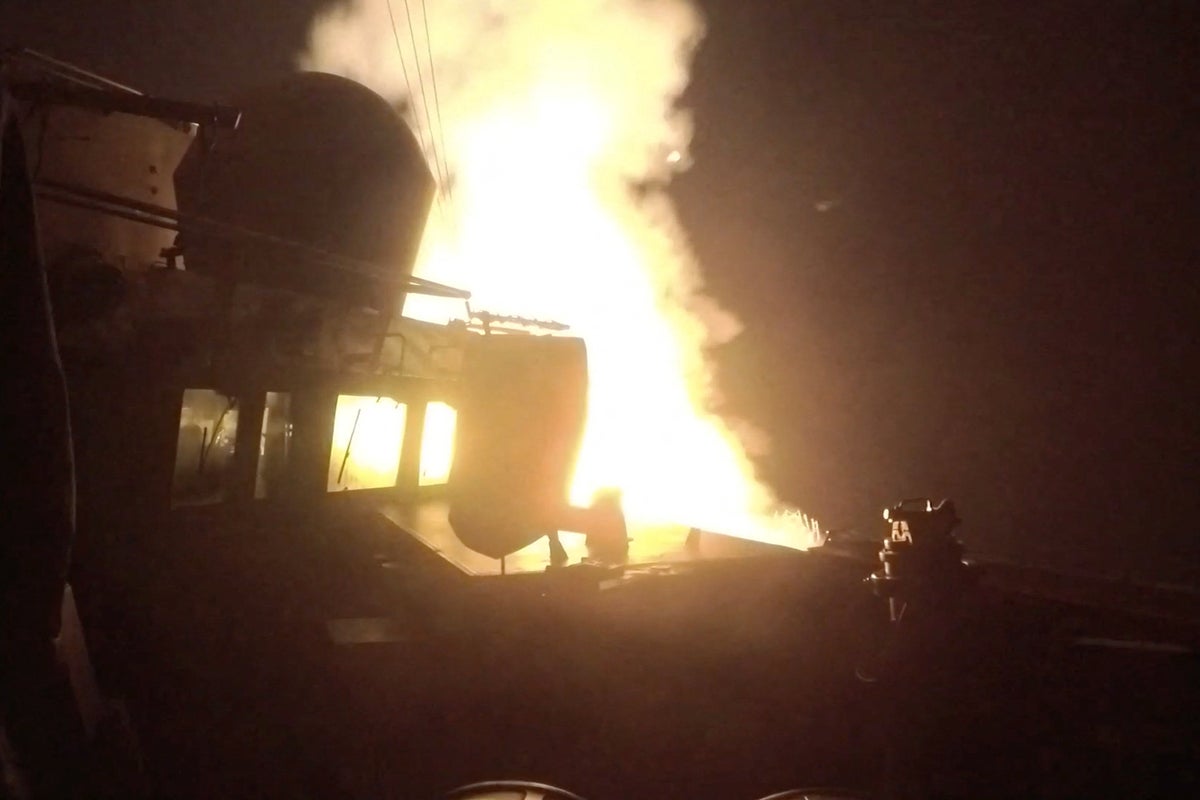
The escalating military theater between Washington and Tehran has broken the fragile Middle Eastern ceasefire, culminating in an unprecedented exchange of heavy munitions across regional borders. Striking with dozens of ballistic missiles and attack drones, Iran targeted crucial facilities hosting American forces at the Ali Al-Salem and Ahmad Al-Jaber airbases in Kuwait, the Sheikh Isa base in Bahrain, and the Al-Azraq facility in Jordan. The Islamic Revolutionary Guard Corps claimed to have struck 18 distinct military targets. This dramatic retaliation followed direct orders from President Donald Trump for waves of heavy American airstrikes hammering logistical networks, surveillance systems, and air defense infrastructure inside Iran.
By framing this crisis as a sudden eruption, standard reporting completely misses how calculated ambiguity and broken communication pathways led directly to the brink. The current conflict is not an isolated flare-up; it is the predictable breakdown of an unworkable deterrence policy. Decades of observing regional brinkmanship reveal that the current strategies of maximum military pressure from Washington and asymmetric leverage from Tehran are fundamentally incompatible, guaranteeing structural instability rather than peace.
The Trigger and the Breakdown of Strategy
The immediate catalyst for the current crisis was the downing of a U.S. Army Apache attack helicopter near the strategic Strait of Hormuz. While Pentagon officials initially stated that the cause of the crash remained under investigation, political momentum quickly outpaced military intelligence. Briefed by Defense Secretary Pete Hegseth and Chairman of the Joint Chiefs of Staff Dan Caine regarding an alleged mid-air collision with an Iranian drone, President Trump shifted from an initially downplayed stance to an aggressive posture, declaring via social media that the aircraft had been shot down.
The subsequent American kinetic response was swift and heavy. Operating under U.S. Central Command, Navy, Marine Corps, and Air Force assets launched precision strikes using 49 Tomahawk cruise missiles alongside strike fighter jets. The operation deliberately targeted critical nodes forty miles outside Tehran and across the southwestern coast, specifically hitting air defense installations, radar positions, and communication hubs in Bandar Abbas, Qeshm Island, Minab, and Sirik.
       [U.S. Apache Helicopter Downed near Hormuz]
                          │
                          ▼
         [Trump Orders Retaliatory Strikes]
                          │
         ┌────────────────┴────────────────┐
         ▼                                 ▼
[49 Tomahawk Missiles]         [Strikes on Southern Iran]
(Targeting Radars/Defenses)     (Bandar Abbas, Qeshm, Sirik)
         │                                 │
         └────────────────┬────────────────┘
                          ▼
        [IRGC Launches Ballistic Missiles]
                          │
         ┌────────────────┼────────────────┐
         ▼                ▼                ▼
  [Kuwait Bases]   [Bahrain Bases]   [Jordan Base]
  (Ali Al-Salem,   (Sheikh Isa, 5th   (Al-Azraq Air
  Ahmad Al-Jaber)    Fleet HQ)           Base)
Tehran did not absorb the blow. Moving immediately to activate its regional deterrence playbook, the IRGC launched waves of ballistic missiles aimed at the very infrastructure supporting American air power. While state media in Tehran claimed extensive destruction of advanced F-35, F-15, and F-16 fighter assets on the ground in Jordan, CENTCOM pushed back, asserting that regional air defenses successfully intercepted the vast majority of incoming threats and that American operational readiness remained intact.
The Vulnerability of Regional Hosts
The geopolitical fallout of these strikes has permanently altered the security calculus for Gulf nations hosting American military infrastructure. For decades, states like Kuwait, Bahrain, and Jordan viewed the American military presence as an ultimate security guarantee. The current escalation proves that these installations can instead act as lightning rods for regional conflict.
- Kuwait: The activation of air defenses over the Ali Al-Salem and Ahmad Al-Jaber bases forced civil aviation authorities to immediately close national airspace, diverting commercial traffic and freezing economic operations.
- Bahrain: Home to the U.S. Fifth Fleet, the island nation faced immediate peril as sirens rang out across its territory, demonstrating that its very sovereignty is bound to the security posture of the American naval command.
- Jordan: By launching long-range missiles from deep within western Iran toward the Al-Azraq base, Tehran proved that geographical distance no longer offers safety from its domestic arsenal.
These host nations now face an agonizing dilemma. Expelling or drawing down American forces risks losing their primary security partner, yet continuing to allow unrestricted offensive operations from their soil directly exposes their civilian centers and national economies to immediate retaliatory devastation.
The Economic Leverage Point
Beyond the immediate tactical exchange of missiles and interceptors, the most lethal weapon in Tehran’s inventory remains economic disruption. Concurrently with its missile strikes, Iran’s joint military command announced the absolute closure of the Strait of Hormuz, vowing to target any vessel attempting transit. While CENTCOM maintains that international commercial shipping continues to pass through the waterway under naval protection, the mere threat has sent immediate shockwaves through global markets.
International energy benchmarks responded instantly, with Brent crude futures surging past $92 a barrel and West Texas Intermediate climbing toward $89. This spike occurs against a backdrop of fragile global economic conditions, where persistent inflation fears complicate monetary policy. For Iran, the strategy is transparent: utilize its geographic chokehold over a critical global energy artery to inflict financial pain on Western economies, gambling that global capital markets will force Washington back to the negotiating table before a wider ground conflict becomes unavoidable.
The central flaw in Washington's current approach is the assumption that overwhelming conventional military dominance translates automatically into political compliance. Modern conflict history indicates that heavy aerial bombardment rarely forces ideological regimes into submission; instead, it frequently hardens internal political resolve and accelerates asymmetric counter-escalations. The current policy cycle—where strikes are answered by counter-strikes, and ceasefires are treated as temporary windows to rearm—offers no viable path toward long-term regional stability. Breaking this destructive loop requires moving beyond empty rhetorical warnings and acknowledging the complex security realities of all parties involved.


