When you escape a regime, you expect the fear to stay behind at the departure gate. You buy a ticket, board a flight, and cross an ocean. When you land in a rainy, grey city like London, you finally breathe out. You think the distance protects you.
It does not.
For hundreds of pro-democracy activists who fled Hong Kong for the United Kingdom, the illusion of safety dissolved entirely. They discovered that the system designed to protect the British border was being manipulated by the very apparatus they were running from. The long arm of authoritarian tracking did not stop at the terminal. It was sitting behind the immigration desk.
The reality of transnational repression is rarely about grand cinematic shootouts or midnight kidnappings. It is quiet. It is digital. It is a slow, suffocating paranoia that follows a target into their local grocery store, onto their social media feeds, and into the secure databases of the state that granted them asylum.
The Shadow in the Terminal
Consider a young activist we will call Anna. This is a hypothetical composite of the targets, designed to ground the abstract mechanics of state espionage in the lived reality of those who endure it.
Anna leaves her apartment in London, constantly checking over her shoulder. She notices the same car parked down the street two days in a row. She wonders if her family back home will receive a late-night visit from the authorities because she attended a rally in Manchester. She thinks she is being paranoid.
But Anna is not paranoid. She is being watched.
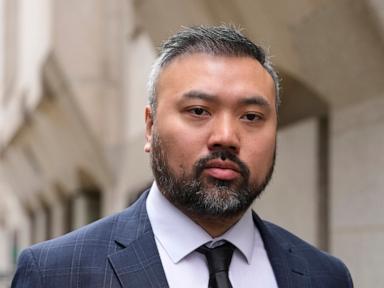
The man organizing the surveillance from the shadows was Peter Wai. To the public, Wai, 41, was a uniformed face of British authority—a UK Border Force officer stationed at Heathrow Airport. He was a volunteer special constable with the City of London Police, a man who had served in the Royal Navy. He wore the badges of British law enforcement. He had passed the vetting.
Behind that veneer of public service lay a completely different operation. Court records revealed that Wai referred to the pro-democracy dissidents he tracked as "cockroaches." He was not protecting the border; he was using his position to run a "shadow policing" operation on British soil on behalf of the Chinese and Hong Kong governments.
Wai’s primary tool was not a weapon, but a keyboard. While working within the Home Office, he systematically abused his access to secure government computer systems. He ran illicit checks on dissidents, pulling highly sensitive details about their lives, their movements, and their families.
The very database meant to log and protect refugees became a shopping list for a foreign intelligence service.
The Handler and the Network
An operative like Wai does not work in a vacuum. Every shadow asset requires a handler, someone to funnel the money and pass the targets down from the high offices of the state.
Enter Bill Yuen, 66. Yuen was a retired Hong Kong police superintendent who had transitioned into a seemingly mundane bureaucratic role: senior manager at the Hong Kong Economic and Trade Office (HKETO) in London. The HKETO is officially tasked with promoting commerce and cultural ties. In reality, prosecutors proved it served as a front for espionage.
The mechanics of the operation were cold and transactional. Between June 2023 and January 2024, the trade office’s HSBC bank account funneled £95,500 to a private security firm run by Wai. The money was then split and distributed to pay for boots-on-the-ground surveillance.
Their targets were not abstract threats. They paid special attention to prominent exiled politicians like Nathan Law, a face of the Hong Kong democracy movement who already carried a £100,000 bounty on his head from the Hong Kong authorities. They also targeted British politicians who spoke out against Beijing, including former Conservative Party leader Iain Duncan Smith and the peer Helena Kennedy.
The pressure on these activists was immense. Imagine knowing that your face, your address, and your daily routine are being packaged into encrypted files and sent directly to the police force that once tear-gassed your friends in the streets of Kowloon.
The scale of the operation eventually collapsed under its own aggressive weight. In May 2024, a nine-person team attempted a clumsy, failed break-in at a flat in Pontefract, West Yorkshire. The home belonged to Monica Kwong, a personal assistant who had fled Hong Kong. Counter-terrorism police, who had already begun monitoring the group's suspicious movements, moved in.
The arrests unraveled the entire network. Along with Wai and Yuen, police arrested Matthew Trickett, a 37-year-old immigration enforcement officer and former Royal Marine who had been hired by Wai to assist with the surveillance. The human toll of the conspiracy spiked shortly after they were granted bail: Trickett was found dead by his own hand in a park in Berkshire, unable to bear the weight of the exposure.
The Verdict and the Permanent Scar
The trial at the Old Bailey lasted two grueling months. Defending their actions, the Chinese embassy claimed the case was a political farce designed to destabilize Hong Kong. The court did not agree.
Mrs. Justice Cheema-Grubb, presiding over the historic sentencing, described Wai’s attitude as "arrogant" and fueled by a deep "sense of entitlement." The actions of the two men, she noted, were deliberate, concerted, and serious. They had caused real and significant harm, leaving their victims trapped in a permanent state of fear and distress.
The sentences handed down were a stark milestone in British legal history—the first major convictions under the updated National Security Act.
| Defendant | Background | Role | Sentence |
|---|---|---|---|
| Peter Wai (41) | UK Border Force, Ex-Met Police | On-the-ground surveillance, Home Office database abuse | 10 Years (6 for espionage, 4 for public office misconduct) |
| Bill Yuen (66) | Ex-HK Police Superintendent, HKETO Manager | Handler, financial middleman for foreign intelligence | 8 Years (Espionage) |
The prison terms offer a sense of legal closure, but they do not erase the deeper damage. The institutional trust has been breached. For the tens of thousands of Hong Kongers who moved to the UK seeking asylum after the sweeping 2020 National Security Law crushed their home city’s freedoms, the revelation is terrifying.
It means the system can be penetrated. It means the person checking your passport might be the person reporting your location to your persecutors.
Security procedures have reportedly been tightened since the security breach was discovered. Vetting processes are being overhauled. But for the activists living in quiet apartments across Britain, the ceiling has permanently lowered. Every unfamiliar car on the street, every delayed email, and every look from an official at an airport gate carries a cold, lingering question.
They escaped the city, but they could not escape the shadow.