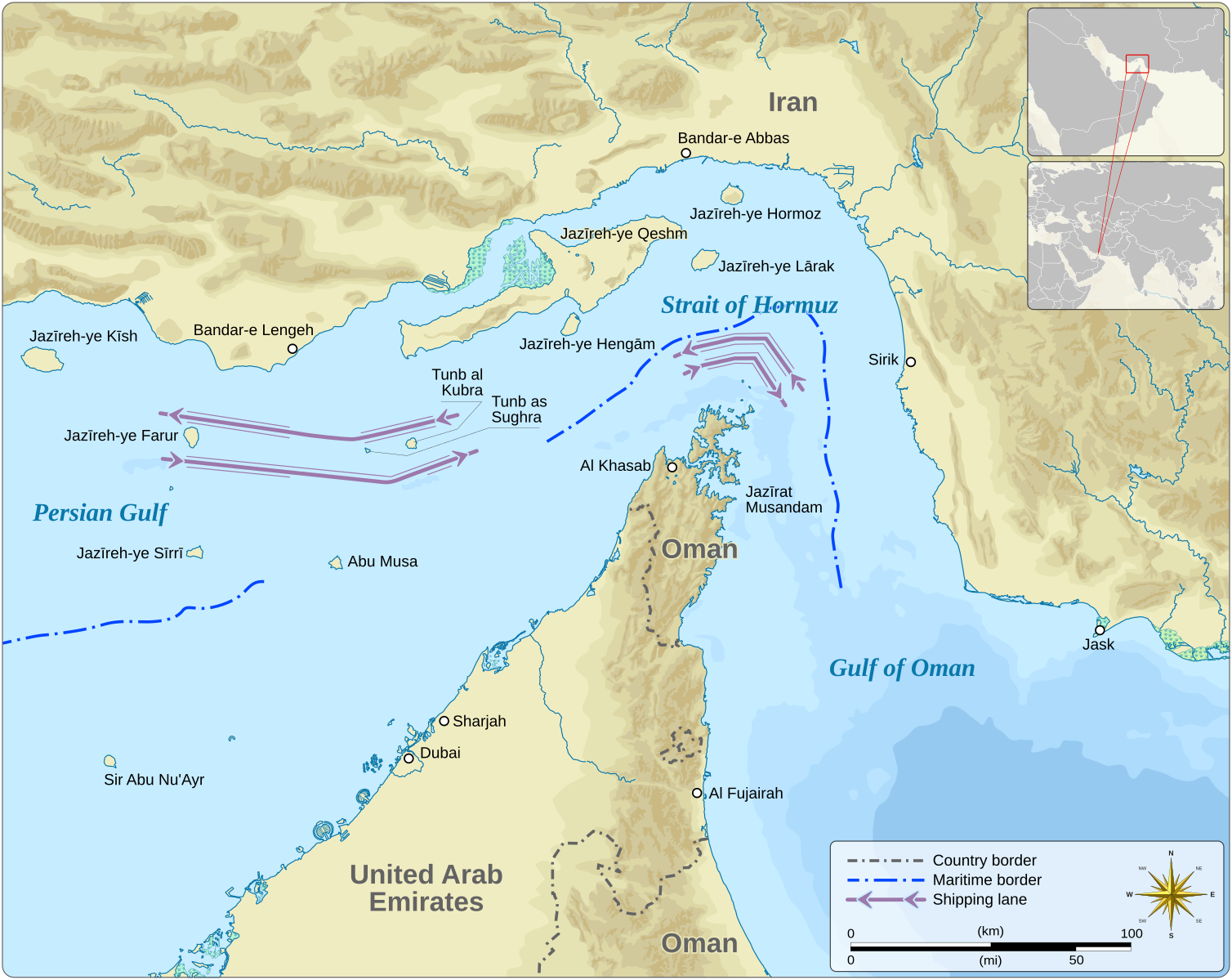
The Pentagon is taking a victory lap over a ghost. By claiming it has "crippled" the Iranian threat in the Strait of Hormuz, the U.S. defense establishment is indulging in a dangerous brand of tactical myopia. They are celebrating the suppression of 1980s-era naval doctrine while ignoring the fact that Iran has already pivoted to a theater where carriers are nothing more than floating bullseyes.
Washington defines "crippled" by counting hulls and kinetic intercepts. This is a spreadsheet mentality applied to a guerrilla reality. If you measure success by the number of fast-attack craft forced back to port or the percentage of drones splashed by Phalanx systems, you are winning a war that Iran stopped fighting three years ago. The threat hasn't been neutralized; it has been digitized and decentralized.
The Asymmetric Sinkhole
The consensus view—parroted by every major network—is that American naval presence and "unprecedented" surveillance have restored order to the world's most vital chokepoint. This narrative assumes that Iran’s goal is a conventional blockade. It isn't. Tehran’s objective is the persistent inflation of insurance premiums, not a localized naval battle they know they would lose.
I have spent years analyzing the intersection of maritime logistics and electronic warfare. In that time, I've seen the U.S. Navy burn through $2 million interceptor missiles to take down $20,000 "suicide" drones. This isn't a victory. It’s a mathematical defeat. Every time a Destroyer fires a weapon system to protect a tanker, the return on investment favors the instigator. We are trading gold for lead.
The "threat" hasn't vanished. It has evolved into three distinct vectors that the current U.S. posture is fundamentally ill-equipped to handle:
- AIS Spoofing and Ghost Fleets: Iran has mastered the art of making ships disappear or appear where they aren't. While the U.S. focuses on physical interception, the real war is happening in the data stream.
- Subsurface Autonomous Attrition: The focus remains on surface craft, but the proliferation of low-cost, Iranian-made UUVs (Unmanned Underwater Vehicles) means the "crippled" threat is simply moving beneath the waves where satellite surveillance is blind.
- The Proxy Pivot: By shifting operations to the Bab el-Mandeb via Houthi assets, Iran has effectively bypassed the "crippled" zone. The Strait of Hormuz is quiet because the front line moved, not because the enemy surrendered.
The High Cost of "Safety"
Let’s dismantle the "People Also Ask" obsession with "Is the Strait of Hormuz safe?" The question itself is flawed. "Safe" for whom? For the U.S. taxpayer? Absolutely not.
The operational cost of maintaining a "crippled" status quo in the Persian Gulf is an unsustainable drain on the Fifth Fleet. We are talking about billions of dollars in wear and tear, fuel, and personnel costs to play a permanent game of Whac-A-Mole. Meanwhile, the Iranians are spending pennies to keep us on high alert.
True security in the Strait wouldn't look like an armada. It would look like a complete overhaul of global energy dependency and a shift toward hardened, autonomous merchant vessels. Instead, we are using the world's most expensive military to babysit private oil tankers, many of which are flying flags of convenience and paying zero taxes to the nation protecting them.
The Tech Gap the Pentagon Ignores
The military-industrial complex loves a "kinetic solution." A kinetic solution involves things that go bang, which leads to more contracts for more things that go bang. But the Iranian threat in the Strait is increasingly a software problem.
- Electronic Warfare (EW): Iran has successfully jammed GPS signals for commercial shipping, leading to "accidental" incursions into their territorial waters. You can't shoot a radio wave with a Harpoon missile.
- Swarm Intelligence: The U.S. boasts about its ability to track Iranian "Fast Inshore Attack Craft." But the real danger lies in swarm logic—coordinated attacks where thirty targets move as one. Our current Aegis systems are designed to track sophisticated missiles, not thirty fiberglass boats with outboard motors and RPGs.
The "lazy consensus" says that because there hasn't been a major seizure in the last few months, the strategy is working. This is like saying a forest isn't at risk of fire because you haven't seen a flame for an hour, even as the undergrowth dries to tinder. Iran is waiting for the U.S. to get bored, run out of money, or get distracted by a conflict in the Pacific.
Stop Guarding the Past
If we wanted to actually "cripple" the threat, we would stop focusing on the Strait of Hormuz as a physical geography and start treating it as a node in a global network.
The conventional wisdom suggests that more "freedom of navigation" exercises are the answer. They aren't. They are a predictable routine that allows the IRGC to map our response times and electronic signatures. We are giving away our playbook for free.
Instead of cheering for a "quiet" Gulf, we should be terrified. Silence in the Strait usually means the adversary is busy elsewhere—likely in the cyber domain or developing deep-water capabilities that will make our current carrier groups look like museum pieces.
The U.S. military is currently a bodybuilder trying to catch a swarm of mosquitoes with a sledgehammer. He might hit one or two, but he's going to exhaust himself long before the mosquitoes give up.
We are told the threat is "crippled." In reality, we’ve just forced the virus to mutate.
The next time you see a headline about "restored stability" in the Middle East, ask yourself who benefits from that narrative. It’s usually the people selling the sledgehammers.
Withdraw the heavy hitters. Decentralize the defense. Stop protecting the profits of oil giants with the lives of sailors and the wallets of citizens. The Strait isn't won; it's just temporarily, and expensively, quiet.
The "victory" in Hormuz is a theatrical performance for a domestic audience. The Iranians aren't intimidated; they’re taking notes.
Go home and build something that doesn't require a $13 billion carrier to stay afloat.