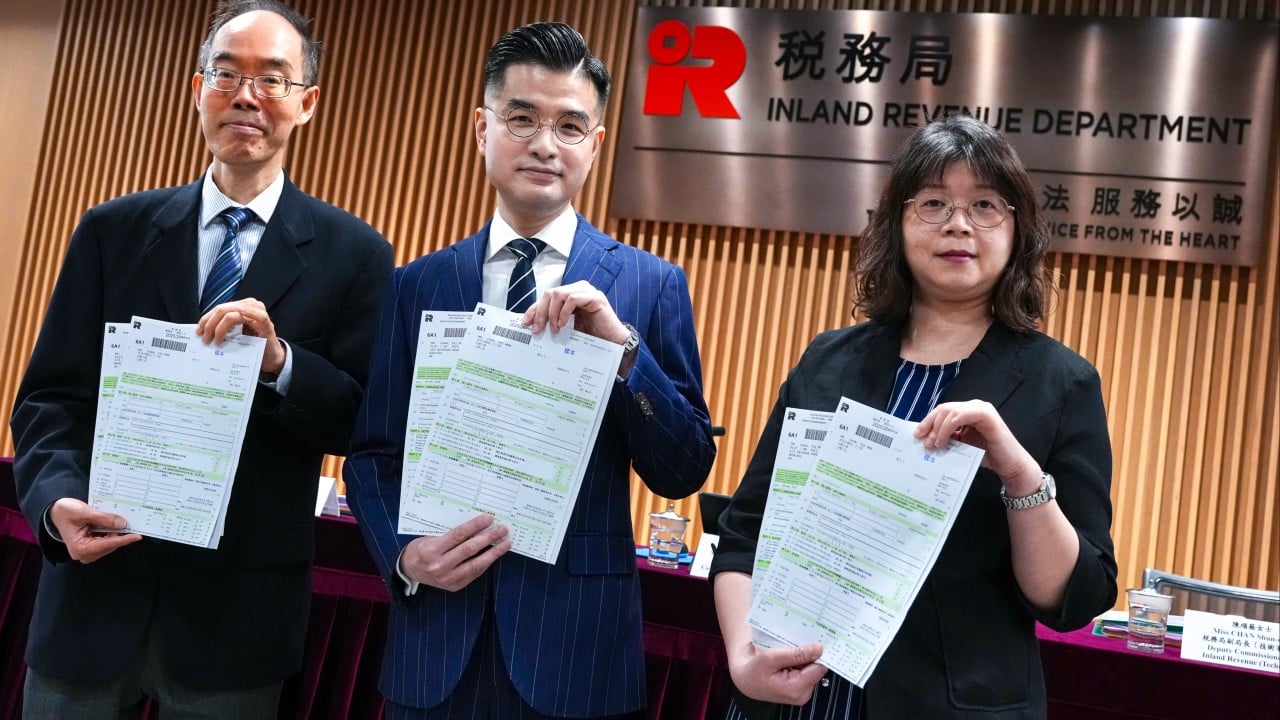
The headlines are screaming about a "massive recovery." They see a 22% jump in tax revenue to HK$458 billion and want to pop champagne. They look at the Inland Revenue Department’s ledger and see success. They are wrong.
In reality, these numbers are a lagging indicator masking a structural decay. Higher tax collection in a high-interest-rate environment isn't a sign of a "vibrant hub." It is the sound of the government squeezing the last drops of juice from a fruit that has already fallen off the vine. If you think a spike in profits tax means the golden era is back, you aren't looking at the right balance sheet.
The Lagging Indicator Trap
The biggest mistake amateur analysts make is treating tax revenue as real-time data. It’s a rearview mirror. The HK$458 billion figure largely reflects earnings and transactions from the previous fiscal cycle. It’s a ghost of performance past.
While the government celebrates these receipts, the actual "boots on the ground" reality in Central and Tsim Sha Tsui tells a different story. Commercial vacancies are at record highs. The Hang Seng Index spent much of the last year performing like a brick in a swimming pool. If you want to know the health of an economy, you don't look at how much the taxman took yesterday; you look at the velocity of capital today. That velocity is stalling.
The Stamp Duty Delusion
A significant portion of the revenue "growth" narrative relies on the volatility of stamp duty. The government loves to lean on property and stock transactions to balance the books. But this creates a dangerous dependency.
When the market is frothy, the coffers overflow. When the market corrects—as it has been doing—the Inland Revenue Department (IRD) is forced to rely on the "delayed" payments from better years. We are currently witnessing the final harvest of the old growth. The new seeds aren't being planted because the cost of capital is too high and the regulatory burden is becoming too heavy.
The Profit Tax Paradox
Critics will point to the jump in Profits Tax and say, "Look, businesses are making money!"
Let’s dismantle that. In a high-inflation, high-interest-rate environment, "nominal" profits can increase while "real" value shrinks. Companies have been raising prices to keep up with costs, which inflates the top-line revenue numbers that the IRD taxes. However, their margins are being crushed.
I’ve sat in boardrooms from Quarry Bay to Singapore over the last eighteen months. The conversation isn't about expansion in Hong Kong; it's about "risk diversification." When the government takes a bigger slice of a shrinking margin, it doesn't "foster" growth. It accelerates the exit.
Why the "Success" is a Warning Sign
- Capital Flight Masked by Compliance: Large firms are paying their dues on the way out. Settling tax liabilities is a prerequisite for restructuring or relocating.
- The Squeeze on SMEs: While the "Big Four" and the banks might weather a 22% revenue hike in the city’s ledger, the small and medium enterprises are suffocating. They are paying taxes on "profits" that are being eaten alive by rent and electricity costs.
- Lack of Reinvestment: Higher tax revenue means the government is holding the capital, not the private sector. In a truly booming economy, you want that HK$458 billion being cycled back into R&D, tech stacks, and human capital. Instead, it’s sitting in the Exchange Fund.
The Ghost of the Property Market
For decades, Hong Kong operated on a "Low Tax, High Land Price" model. It was a brilliant, if lopsided, trick. You didn't pay much on your salary, but you paid for it through your mortgage or your rent.
The recent "surge" in tax revenue is a desperate pivot. As land sales—the traditional lifeline of Hong Kong’s budget—falter due to lack of developer appetite, the burden is shifting. The government is becoming more aggressive in its collection of existing taxes to offset the catastrophic drop in land premium income.
If you think this is sustainable, you don’t understand basic arithmetic. You cannot replace the massive capital inflows of land auctions with more efficient collection of salaries tax. It’s like trying to power a cruise ship with a lawnmower engine.
The Singapore Specter
Every time I mention the decline of the HK model, someone brings up the "unrivaled infrastructure." Infrastructure is a commodity. Talent is not.
The 22% jump in tax revenue is actually a competitive disadvantage. While Hong Kong bragged about its record haul, regional competitors were busy refining tax incentives for family offices and tech startups. Wealth isn't static. It’s liquid. It flows to where it is treated best.
By celebrating "record tax revenue" during a period of socio-economic transition, the Hong Kong administration is sending a signal to global investors: "We care more about our balance sheet than yours." That is a fatal messaging error.
The Myth of the "Rebound"
People ask: "How can the revenue be up if the economy is struggling?"
The answer is simple: The Tax Code is a blunt instrument. It doesn't care if you had to fire 10% of your staff to make that profit. It doesn't care if you sold off an asset just to stay liquid. It only sees the taxable event.
We are seeing a "liquidation tax" phase. Assets are being moved, positions are being closed, and companies are being streamlined. All of these actions create taxable events that look great on a government spreadsheet but represent a hollowed-out private sector.
Stop Asking if Revenue is Up
The question you should be asking is: "What is the cost of this revenue?"
The cost is the erosion of Hong Kong's primary value proposition: its status as the most efficient place in the world to grow capital. If the government continues to prioritize filling its reserves over ensuring the profitability of its tenants, the "22% jump" will be remembered as the peak before the cliff.
I have watched companies move their regional headquarters because the "total cost of operations"—which includes the hidden taxes of compliance and the looming threat of a more rigid fiscal policy—simply stopped making sense. You can’t eat "record revenue" headlines when your office tower is 30% empty.
The Hard Truth for Investors
If you are basing your investment thesis on government-issued revenue reports, you are going to get slaughtered. The IRD's success is the private sector's overhead.
- Watch the Land Auctions: If developers aren't buying, the long-term outlook is grim, regardless of how many billions in Salaries Tax were collected this year.
- Analyze the Outflow: Look at the net capital outflow. If more money is leaving the city than the tax revenue being generated, you are looking at a net loss.
- Ignore the "Recovery" Rhetoric: A recovery requires new industry, not just better collection of old money.
The "record" revenue isn't a sign of health. It's a fever. The body is working overtime, burning through its resources to maintain a facade of normalcy while the underlying systems are under unprecedented strain.
The government doesn't need more of your money; the economy needs more of your confidence. And you can’t tax confidence into existence.
Stop celebrating the bill. Start looking at the kitchen. It’s on fire.