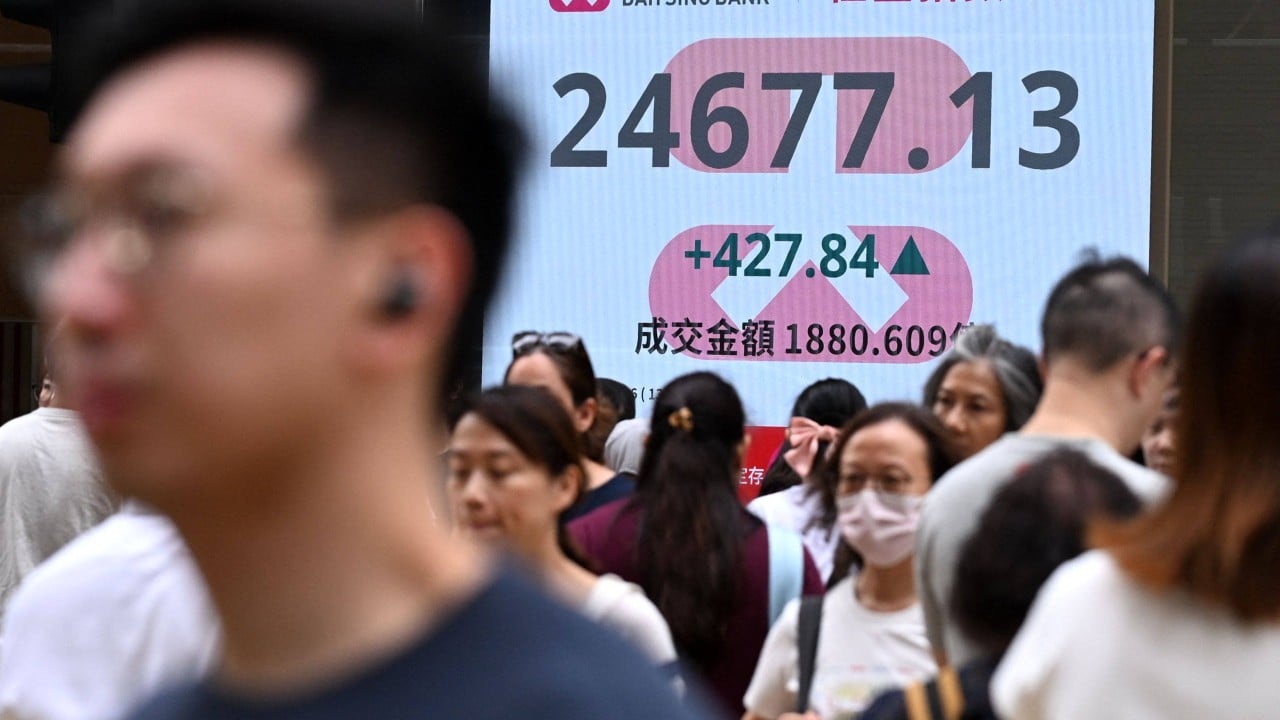
You think you know how the Hang Seng Index works. Then a single morning wipeout tracks a global chip tremor, and suddenly everything flips.
That's the reality institutional desks faced this week. For a minute, it looked like Hong Kong shares were ready to stage a real structural rally. Short sellers were covering positions, factory activity data out of mainland China beat forecasts, and localized AI optimization offered a neat fundamental story.
Then regional tech volatility pulled the rug out.
When the Philadelphia Semiconductor Index slides over 6% in a single Wall Street session—dragged down by double-digit drops in heavyweights like Micron—the ripple effect hits Asian equity desks like a physical wave. The Hang Seng dropped 145 points to close at 22,881 on a massive HK$308.05 billion turnover.
If you are trying to manage money here, you can't just look at local earnings. You have to look at how regional tech cross-currents are actively breaking local tactical rallies.
The Short Covering Mirage
A massive surge in daily turnover typically signals institutional commitment. Lately, though, a lot of that volume has just been short covering.
Traders who spent months shorting the likes of Alibaba, Tencent, and Meituan got caught off balance when domestic Chinese tech policy shifted back toward growth. Alibaba’s recent single-day jump lit a fire under the tape. It forced Bears to buy back borrowed shares to limit their losses.
That mechanical buying creates an illusion of health. It is not organic long-only money building structural positions. It is structural capitulation.
When that short-covering fuel burns out, the index gets exposed to global macro currents. Look at the divergence between Hong Kong and the mainland markets. Shanghai and Shenzhen managed to find green because their local tech sectors are highly shielded, focused heavily on domestic silicon and state-backed artificial intelligence. Hong Kong has no such buffer. Its deep, unrestricted liquidity means it functions as the regional escape valve whenever global chip sentiment turns sour.
Why Regional Electronics Supply Chains Dictate the Hang Seng
You might think the Hang Seng Tech Index is just a play on Chinese internet platforms. It isn't. The index is deeply tied to the broader Northeast Asian hardware ecosystem.
When Micron or SK Hynix see extreme price swings, global macro funds do not just sell chipmakers. They sell the entire Asian tech beta block. Hong Kong is often the easiest place to execute that trade quickly.
The Real Winners from the Downturn
While hardware and global chip suppliers are getting hammered by high valuations and cooling AI capital expenditure expectations, platform businesses are holding up on pure execution.
- Alibaba (9988.HK): The focus has shifted back to enterprise cloud margins and its dominant commerce ad engine.
- Tencent (0700.HK): WeChat's massive mini-app monetization and resilient domestic gaming revenues act as a cash-flow moat.
- Meituan (3690.HK): Sustained profitability across local logistics networks proves that delivery density works, regardless of global macro stress.
The problem is weightings. You can have a fantastic earnings print from an internet giant, but if regional sentiment triggers a broader equity exit from Asia, those gains get completely swallowed.
The HSI Volatility Index Tells the Real Story
Look at the HSI Volatility Index (VHSI). It spiked nearly 14% to sit around the 22.92 mark. That tells us that option premiums are inflating fast.
Smart institutional desks aren't just sitting there taking the hit. They are using structured products to generate yield while the underlying cash market churns sideways. For instance, covered call strategies tracking the Hang Seng Tech Index are printing massive annualized yields right now because option premium income scales directly with headline volatility.
If you're an individual investor trying to trade directional moves in this environment, you're playing a losing game. The institutional desks are essentially using options to monetize your anxiety.
Actionable Steps for Navigating This Tape
Stop buying the broader index on days when the headline factory data looks good. The macroeconomic data from the mainland is stabilizing, but global liquidity flows matter more for Hong Kong right now.
First, separate platform tech from hardware tech. If your portfolio is exposed to companies dependent on global semiconductor equipment components, you are exposed to extreme downside tail risk when Wall Street shifts its AI capex narrative. Focus on companies with domestic cloud scale and visible ad monetization.
Second, watch the daily Southbound Stock Connect flows. If mainland institutional investors are actively buying Hong Kong tech dips while global funds are selling, it creates a floor for select names. That's your signal for tactical entry points.
Don't mistake a short-covering bounce for the start of a structural bull market. Wait for regional tech volatility to settle below its long-term average before adding major directional risk.