The financial press is currently drunk on the Morgan Stanley narrative. The story is simple, seductive, and almost entirely wrong: they claim that a slight uptick in residential transactions will magically drag the commercial office and retail sectors out of their multi-year grave. It is the classic "rising tide lifts all boats" fallacy. But in the current Hong Kong economy, the tide is receding, and most of the boats are already stuck in the mud.
Residential property is not a leading indicator for office demand. It never has been. They are separate ecosystems driven by vastly different mechanics. Treating a minor bump in home sales—spurred by the removal of cooling measures—as a herald of a broader economic renaissance isn't just optimistic. It is negligent.
The Residential Mirage
The recent "surge" in residential activity is a knee-jerk reaction to the government finally scrapping the New Residential Stamp Duty (NRSD) and Buyer’s Stamp Duty (BSD). This wasn't a sign of organic growth; it was the release of a pressure valve. Investors who were sitting on the sidelines for years rushed in to capture the immediate cost savings.
But look at the inventory. Hong Kong is staring down a massive pipeline of unsold units. Developers are slashing prices just to move stock. When a developer offers a 20% discount on a new launch in Kai Tak, that isn't a recovery. That is a liquidation sale.
Residential prices are still fundamentally decoupled from local wages. The median household income hasn't kept pace with the debt required to service these "corrected" prices. We aren't seeing a healthy market return; we are seeing the final gasp of a speculative era. If the primary driver of your recovery is the removal of a tax, you don't have a market. You have a subsidy.
The Office Sector is Beyond Saving
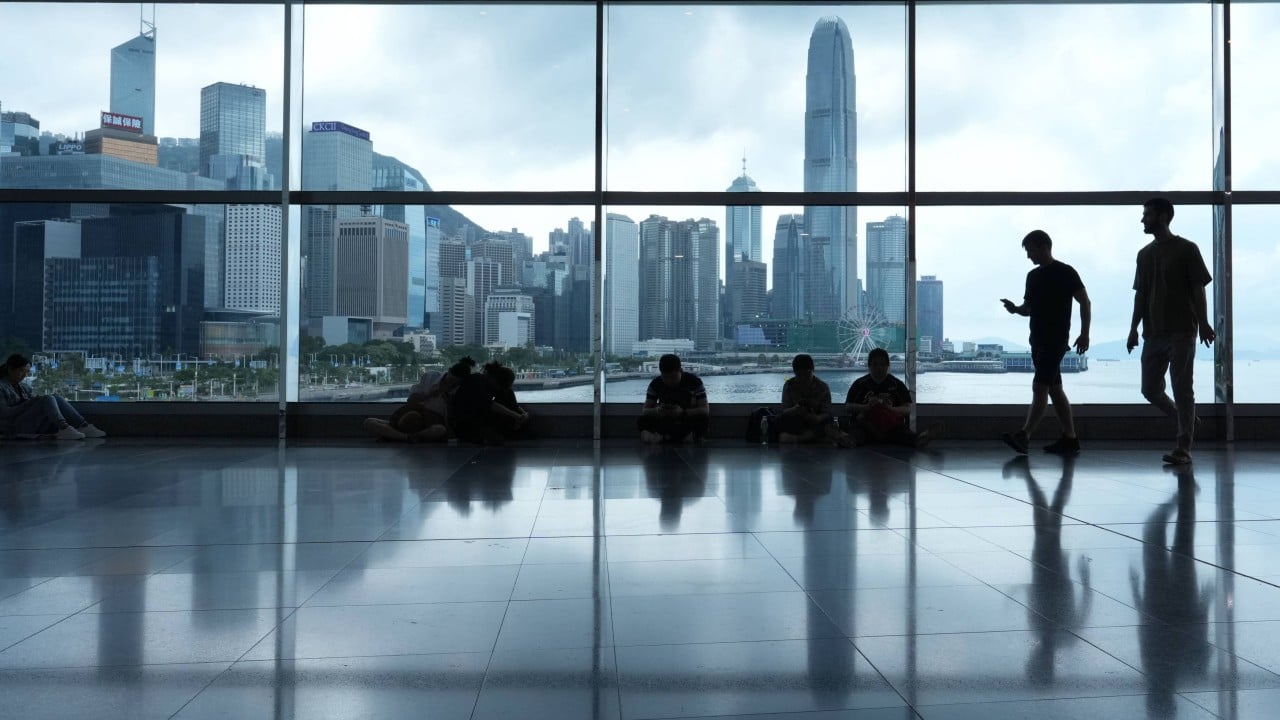
Morgan Stanley’s attempt to link home buying to office occupancy is a reach of Olympic proportions. The office market in Central and Kowloon East is facing a structural crisis, not a cyclical one.
The vacancy rate in Grade A office space is hovering near record highs of 15% to 16%. In any other global financial hub, that is a Tier-4 emergency. The "flight to quality" argument—the idea that firms will move into nicer buildings because rents are lower—is a zero-sum game. For every tenant that moves into a shiny new tower in West Kowloon, an older building in Wan Chai or Admiralty goes dark.
The fundamental problem is that the demand side of the equation has evaporated. The pillars of Hong Kong office demand—Western investment banks and Chinese tech giants—are both retreating.
- Western Banks: They are shrinking their footprints to cut costs and pivoting toward Singapore or back to home markets as geopolitical tensions simmer.
- Mainland Firms: The expected "Great Influx" of mainland companies has turned into a trickle. These firms are now more focused on domestic survival than paying $120 per square foot for a view of Victoria Harbour.
Rents have dropped nearly 30% from their 2019 peaks, yet occupancy isn't budging. In economics, we call this inelastic demand. Price doesn't matter when the need for the product has changed. The hybrid work model isn't a "fad" that a residential boom will fix. It is a permanent shift in how capital is deployed. Every CEO I talk to is asking how to shed 20,000 square feet, not how to add it.
The Retail Death Spiral
Then there is retail. The argument here is that if people feel richer because their homes "stopped losing value," they will go out and spend.
This ignores the structural shift in consumer behavior. Hong Kongers aren't shopping in Causeway Bay anymore. They are taking the MTR to Shenzhen on the weekends. Why pay $100 for a meal in Tsim Sha Tsui when you can get the same quality for $30 in Futian? The "Northbound" consumption trend is a massive drain on local retail sales that no amount of local "wealth effect" can counter.
The luxury segment is even worse off. The mainland tourists who used to flock to Canton Road to buy Chanel bags are either doing it in Hainan (tax-free) or in Paris. The "daigou" economy is dead. High-street rents are falling, but they are still too high for the new reality. We are seeing a replacement of high-end boutiques with "snake meal" shops and temporary discount outlets. That isn't a recovery. It's a downgrade.
The Interest Rate Trap
Everyone is betting on the Fed. The consensus is that once the US starts cutting rates, the HKD (pegged to the USD) will follow, and the property market will soar.
This assumes a return to the "easy money" era of 2010–2019. It’s not happening. Even if the Fed cuts 100 basis points, we are still looking at a higher-for-longer environment compared to the near-zero rates that fueled the previous bubble.
Interest rates are a blunt instrument. They can stop a market from crashing further, but they cannot force a company to hire 500 people and rent two floors of an office building. The cost of capital is only one part of the equation; the return on that capital is what matters. Currently, the return on Hong Kong commercial real estate is abysmal compared to risk-free yields or US equities.
The Opportunity Cost of Denial
The danger of the Morgan Stanley narrative is that it encourages "hope as a strategy." It tells landlords they should hold their rents and wait for the recovery. It tells investors that the bottom is in.
I’ve seen this play out in other markets. Tokyo in the 90s. London post-2008. When you refuse to acknowledge a structural shift, you end up with "zombie" assets—buildings that are technically occupied but worth a fraction of their debt load.
If you want to actually make money in Hong Kong real estate right now, you have to stop looking at traditional sectors.
- Industrial Conversion: Converting old manufacturing blocks into cold storage or data centers. The digital economy actually needs physical space; bankers on Zoom do not.
- Student Housing: With the influx of mainland students, this is the only residential sub-sector with actual, growing demand.
- Distressed Debt: Buying the notes on buildings where the owner is over-leveraged and the bank is sweating.
The "upturn" being celebrated in the news is a statistical artifact. It is the result of a low base and a temporary tax holiday. Beneath the surface, the foundations are crumbling.
Stop listening to the analysts who need to keep their investment banking clients happy. The office market is in a secular decline. Retail is being disrupted by geography and technology. Residential is an oversupplied mess.
If you're waiting for 2018 to come back, you’re already broke. You just haven’t checked your balance sheet yet.