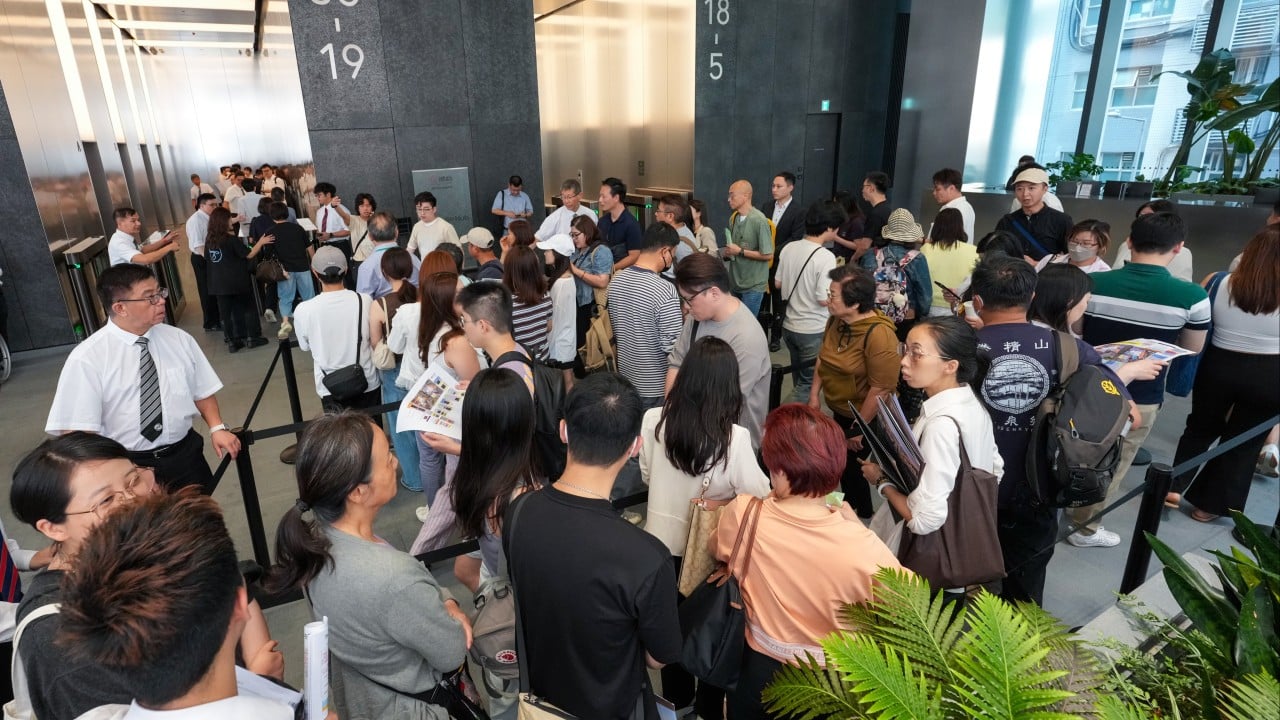
The headlines are screaming about a "streak." They want you to believe that because a few hundred apartments in Blue Coast II or The Pavilia Forest sold out in a weekend, the beast is back. They call it "renewed confidence." I call it a desperate exit strategy for developers who finally realized they are holding bags of melting ice.
If you think a 100% sell-through rate on a launch day signals a bull market, you are reading the map upside down. In the real world—the one not polished by developer PR firms—a sell-out in the current climate isn't a sign of strength. It’s a confession of price capitulation. Expanding on this topic, you can find more in: The Shadow Fleet and the Green Standoff Behind the Greek Shipping Empire.
Developers are finally pricing to clear, not to profit. When you drop your pants on price, people buy. That’s not a "market recovery"; that’s a fire sale.
The Consensus Is Blind to the Yield Gap
The lazy narrative suggests that because the US Federal Reserve started cutting rates, the Hong Kong property market is automatically saved. This ignores the brutal reality of the negative carry. Analysts at Bloomberg have shared their thoughts on this matter.
Even with the recent 50-basis point cut, the prime rate in Hong Kong remains stubbornly high relative to rental yields. Most residential properties in the city are yielding between 2% and 3.2%. Meanwhile, your mortgage is costing you effectively 3.875% to 4.125%.
Do the math. You are paying the bank for the privilege of owning an asset that is depreciating in real terms. Every month you hold that "sold out" apartment, you are bleeding cash. Professional investors don't buy negative carry assets unless they expect double-digit capital appreciation. With a massive supply overhang of over 20,000 unsold units in the pipeline, where exactly is that appreciation coming from?
The 100 Percent Sell-Out Myth
Let’s dismantle the "Sell-out Streak."
When a developer releases 200 units in a project that has 1,000 units, and those 200 sell, the media reports a "100% success rate." This is a curated illusion. It is a psychological trick designed to trigger FOMO (Fear Of Missing Out).
I’ve spent two decades watching these sales cycles. Developers are now using "drip-feed" tactics more aggressively than ever. They release the most attractive units at the lowest possible prices to create the headline. They need the headline to convince the secondary market that the floor is in.
It isn't.
The secondary market is where the truth lives, and the truth is ugly. While primary sales look "hot," secondary transactions are still struggling. Homeowners who bought in 2018-2021 are finding themselves "underwater" or facing massive "paper losses." They can’t compete with developers who have the balance sheet strength to offer 90% financing, stamp duty rebates, and "furniture packages" that are just masked price cuts.
The Mainland Savior Complex
The article you probably read likely mentioned the influx of mainland Chinese buyers as the new pillar of the market. Since the removal of the "cooling measures" (the New Residential Stamp Duty and Buyer’s Stamp Duty), mainlanders have indeed returned.
But they aren't the same buyers from 2012.
The new wave of mainland buyers is sophisticated and value-driven. Many are Top Talent Pass Scheme entrants. They are looking for a place to live, not a speculative vehicle to park offshore cash. More importantly, they are coming from a domestic Chinese property market that is currently in a multi-year structural decline. They have seen the ghost of Evergrande. They are not going to catch a falling knife in Hong Kong just because the "spices" (taxes) were removed.
The removal of these taxes was a one-time sugar hit. It brought forward demand that was sitting on the sidelines. Once that pool of pent-up demand is exhausted—which usually takes about six to nine months—the market returns to its fundamental drivers: local wages, economic growth, and interest rates. None of those look particularly "bullish" right now.
Inventory Is a Ticking Time Bomb
Let's talk about the "Overhang."
The vacancy rate is a distracting metric. The number that matters is "Completed Unsold Units." Developers are sitting on the largest stockpile of finished, empty apartments in two decades.
In a rising market, you hold inventory to sell higher later. In a stagnant or falling market, inventory is a liability. It’s a cost center. Every day those units sit empty, the developer is paying for maintenance, security, and interest on the construction loans.
The "sell-out streak" is a desperate attempt to de-lever. They are racing against each other. If Sun Hung Kai lowers prices, CK Asset has to go lower. if Henderson Land offers a rebate, New World has to match it. This is a race to the bottom disguised as a "market rally."
The Wealth Effect Has Reversed
The Hong Kong economy has historically been fueled by the "Wealth Effect." When your flat goes up by $1 million HKD in a year, you spend more at the mall, you buy a new car, and you dine at Michelin-star restaurants.
That engine is broken.
With residential prices down roughly 25% to 30% from their 2021 peak, the middle class is feeling the squeeze. Negative equity cases are at a 20-year high. This isn't just a "property problem"; it’s a systemic drag on the entire economy. A few "sell-out" weekends in Wong Chuk Hang won't fix the fact that the average Hong Konger’s primary store of wealth is shrinking.
Stop Asking if the Bottom Is In
People keep asking: "Is this the bottom?"
It’s the wrong question. The right question is: "Why do I want to own this asset right now?"
If your answer is "because everyone else is buying," you are the liquidity. You are the exit strategy for a developer or a distressed seller.
The market is currently in a Liquidity Trap. Lowering interest rates slightly won't stimulate the market because the fundamental belief in "Hong Kong property always goes up" has been shattered. Once that collective myth dies, the asset is revalued based on its utility and its yield. By those metrics, Hong Kong property is still 15% to 20% overpriced.
The Brutal Advice
If you are a homebuyer looking for a "bargain" in these new launches:
- Ignore the crowd. The "thousands of registrations" for a few hundred units are often fake or inflated by agents submitting multiple entries for the same client.
- Calculate the net price. Subtract the rebates, the gifts, and the interest-free periods. That is the real price. Compare that to the secondary market in the same district. You’ll often find the "new" property is still at a 10% premium.
- Stress test at 6%. Don't assume rates will drop to zero. If you can’t afford the mortgage at 6%, you are one economic shock away from ruin.
The "streak" is a marketing campaign. The "confidence" is a press release.
Real confidence doesn't need a headline to prove it exists. It shows up in the secondary market volume, in rising rental yields, and in an economy that produces more than just real estate commissions. We are nowhere near that.
Stop buying the narrative. Start reading the balance sheets. The developers are selling because they have to. You should only buy if the math—not the FOMO—makes sense.
Everything else is just noise in a dying echo chamber.