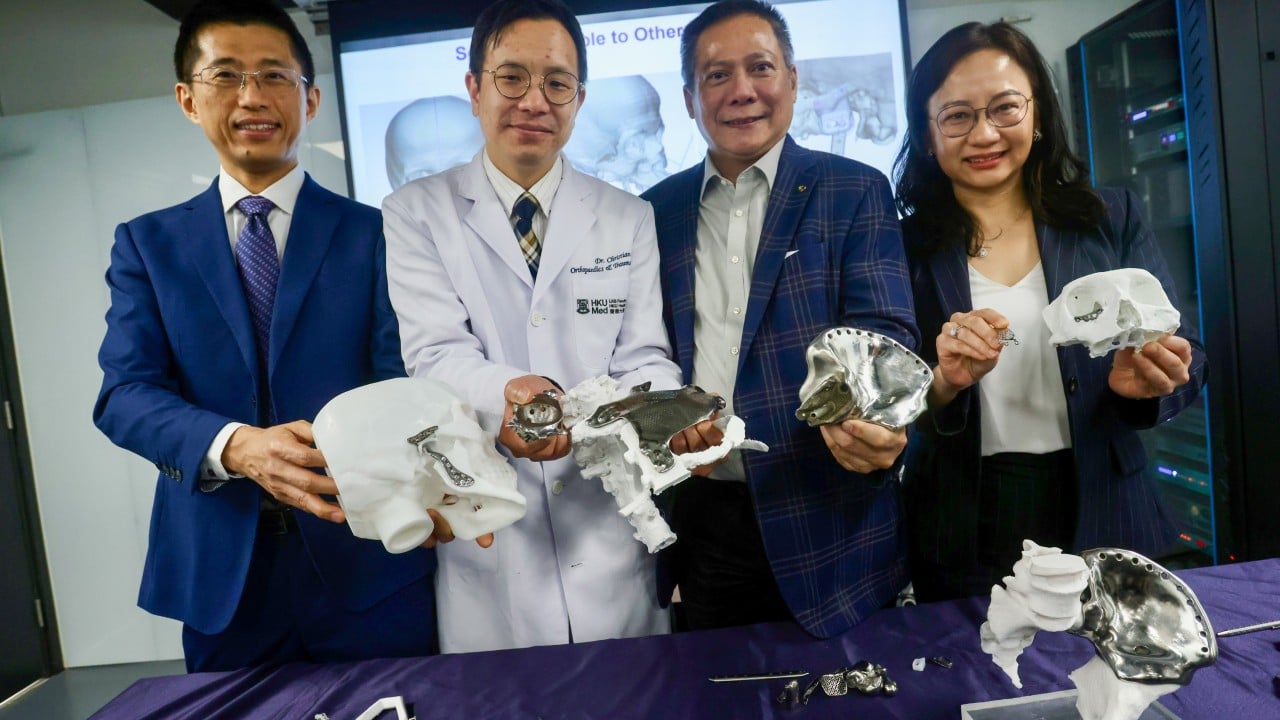
Hong Kong is a city that knows how to pivot. For decades, the local tech sector lived in the shadow of finance and real estate. Now, a new breed of high-stakes manufacturing is stepping out. Specifically, the medical implant industry is making moves that most people aren't watching yet. One prominent Hong Kong firm specializing in 3D-printed medical implants is looking past traditional Western markets and setting its sights on Central Asia. It's a calculated gamble on a region that’s desperately hungry for modern healthcare infrastructure.
If you think this is just about selling some hardware, you're missing the point. It’s about a massive gap in specialized surgical care. Central Asia, including nations like Kazakhstan and Uzbekistan, has been stuck with legacy medical equipment for years. By bringing in patient-specific implants from a logistics hub like Hong Kong, these firms aren't just expanding their bottom line. They're basically rewriting the surgical playbook for millions of people. Also making waves recently: The Real Reason Ferrari is Falling and How to Fix It.
Why Central Asia is the Next Big Win for MedTech
Most businesses obsess over the US or Europe. They fight for scraps in saturated markets where regulation takes a decade to clear. Smart money is looking at the Silk Road. Kazakhstan, for instance, has been pouring billions into its "Kazakhstan 2050" strategy. They want to be a top-tier global economy. You can't get there with 1980s bone plates and screws.
The demand for orthopedic and cranial implants in these regions is skyrocketing. Aging populations and a rise in traffic-related trauma mean surgeons need better tools. When a patient in Almaty needs a custom skull plate after an accident, they don't want a generic piece of metal that a surgeon has to bend by hand in the OR. They want a precision-engineered, 3D-printed titanium implant that fits perfectly. That's where the Hong Kong advantage comes in. Further insights into this topic are detailed by Harvard Business Review.
Hong Kong firms have spent years refining 3D printing techniques under strict international standards. They have the ISO certifications. They have the clinical data. More importantly, they have the proximity to mainland Chinese supply chains while maintaining the legal and financial frameworks that international investors trust.
The Logistics of Saving Lives Across Borders
Shipping a medical device isn't like mailing a t-shirt. You’re dealing with sterile packaging, biological compatibility, and customs officials who might not know what a trabecular metal structure is. Hong Kong's status as a premier logistics center makes this expansion possible.
- Speed of Customization. A surgeon sends a CT scan from Tashkent to a lab in Hong Kong. The engineers turn that data into a 3D model within hours.
- Precision Manufacturing. Using Electron Beam Melting (EBM) or Selective Laser Melting (SLM), the firm prints the implant in medical-grade titanium.
- The Air Bridge. Hong Kong International Airport remains one of the world's busiest cargo hubs. Direct flights to Central Asian capitals mean a custom implant can arrive in days, not months.
It's a workflow that saves lives. I’ve seen how traditional "off-the-shelf" implants fail because they don't account for the unique bone density or anatomy of the patient. Customization reduces surgery time. It lowers infection rates. It’s better for everyone.
Overcoming the Regulatory Wall
You can't just show up in Kyrgyzstan with a bag of titanium and start operating. Every country has its own health ministry. Each has its own registration process. The Hong Kong firm leading this charge is doing something clever—they're partnering with local distributors who already have the "in" with government hospitals.
Local partnerships are the secret sauce. You need someone on the ground who speaks the language and understands the nuances of the regional procurement systems. In many Central Asian countries, the government is the primary buyer. Winning a state contract is the difference between a small pilot program and a nationwide rollout.
Hong Kong companies also benefit from the city's participation in the Belt and Road Initiative. This provides a political cushion and financial incentives that Western firms might lack. It’s a strategic alignment that makes the high cost of market entry a bit easier to swallow.
Clinical Realities and Surgeon Training
High-tech implants are useless if the surgeons don't know how to use them. The expansion into Central Asia involves more than just sales. It’s an educational mission. Hong Kong firms are setting up training centers and hosting webinars for regional orthopedic surgeons.
This is where the E-E-A-T (Experience, Expertise, Authoritativeness, Trustworthiness) comes into play. If a company just ships a product, they’re a vendor. If they train the doctors, they become a partner. They’re teaching surgeons how to use digital planning software to map out a surgery before the first incision is ever made. This level of support builds a "moat" around the business. Once a surgical team is trained on your specific software and implant system, they're very unlikely to switch to a competitor.
What This Means for the Future of Hong Kong Industry
For a long time, people worried that Hong Kong was losing its edge as a manufacturing hub. This shift toward high-value, specialized medical goods proves those worries were premature. You don't need massive factories to win in the 2020s. You need smart labs, high-end printers, and a killer logistics network.
The expansion into Central Asia is a blueprint. It shows that Hong Kong can be the "brain" of the operation, designing and printing complex devices that solve problems in emerging markets. It’s a high-margin business that relies on intellectual property rather than cheap labor.
Getting Your Foot in the Door
If you're looking at this space, don't wait for a formal invitation. The window for early-mover advantage in Central Asian MedTech is closing as more players realize the potential.
- Check the local registration requirements. Each "stan" has different rules. Start with Kazakhstan as it’s the most mature market in the region.
- Find a local clinical champion. You need a respected surgeon in the region who is willing to use your tech and speak about it at local conferences.
- Invest in digital twins. If you aren't offering a digital simulation of the surgery alongside the physical implant, you're already behind.
- Secure your IP. Make sure your patents and trademarks are registered locally before you start shipping units.
The era of generic medical hardware is ending. The future belongs to those who can deliver a perfect fit to the most remote corners of the map. Hong Kong's medical implant pioneers are already on their way. You should be too.


.png?width=1200&auto=webp&trim=0%2C0%2C0%2C0)