The Oval Office is a room built on the weight of silence and the gravity of history. It is a space where the air usually feels thick, pressed down by the decisions that have altered the map of the world and the lives of billions. When you step onto that thick carpet, you are supposed to feel small, not because you are insignificant, but because the office itself is so vast in its implications.
But then, the children walked in.
They were young, perhaps too young to understand the theater of the presidency, but old enough to sense that something was off. They stood in a semi-circle around the Resolute Desk—a massive piece of oak gifted by Queen Victoria, carved from the timbers of a British arctic exploration ship. It is a desk that has seen the signing of civil rights acts and the tense whispers of the Cuban Missile Crisis.
Donald Trump sat behind it. He didn’t talk to them about the future. He didn’t ask about their dreams or their favorite subjects in school. Instead, he leaned back and began a monologue that felt less like a fatherly address and more like a bizarrely defensive performance for an audience that wasn't actually in the room.
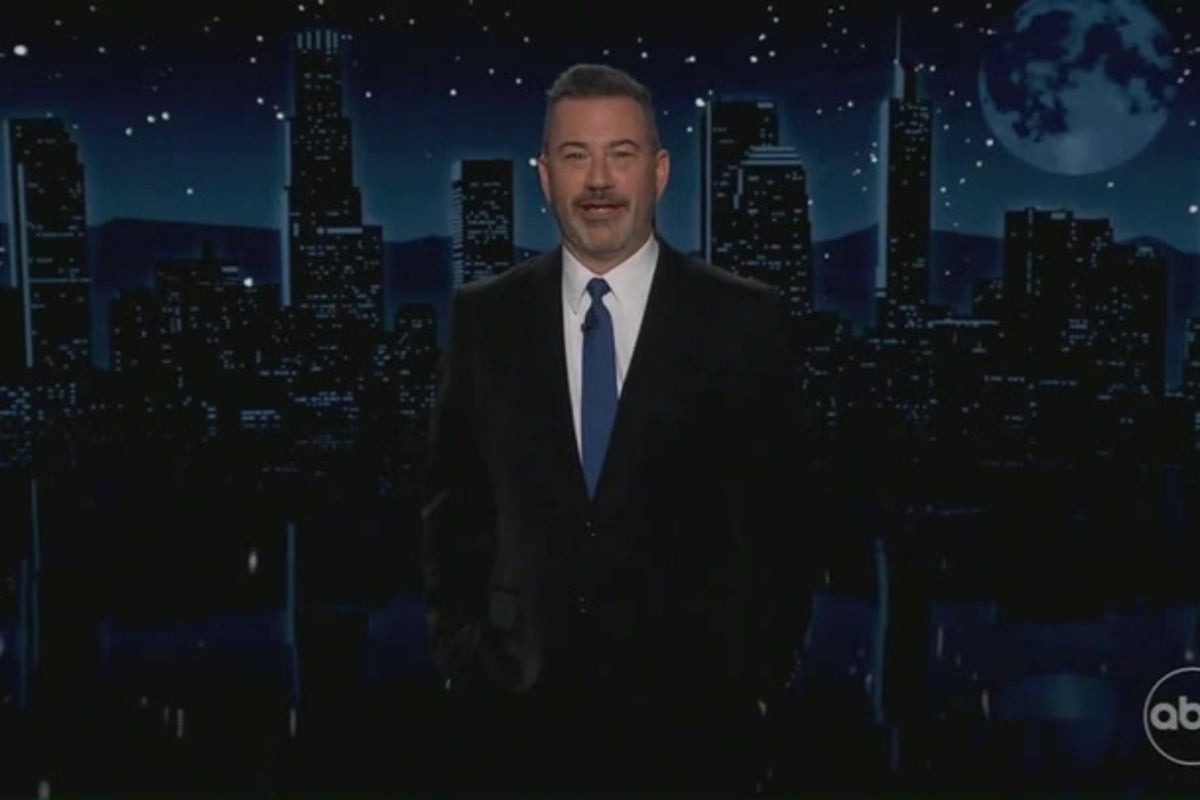
Jimmy Kimmel sat in his studio thousands of miles away, watching the footage with the rest of us. He did what he does best: he pointed at the screen and asked the question we were all thinking.
"Is this... normal?"
The Anatomy of an Awkward Silence
Humor is often our only defense against the surreal. When Kimmel played the clips of the President’s interaction with the youth, he wasn't just looking for a punchline. He was highlighting a profound disconnect in the American psyche.
In the footage, Trump meanders through topics that no child could possibly grasp or care about. He discusses the "vicious" nature of the media. He mentions the "fake news" and the rigors of his schedule. The children stare back. Their eyes are wide, unblinking, and vacant. It is the look of a person trapped in an elevator with a stranger who has decided to explain the intricate details of their recent divorce.
Consider a hypothetical child in that room. Let's call her Maya. Maya woke up excited. She put on her best dress. Her parents told her she was going to meet the most important man in the world. She expected a hero, or perhaps a grandfather figure. Instead, she found a man who seemed to be using her as a human prop in a televised grievance session.
Maya doesn't care about the New York Times' editorial board. She cares about whether the President is nice. She cares if he likes dogs. The tragedy of the scene isn't just the politics; it’s the death of the "Presidency" as a symbol of aspirational dignity.
The Late Night Mirror
Late-night talk shows have transitioned from being simple variety hours to becoming the unofficial ombudsmen of our national sanity. When the world feels like it is tilting off its axis, we look to figures like Kimmel to tell us that we aren't crazy for being confused.
Kimmel’s "skewering" wasn't particularly complex. He didn't need to be. He simply held up a mirror to the footage. By adding the commentary "Very normal," he utilized sarcasm to bridge the gap between what we were seeing (a chaotic, self-absorbed rant) and what we were told we were seeing (a standard diplomatic greeting).
The power of that sarcasm lies in its relatability. Every one of us has been in a social situation where someone is talking at us rather than with us. We know that feeling of wanting to slowly back out of the room while nodding politely. Kimmel tapped into that universal social anxiety. He reminded the audience that the President is, at the end of the day, a person. And when that person fails to meet the basic social expectations of interacting with a seven-year-old, the absurdity becomes a political statement in itself.
The Invisible Stakes of the Interaction
Why does it matter if a President is "bizarre" to children? It matters because the Presidency is the ultimate performance of national character.
For decades, the American public has relied on a specific set of tropes: the President playing with a dog, the President pardoning a turkey, the President crouching down to let a young boy touch his hair to see if it feels like his own. These aren't just photo ops. They are signals. They tell the citizens—and the world—that the person holding the nuclear codes is grounded in the shared human experience.
When those signals are replaced by "vicious" rhetoric directed at toddlers, the signal breaks. The frequency goes static.
We are left wondering what happens when the person in the high office loses the ability to distinguish between a political rally and a classroom visit. The stakes are the erosion of the office's "soft power." If the President cannot command the respect and attention of a group of grade-schoolers without resorting to weird, defensive posturing, how does he look to a foreign head of state?
The Comedy of the Uncomfortable
Kimmel’s monologue moved through the footage like a surgeon. He focused on the physical cues. Trump’s fidgeting. The way he looked at the cameras more than the kids. The way the kids looked at each other, seeking an exit strategy.
It wasn't just a critique of Trump; it was a critique of the era. We have become a culture where "winning" the news cycle is more important than the actual content of the interaction. The fact that the White House released this footage as a positive highlight is perhaps the most telling fact of all. They believed this was a good look. They believed the "Very normal" behavior was, in fact, normal.
This is where the comedy turns into something sharper. Comedy requires a baseline of reality to subvert. If the baseline of reality has moved so far toward the absurd that the "normal" is now "bizarre," the comedian’s job becomes exponentially harder. They are no longer satirizing the news; they are simply narrating it.
The Final Echo
The children eventually left the Oval Office. They filed out, likely relieved to be back in the hallway where the air was thinner and the adults weren't complaining about the "fake news."
They left behind a man sitting at a very large desk in a very quiet room.
The Resolute Desk remained. It had endured the weight of the Civil War’s aftermath, the Great Depression, and the Cold War. It would endure this, too. But for a few moments, the grandeur of the room had been stripped away, replaced by the awkward, staccato rhythm of a man who seemed to have forgotten how to speak to the future.
The image that lingers isn't the President himself. It is the faces of those children. It is the look of pure, unadulterated confusion. It is the silent realization that the adults in the room might not actually have everything under control.
Kimmel’s laughter provided the release, but the image remained.
A hollow echo in a room that was built for symphony.