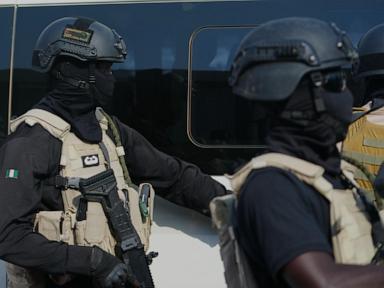
The abduction of university students from a passenger bus in Benue State is not an isolated tragedy but a symptom of a collapsing security architecture. On the stretch of road connecting Otukpo and Enugu, gunmen intercepted a vehicle carrying medical students from the University of Maiduguri and University of Jos. Within minutes, the future of Nigeria’s healthcare system was hauled into the bush. This is the new reality of Nigerian transit. It is a calculated, high-yield business model where human lives are the primary commodity.
For the families of these students, the nightmare is just beginning. For the Nigerian state, it is another indictment of a "reactive" security posture that consistently fails to secure the nation's federal highways. We are no longer dealing with "bandits" in the traditional sense; we are witnessing the rise of a mobile, sophisticated kidnapping industry that exploits the geographical vulnerabilities of the Middle Belt.
The Geography Of A Crisis
Benue State occupies a precarious position in the Nigerian map. It is the bridge between the north and the south, a transit hub for agricultural goods, students, and workers. This makes its roads some of the busiest—and most dangerous—in the country. The specific corridor where the students were snatched is notorious for its thick vegetation and lack of telecommunications coverage.
Kidnappers understand the terrain better than the security forces tasked with patrolling it. They choose "kill zones" where the road surface is so degraded that vehicles must slow to a crawl. In these stretches, a luxury bus or a student shuttle becomes a sitting duck. The gunmen don't just appear; they stake out these locations, often with the help of local informants who track the movement of high-value targets.
This isn't random violence. It is logistical precision.
The Economics Of Human Assets
Why students? In the grim calculus of the kidnapping trade, students are "high-sentiment" targets. Unlike a lone trader or a rural farmer, the abduction of dozens of university students guarantees national headlines and immediate pressure on the government. This pressure, ironically, serves the kidnappers’ interests. It speeds up the negotiation process.
The ransom demands for such groups are astronomical. We have moved past the era where a few thousand Naira would suffice. Today, kidnap syndicates demand tens of millions, often accompanied by "taxes" in the form of motorcycles, foodstuffs, and high-end electronics. When the state refuses to pay—officially, at least—the burden falls on the parents. These are families already struggling with an economy in freefall, forced to sell ancestral lands or crowdfund on social media to buy back their children.
The "Business of Kidnapping" now operates with a clear hierarchy:
- Spotters: Locals who identify vulnerable vehicles and report back on security patrols.
- The Strike Team: Heavily armed men who execute the ambush and lead the victims into the forest.
- Negotiators: Individuals, often based in urban centers, who handle the burner phones and manage the ransom logistics.
- The Laundries: Networks that convert the cash into assets or weaponry to further fuel the cycle.
The Failure Of Intelligence And The Checkpoint Illusion
If you drive through Benue, you will encounter numerous checkpoints. Police, Army, Civil Defense—all are present. Yet, kidnappings occur within miles of these outposts. The problem is that Nigerian security forces are largely static. They wait at roadblocks while the criminals remain mobile.
A veteran intelligence officer once told me that a checkpoint is only as good as the patrol behind it. If the gunmen can move twenty students through the bush for three days without being spotted by a drone or a helicopter, the checkpoint is merely theater. There is a profound lack of inter-agency synergy. The police don't talk to the army, and neither seems to trust the local vigilantes who actually know the forest paths.
Furthermore, the "Tactical Teams" announced by the Inspector General of Police after every high-profile incident are often underfunded and ill-equipped. They lack the night-vision goggles, the geo-location tools, and the rugged vehicles necessary to pursue kidnappers into the heart of the "Sambisa-lite" forests that are cropping up across the Middle Belt.
The Displacement Of Education
Beyond the immediate trauma, these abductions are killing the Nigerian intellect. When parents are afraid to send their children to school across state lines, the educational divide widens. The University of Jos and University of Maiduguri are prestigious institutions, but they are becoming islands of risk.
We are seeing a trend where students choose inferior local colleges simply because the road to a better university is a gauntlet of death. This is the internal brain drain. It is the erosion of the one thing that could actually lift the region out of the poverty that fuels the recruitment of these very gunmen.
The Regional Spillover
What happens in Benue does not stay in Benue. The instability in the Middle Belt is linked to the wider collapse of security in the Northwest and the lingering insurgency in the Northeast. As the military pushes "bandits" out of Zamfara or Katsina, they migrate. They move into the "empty spaces" of Benue, Kogi, and Nasarawa.
These gunmen are now better armed than many local police divisions. They carry AK-47s, General Purpose Machine Guns (GPMGs), and even Rocket Propelled Grenades (RPGs). They operate from forest bases that are essentially mini-states, where they exert more authority than the local government.
Redefining The Security Architecture
The standard response of "beefing up security" is a tired cliché that produces no results. To stop the snatching of students, the Nigerian government must pivot to a proactive intelligence-led model.
- Technological Surveillance: The federal government must deploy persistent aerial surveillance over known "black spots" on the A1 and A2 highways. It is 2026; the use of low-cost drones to monitor traffic in high-risk zones should be standard.
- Forest Rangers: The creation of a dedicated, highly trained Forest Guard is essential. You cannot secure the road if you do not control the bush. These units must be trained in long-range reconnaissance and be able to stay in the forest for weeks at a time.
- Telecom Mandates: The "dead zones" where kidnappers operate are well-mapped. The government must compel telecommunications providers to install towers in these areas, even if they aren't profitable, as a matter of national security. No signal means no call for help.
- Financial Intelligence: Follow the money. Ransoms are often paid in cash, but that cash eventually enters the banking system or is used to buy high-value goods. The Nigerian Financial Intelligence Unit (NFIU) needs to be as aggressive as the army in tracking the wealth generated by these crimes.
The Complicity Of Silence
We must also talk about the local level. Kidnapping on this scale requires a degree of local complicity. From the mechanics who fix the kidnappers' bikes to the traders who sell them bags of rice in the bush, the "Kidnap Economy" is propping up certain rural micro-economies.
Breaking this cycle requires more than bullets. It requires the state to provide an alternative. When the government is absent, the criminal becomes the employer. Until the Nigerian state can prove it is more powerful and more reliable than the gang leader in the forest, the roads will remain a hunting ground.
A Systemic Rot
The Benue abduction is a mirror reflecting a nation that has lost its grip on the monopoly of violence. Every time a student is taken, the social contract is shredded. We are telling the next generation that their pursuit of knowledge is a gamble with their lives.
The "medical students" taken in this latest raid were supposed to be the ones healing the nation. Instead, they are being used as leverage in a sordid game of greed. If the state cannot protect those who represent its future, it has no claim to be a state at all.
Security is not a privilege; it is the most basic function of governance. The current strategy of offering "thoughts and prayers" while the bush swallows the best and brightest of the country is not just a failure—it is a betrayal. The road to Otukpo is not just a highway; it is a test. And right now, Nigeria is failing it.
The solution starts with acknowledging that this is an organized industry, not a series of unfortunate events. Until the risk for the kidnapper outweighs the reward, the buses will keep stopping, and the seats will keep coming back empty.
The time for "robust" statements has passed; the time for reclaiming the bush is decades overdue. Every hour these students spend in captivity is another hour the Nigerian state remains a spectator in its own territory.