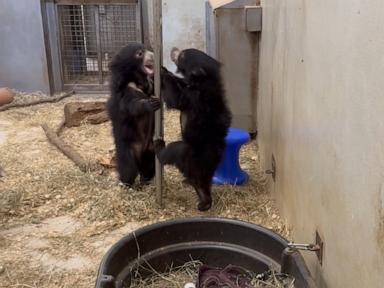
The Smithsonian National Zoo recently unveiled its newest sloth bear cubs to the public, a milestone that generated instant viral videos and long lines at the Washington, D.C. habitat. While crowds gather to watch the cubs navigate their outdoor enclosure, the reality behind their public debut involves a high-stakes conservation battle. These births represent more than an aesthetic victory for the institution. They are a fragile defense against a genetic bottleneck and a grim reminder of the escalating threats facing the vulnerable species in its native South Asian habitats.
Public debuts are the lifeblood of modern zoological public relations. They drive foot traffic, boost membership sales, and dominate local news cycles. Yet, looking past the glass of the Asia Trail exhibit reveals a complex, resource-intensive apparatus that struggles to balance entertainment with genuine ecological preservation.
The Biological Roulette of Captive Breeding
Breeding sloth bears in captivity is an exercise in mitigating biological volatility. The species, native primarily to India, Sri Lanka, and Nepal, does not adapt easily to the artificial rhythms of a zoo. In the wild, a female sloth bear selects a secluded den and remains isolated for weeks to give birth and protect her incredibly altricial offspring. Captivity disrupts this isolation.
Historically, infant mortality rates for sloth bears in zoological settings have been stubbornly high. Mothers are notoriously sensitive to environmental stress. Any perceived threat, from unusual noises to minor changes in keeper routines, can trigger maternal neglect or, in worst-case scenarios, infanticide. Zoo keepers must balance the need for medical monitoring with a strict policy of non-interference.
The Smithsonian team managed this specific birth through a network of den cameras and sound monitors. Staff watched from a distance as the mother managed the early weeks of rearing. This hands-off approach requires immense patience and a willingness to accept losses if things go wrong. Hand-rearing a rejected sloth bear cub is rarely successful. The milk composition of a sloth bear is incredibly complex, high in fats and specific proteins that are difficult to replicate synthetically. Cubs that survive hand-rearing often suffer from metabolic bone diseases or fail to develop the social behaviors necessary to interact with their own kind later in life.
Inside the Species Survival Plan Numbers
The two cubs in Washington do not belong to the Smithsonian National Zoo alone. They are part of a highly regulated living collective managed by the Association of Zoos and Aquariums under the Sloth Bear Species Survival Plan. This program treats the entire captive population across North America as a single unit, moving individuals between institutions to maximize genetic diversity.
The math governing this population is unforgiving.
| Metric | Captive North American Population | Wild Population Estimates |
|---|---|---|
| Total Individuals | Approximately 60 | 6,000 to 10,000 |
| Genetic Diversity Status | Critical Bottleneck | Highly Fragmented |
| Primary Threat | Inbreeding Depression | Habitat Loss and Poaching |
With only a few dozen individuals spread across a handful of accredited facilities, the danger of inbreeding depression is a constant shadow. Every mating pairing is calculated using complex studbook software that measures mean kinship. The goal is to keep the overall inbreeding coefficient as low as possible.
This means that individual animals are routinely crated, sedated, and flown across the country away from familiar keepers and environments solely because their DNA matches well with a bear in another state. The stress of these relocations is significant. Critics of the system argue that the psychological toll on these highly intelligent, long-lived mammals outweighs the incremental gains in genetic diversity. Zoo biologists counter that without these forced migrations, the captive population would collapse into a cycle of genetic defects and infertility within a few generations.
The Grim Reality of Habitat Fragmentation
While the public celebrates a successful birth in Washington, the wild counterparts of these bears face an entirely different trajectory. Sloth bears are classified as vulnerable by the International Union for Conservation of Nature. Their habitat is disappearing at an alarming rate.
India’s rapid industrialization and agricultural expansion have carved the subcontinent's forests into isolated islands of green. Sloth bears require large home ranges to find the termite mounds and fruit trees that sustain them. When roads and farms cut through these ranges, conflict with humans becomes inevitable.
Unlike many other bear species that prefer to flee when startled, sloth bears evolved alongside tigers. Their primary defense mechanism is immediate, explosive aggression. When a villager gathering firewood accidentally surprises a sloth bear in a fragmented forest patch, the encounter frequently ends in severe injury or death for the human, and a retaliatory killing for the bear.
[Fragmented Forest] ---> [Human Encroachment] ---> [Accidental Encounters]
                                                             |
                                                             v
[Retaliatory Killings] <--- [Severe Human Injuries] <--- [Explosive Bear Defense]
Captive breeding programs often claim that their ultimate goal is reintroduction into the wild. For sloth bears, this claim is functionally impossible. There is nowhere to put them. Releasing a zoo-born bear, unaccustomed to avoiding humans and lacking wild foraging skills, into a crowded Indian landscape would be a death sentence for the animal or a disaster for local communities. The cubs on display in Washington will spend their entire lives behind barriers. They are ambassadors in theory, but in practice, they are a genetic safety deposit box for a world that may no longer have room for them.
The Marketing Engine and the Conservation Dollar
The financial mechanics of a major zoo debut are substantial. The arrival of charismatic megafauna cubs triggers a predictable surge in gate receipts, gift shop sales, and corporate sponsorships. Plush toys modeled after the new cubs sell out quickly. Plush enclosures require millions of dollars in upkeep, design, and veterinary staffing.
The central ethical dilemma facing modern zoology is whether this revenue actually trickles down to in-situ conservation efforts where the animals actually live. The Smithsonian institution does fund field research, including studies on human-bear conflict mitigation in India. Yet the ratio of spending remains highly skewed toward domestic operations.
Building a state-of-the-art habitat in a Western capital costs tens of millions of dollars. That same capital, deployed directly into community-based conservation programs in Karnataka or Madhya Pradesh, could secure vast corridors of wild habitat and fund teams of local rangers. This creates a friction point between the operational reality of keeping a major civic attraction afloat and the purist mission of global wildlife preservation.
The public demands to see the animals up close to care about them. That is the foundational premise of the modern zoo. But as the gap widens between the protected, climate-controlled environments of North American exhibits and the degraded, dangerous landscapes of the wild, the debut of new cubs feels less like a triumph and more like a beautifully staged museum piece. The crowds will continue to line up, the cameras will capture every clumsy step the cubs take, and the survival plan will continue its complex genetic choreography, all while the wild spaces continue to shrink to the size of a postcard.