The air inside the Lusail Stadium did not circulate. It hung. Eighty thousand people breathed the same nervous, sweat-slick oxygen, suspended in a vacuum of collective anxiety. On the green expanse below, two men who shared a club locker room in Paris stood on opposite sides of a fault line that split the footballing world in two.
Lionel Messi was chasing a ghost. Kylian Mbappé was chasing him.
We talk about sports statistics as if they are cold, solid things. We print them on glossy paper and display them on digital tickers. Six goals. It sounds like a simple tally, a neat little integer easily digested over morning coffee. But numbers on a scoreboard do not capture the brutal friction of reality. They do not tell you about the localized gravity that pulls at a man’s boots when the expectations of forty-five million citizens rest squarely on his left shoulder. They do not record the terrifying, frictionless velocity of a twenty-three-year-old who refuses to acknowledge that history has an established hierarchy.
The stadium hummed with a sound like high-voltage wires in a storm.
To understand what happened in the desert, you have to discard the dry wires of the news feeds. You have to look at the geometry of human desperation. For seventy-nine minutes, the narrative was a funeral march for French ambition. Argentina danced. Messi scored, a cool stroke from the penalty spot that felt like the closing of a ledger. He had five goals in the tournament. Then six. The script was written, dried, and ready for the archive. The old master was ascending his throne, his long, agonizing tango with destiny finally reaching its resolution.
Then, the temperature broke.
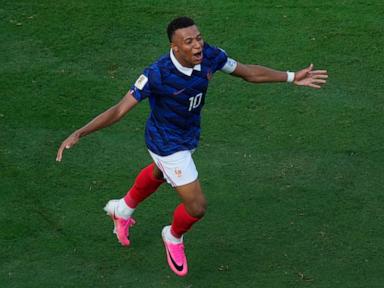
It takes less than ninety seconds to dismantle a lifetime of certainty. That is the terrifying beauty of the game. A penalty converted with a fierce, unforgiving strike. A moment later, a ball lofted into the humid air, a body tilting at an impossible angle, and a volley that struck the back of the net with the force of an eviction notice.
Two goals. Just like that.
Suddenly, the scoreboard read six apiece for the Golden Boot race. The numbers matched, but the energy did not. The statistic was a bridge connecting two entirely different cosmic forces. On one side was the accumulation of a two-decade epic, heavy with the dust of past failures and the frantic prayers of a nation. On the other was a lightning strike, pure, unburdened, and terrifyingly fast.
Consider what happens next to the human mind under that kind of pressure.
When you watch from the comfort of a sofa, a football match looks like a tactical exercise. You see shapes moving across a screen. You analyze passing lanes. But on the grass, the tactical gives way to the visceral. Your lungs burn. The lactic acid in your thighs feels like liquid lead. Every whistle from the referee sounds like a gunshot. The grass becomes slick, not just with water, but with the immense weight of what is at stake.
Mbappé did not look at the scoreboard to see he had tied Messi. He did not need to. A striker knows the count the way a gambler knows the remaining cards in the deck. It lives in the subconscious. Every touch of the ball becomes an argument against time itself.
The rivalry between these two is often painted as a ideological war. The elegant, aging technician versus the bionic speed of the new generation. But that is a lazy simplification. Watch the way Mbappé moves when the pressure reaches its absolute peak. It is not just raw athleticism. There is a cruel, calculating intelligence behind those bursts of acceleration. He hunts spaces that do not exist yet, predicting where the ball will be based on the subtle shift of a defender's hips three steps prior.
Messi, conversely, economizes. He walks. He observes. He waits for the precise moment the universe aligns, then steps into the vacuum to deliver a stroke of absolute clarity. It is a contrast of rhythms—one a frantic, driving drumbeat; the other a sudden, devastating crescendo.
They were tied at six goals each, sharing the summit of the world's greatest stage, yet they looked like passengers on two different trains passing in the night, moving in opposite directions. One was fighting to delay the sunset. The other was forcing the dawn.
The stadium lights reflected off the golden surface of the trophy sitting on its pedestal near the tunnel. It is made of solid metal, but in that moment, it looked like dry ice, smoking with the intensity of everyone's desire. The crowd didn't just cheer; they screamed in a pitch that sounded remarkably like panic. Every time the ball left the midfield, eighty thousand chests tightened simultaneously.
That is what a statistic like "six goals" actually means. It is the shorthand for hours of agonizing tension, for millions of heartbeats skipping in unison, for the sheer, terrifying realization that greatness is not given, but violently taken.
The whistle blew, signaling another period of prolonged agony. The two men walked toward their respective benches, their faces blank with the exhaustion that only comes from emptying your soul in front of the world. They did not look at each other. They didn't need to. The scoreboard said everything that mattered, a glowing reminder that in the realm of myth, there is rarely enough room for two.