In the spring of 1976, the air in suburban California smelled of jasmine and gasoline. Inside a cramped garage, two men—one a relentless visionary, the other a quiet wizard of circuits—were soldering the future together on a workbench. They weren’t looking to change the world. Not yet. They were just trying to build a machine that didn't require a PhD to operate.
Fifty years later, that scent of solder has been replaced by the sterile, minimalist hum of the glass-and-steel "Spaceship" in Cupertino. The garage is now a historical landmark. The two men are legends, one of them a ghost. And the company they birthed, Apple, has just crossed a threshold that defies human comprehension: 2.5 billion active devices.
Two and a half billion.
To understand that number, stop thinking about silicon. Stop thinking about stock prices or the trillion-dollar valuations that financial analysts track with religious fervor. Instead, think about a grandmother in Osaka using FaceTime to see her newborn grandson. Think about a student in Nairobi coding their first app on a refurbished iPhone. Think about the way your thumb instinctively reaches for a glass screen before your eyes are even fully open in the morning.
The story of Apple’s fifty years isn't a story of hardware. It is a story of how a single company managed to insert itself into the very fabric of human intimacy.
The Architecture of a Nervous System
We often talk about computers as tools. A hammer is a tool. A wrench is a tool. But you don't feel a pang of phantom-limb syndrome if you leave your hammer in the other room.
Apple’s genius was never just about the specifications of their chips or the resolution of their displays. It was about the "handshake" between the cold logic of a machine and the messy, emotional reality of a human being. When Steve Wozniak designed the Apple I, he was obsessed with the idea that a computer should be a single, unified entity rather than a kit of disparate parts. He wanted it to be accessible.
Then came the Macintosh in 1984. It didn't just calculate; it smiled at you. By giving the machine a face and a voice, Apple shifted the paradigm from "computing" to "relating." They stopped making calculators and started making companions.
This evolution wasn't a straight line. There were years of wandering in the desert. There were failed products like the Newton and the Lisa—expensive lessons in the reality that being first is rarely as important as being right. But when Steve Jobs returned in the late nineties, he brought a realization with him: a brand is not what you sell; it is the way you make people feel about themselves.
The Invisible Stakes of 2.5 Billion Connections
When a company reaches 2.5 billion active devices, it ceases to be a business and becomes an ecosystem. It is a digital atmosphere that we all breathe.
Consider a hypothetical woman named Elena. She lives in a mid-sized city, works a standard job, and considers herself "not a tech person." Yet, her entire life is mediated through a series of glowing rectangles. Her health is tracked by a watch that monitors her heart rate for irregularities. Her memories are stored in a cloud she cannot see but trusts implicitly. Her bank account, her front door lock, and her connection to her aging parents all live within that 50-year-old lineage.
This is the invisible stake.
The weight of 2.5 billion devices is not just the environmental cost of the rare earth minerals required to build them—though that is a massive, looming challenge Apple is racing to solve with its "Carbon Neutral 2030" goals. The real weight is the responsibility of being the steward of human attention.
We have surrendered our boredom to these devices. Every gap in our day—waiting for a bus, standing in line for coffee, lying in bed—is now filled with the infinite scroll. Apple didn't just build a better phone; they redesigned the way we experience time itself. They made the world smaller, but they also made it much noisier.
The Ghost in the Machine
There is a tension at the heart of this fifty-year milestone. On one hand, there is the celebration of incredible technical achievement. The transition from the PowerPC to Intel, and then to the in-house M-series silicon, represents a level of engineering dominance that is virtually unparalleled in the history of industry. These chips are miracles of physics, packing billions of transistors into spaces smaller than a fingernail.
On the other hand, there is a creeping sense of homogeneity. In the early days, owning an Apple product was a rebellious act. It was the mark of the "misfits, the rebels, the troublemakers." Today, Apple is the establishment. When everyone is a misfit, no one is.
The challenge for the next fifty years isn't making the iPhone thinner or the camera more powerful. It’s figuring out how to maintain that "soul" while serving a quarter of the planet's population. How do you keep the garage-to-global spirit alive when you are the largest company on Earth?
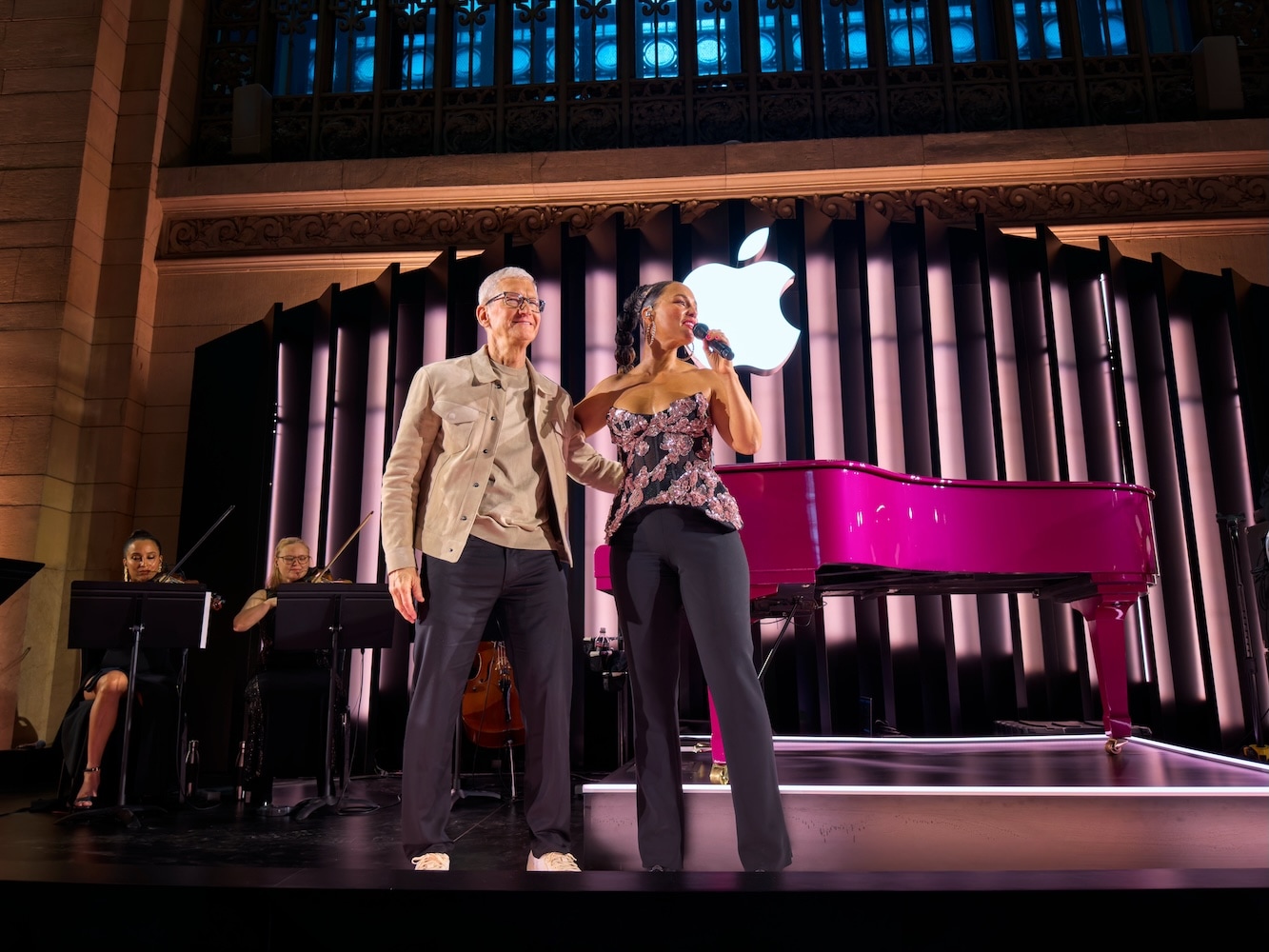
Tim Cook has navigated this by leaning into the concept of "Privacy as a Human Right." It is a clever, necessary pivot. If the first 25 years were about empowering the individual through creativity, the last 25 have been about protecting the individual from the very digital world Apple helped create. It is a protective, paternalistic stance—one that acknowledges that these devices are no longer just tools, but extensions of our private selves.
The Persistence of the Workbench
Walk into any Apple Store today—those cathedrals of glass and light—and you will see the "Genius Bar." It’s a sanitized, corporate version of that 1976 garage workbench. People bring their broken lives there. Not just broken screens, but lost photos of weddings, corrupted files of first novels, and devices that won't turn on, holding the last voicemails of deceased loved ones.
The technicians don't just fix electronics. They perform digital archaeology. They are the high priests of our collective memory.
This is the true legacy of the last five decades. Apple didn't just sell 2.5 billion devices. They sold 2.5 billion portals. They convinced us that the most important things in our lives—our art, our secrets, our connections—belong inside a sleek, aluminum box.
It is easy to be cynical about corporate anniversaries. It is easy to look at the numbers and see only greed or market dominance. But if you strip away the marketing, you find a story of human yearning. We want to be heard. We want to be seen. We want to create something that outlasts us.
The garage in Los Altos is quiet now, but the vibration of those first few solder joints is still rippling outward. It's in the pocket of the person sitting next to you. It's in your own hand right now.
We are all living in the shadow of that garage. We have become a species that carries its entire world in its pocket, terrified of the moment the battery hits zero, waiting for the next glow to tell us who we are.
Fifty years is a long time in technology, but in the history of human tools, it is a heartbeat. We are still in the early, messy stages of learning how to live with these digital ghosts. The next fifty years won't be about how many devices we can build, but about whether we can remember how to put them down.
The screen flickers. The notification pings. The cycle begins again.