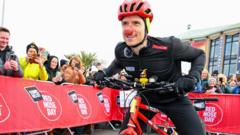
Greg James just kicked off a 630-mile bike ride for Comic Relief and it looks absolutely exhausting. This isn't your typical celebrity "fun run" where someone jogs a 5k and calls it a day. The Radio 1 Breakfast host is attempting to cycle from Wales to Scotland, specifically starting at Pwllheli and aiming for Edinburgh. He's doing it to raise money for Red Nose Day, but the sheer physical toll of this specific route is something most people don't appreciate until they see the elevation data.
Pedaling 630 miles across the spine of Britain involves more than just stamina. It's about fighting the unpredictable British weather and the mental grind of being in the saddle for ten to twelve hours a day. Greg isn't a professional athlete. He's a radio presenter who usually spends his mornings sitting in a climate-controlled studio cracking jokes. Now, he's facing the Irish Sea winds and the relentless climbs of the Lake District.
Why This 630 Mile Challenge Is a Massive Step Up
Most charity events stick to manageable distances to ensure the celebrity actually finishes. This is different. To put 630 miles in perspective, that's roughly the distance from London to Berlin. Doing that on a bicycle in late winter conditions is a recipe for physical breakdown. Greg James has done big stunts before—like the "Gregathlon"—but this "Radio 1’s Give Me A Lift" concept adds a layer of uncertainty.
He’s relying on the public. The challenge involves him hitching rides on the back of bikes or tandem setups provided by listeners, which means he doesn't even have the consistency of his own gear. One hour he might be on a high-end road bike, and the next, he's struggling on a heavy tandem with a stranger who might not have the same cycling rhythm. That lack of control is a psychological nightmare for any endurance athlete.
The Impact on Comic Relief Funding
Comic Relief needs these high-profile pushes more than ever. In an era where "charity fatigue" is a real thing, watching a well-loved public figure suffer a bit for a good cause actually works. It drives engagement because it's raw. You see the sweat, the rain-soaked Lycra, and the moments where he looks like he wants to quit.
The money raised goes toward tackling poverty, providing mental health support, and helping families in crisis across the UK and internationally. When Greg shares stories from the people these funds help during his broadcast segments, it bridges the gap between a guy on a bike and the actual human impact of the donations.
The Logistics of Cycling from Wales to Scotland
The route from Pwllheli to Edinburgh is a tactical minefield. You start in North Wales, which is famously hilly. Then you’ve got the slog through the North West of England. If the wind is coming from the North—which it often does this time of year—Greg will be fighting a headwind for the entire 630 miles.
- Elevation Gain: He isn't just going 630 miles forward; he’s going thousands of feet up.
- Temperature Regulation: Cycling in March means freezing mornings and damp afternoons. Muscle cramps are almost guaranteed.
- Fueling: Burn rates for a challenge like this can exceed 6,000 calories a day. Eating that much while moving is its own struggle.
I’ve seen plenty of these challenges go sideways because of simple mechanical failures or a sudden bout of flu. Greg has a support team, sure, but they can't pedal for him. They can't stop his knees from aching or his lower back from seizing up after day three. That's usually when the "wall" hits.
What Radio 1 Listeners Bring to the Table
The "Give Me A Lift" aspect is the secret sauce here. By involving the audience directly, the BBC has turned a solo journey into a community event. It’s brilliant marketing. Every person who shows up with a bike to help Greg cover a few miles feels a sense of ownership over the challenge. They aren't just donors; they’re teammates.
It also creates chaotic, unscripted radio. You get local characters, weird bike configurations, and genuine moments of connection that you just can't manufacture in a studio. It’s messy and loud and perfectly fits the brand Greg has built over the years.
The Mental Game of Endurance Challenges
Everyone talks about the legs, but the head is what fails first. When you’re 400 miles in and you realize you still have 230 miles to go, the scale of the task becomes soul-crushing. Greg has been vocal about his own struggles with the pressure of these events in the past.
There's a specific type of fatigue that sets in where your brain just starts screaming at you to stop. For Greg, he has the added pressure of performing for a national audience. He has to stay "on" for the mic while feeling physically "off." That's a brutal combination. Most of us would be silent and grumpy after forty miles. He has to be charming and energetic.
How to Support the Cause Properly
If you're following the tracker and want to help, the most obvious way is the donation line. But if you’re on the route, showing up to cheer makes a massive difference. Endurance athletes often say that a crowd on a tough climb acts like an extra set of lungs.
Don't just watch the highlights on social media. Listen to the long-form updates. That's where you hear the reality of the struggle. It’s easy to look at a polished photo of a celebrity on a bike and think it's easy. It isn't. This is 630 miles of grit.
To get involved, head to the official Comic Relief website or follow the live updates on the Radio 1 social channels. You can track Greg's progress in real-time and see exactly where he is on the road to Edinburgh. If you're a cyclist in the areas he's passing through, keep an eye on the "Give Me A Lift" call-outs. You might end up being the person who helps him clear the next fifty miles. Keep those donations moving as fast as his wheels. Every pound makes those hills a little flatter for him.