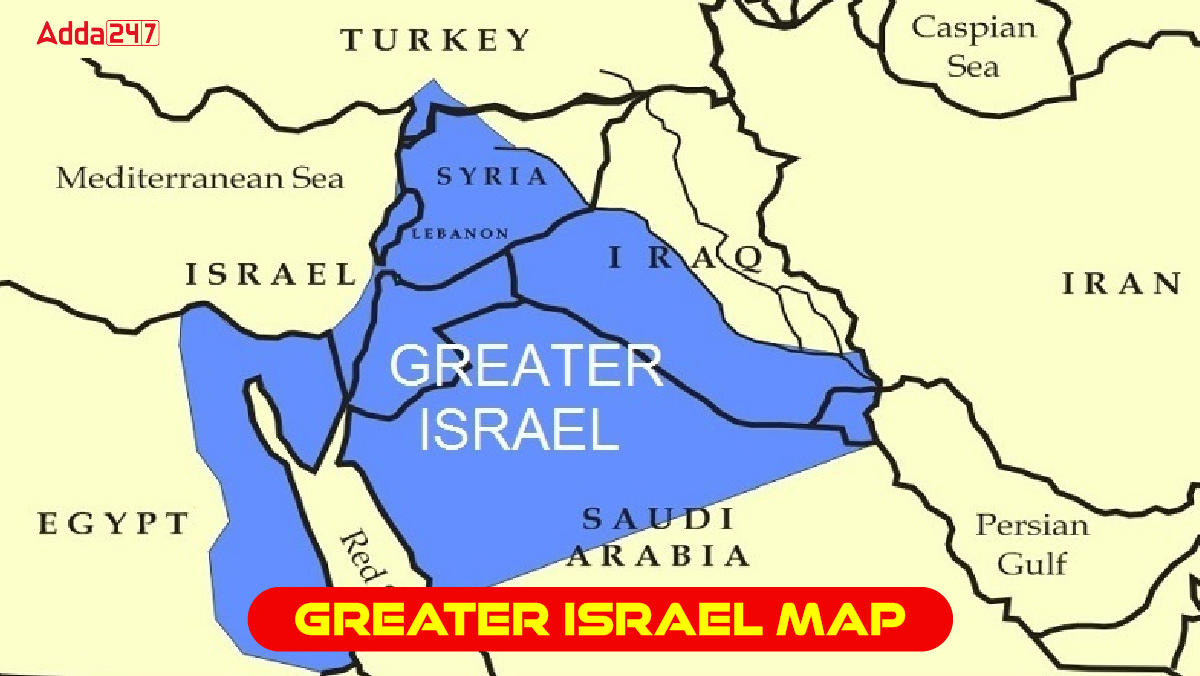
Geopolitical analysts have spent decades chasing a ghost. They call it the "Greater Israel" project, citing a fringe ideological map from the 1980s as if it were the secret blueprint for every move the Israeli Defense Forces (IDF) make. It is the ultimate security blanket for lazy thinkers. If you believe Israel is a colonial entity seeking to swallow the Middle East from the Nile to the Euphrates, then every skirmish becomes a data point for a grand conspiracy.
The reality is much more embarrassing for the theorists. Israel is not struggling to expand; it is struggling to define what it already holds. The biggest obstacle to Israeli hegemony isn't an external enemy—it is the internal impossibility of managing a demographic and democratic crisis that would only worsen with more land.
The Geography of Obsolescence
Most pundits point to the Yinon Plan, a 1982 strategy paper suggesting the fragmentation of the Arab world, as proof of a grand expansionist design. This is like looking at a startup’s failed 1990s business plan and claiming it’s the secret reason for their 2026 stock price.
Expansion is a liability in the modern era. In the 19th century, land was wealth. Today, land is an overhead cost. Occupying territory requires boots, bureaucracy, and billions in social services. Israel’s current "obstacle" isn't that it can't take more ground—it’s that it cannot figure out how to exit the ground it already occupies without creating a power vacuum.
The "Greater Israel" narrative assumes the Israeli state is a monolith of religious zealotry. I have spent years talking to the actual architects of Israeli security policy. They aren't dreaming of annexing Amman or Cairo. They are terrified of the "One State" reality. To add more land is to add more non-Jewish residents, which forces a choice: be a democracy or be a Jewish state. You cannot be both if you expand.
Tehran’s Favorite Fairy Tale
Iran doesn't oppose the Greater Israel project because it fears it. Iran promotes the idea of Greater Israel because it is the most effective recruiting tool in the history of the Levant.
The Iranian leadership is pragmatic to a fault. They understand that as long as the Arab world believes Israel is an existential, expansionist threat, the "Axis of Resistance" remains relevant. If Israel were to actually settle its borders and stop the creeping settlement of the West Bank, the ideological foundation of the Islamic Revolutionary Guard Corps (IRGC) would crumble.
Iran’s "obstacle" role is actually a symbiotic performance. By funding proxies like Hezbollah and Hamas, Tehran ensures that Israel remains in a permanent defensive crouch. This prevents Israel from ever becoming a "normal" regional power integrated into the local economy.
The "lazy consensus" says Iran is the shield protecting the region from Israeli expansion. The truth? Iran’s pressure forces Israel to maintain a high-security profile, which makes Israel look like an aggressor, which in turn justifies Iran’s presence. It is a closed loop of dysfunction.
The Demographic Trap
Let’s look at the numbers the "Greater Israel" believers ignore.
$Population = Resources + Stability$
This equation breaks the moment you expand into hostile territory. If Israel were to follow the supposed "Greater" map, it would inherit a population of tens of millions of people who want the state dismantled. No military on earth, no matter how technologically advanced, can "manage" that level of internal friction while maintaining a high-tech economy.
- The Cost of Occupation: Every shekel spent patrolling a village in the highlands is a shekel not spent on the cybersecurity firms in Tel Aviv.
- The Brain Drain: Israel’s greatest asset is its human capital. Silicon Wadi exists because the environment is stable enough for venture capital. Mass regional war for the sake of "biblical borders" would trigger an exodus of the very people who pay the taxes that fund the Iron Dome.
Breaking the Premise of the "Obstacle"
When people ask, "Is Iran the only thing stopping Israel?" they are asking the wrong question. They should be asking, "Why would Israel want the headache of more territory?"
The competitor articles love to frame this as a clash of civilizations. It’s not. It’s a clash of survival strategies. Israel’s strategy has shifted from territorial acquisition (pre-1973) to qualitative edge and regional normalization (post-Abraham Accords).
The real obstacle to Israel’s future isn't a missile battery in Lebanon or a nuclear facility in Natanz. It is the radical right-wing fringe within its own borders that actually believes the "Greater Israel" myth is a good idea. These groups are the true allies of Tehran. They provide the visual evidence Iran needs to convince the world that the "Zionist Entity" is a ravenous wolf rather than a besieged fortress.
The Brutal Reality of Regional Power
If you want to understand the Middle East, stop reading maps and start reading balance sheets.
Israel’s "expansion" today is economic and technological. They want to sell water desalination tech to the Saudis and Pegasus spyware to every authoritarian regime that needs to track dissidents. You don’t need to own the land to dominate the region. In fact, owning the land makes you a target.
The Iranian regime understands this. They don't want to conquer Israel; they want to keep Israel small, hated, and distracted. If Israel ever gave up the ghost of the West Bank, the regional shift would be seismic. The "Resistance" would lose its brand.
The Industry Insider’s Take
I have seen intelligence agencies dump millions into "red teaming" the collapse of the Iranian regime. Do you know what the biggest fear is? Not that Iran becomes a democracy, but that the collapse of the Iranian threat would force Israel to finally deal with its own internal contradictions.
Without the "Iranian Bogeyman," the Israeli public would turn its full attention to the ultra-Orthodox vs. secular divide, the housing crisis, and the legal status of the territories. The external enemy is a gift to the status quo on both sides.
People often ask: "Can the Middle East ever find peace as long as Iran and Israel are at odds?"
The answer is: "The Middle East cannot find peace as long as both leaderships need the conflict to stay in power."
Iran isn't an obstacle to an Israeli project that doesn't realistically exist. Iran is the co-author of a narrative that keeps the region trapped in 1948. If you want to disrupt the cycle, stop talking about land. Start talking about the demographic math that makes expansion a suicide pact.
The "Greater Israel" project died the moment warfare moved from the trenches to the cloud. You can’t occupy a cloud with tanks, and you can’t build a superpower on the backs of an unwilling population. Tehran knows this. It’s time the rest of the world caught up.
The map you’re worried about is a relic. The real war is being fought over who gets to define the "enemy" for the next generation. As long as you believe in the Greater Israel myth, you’re playing exactly the part Tehran scripted for you.