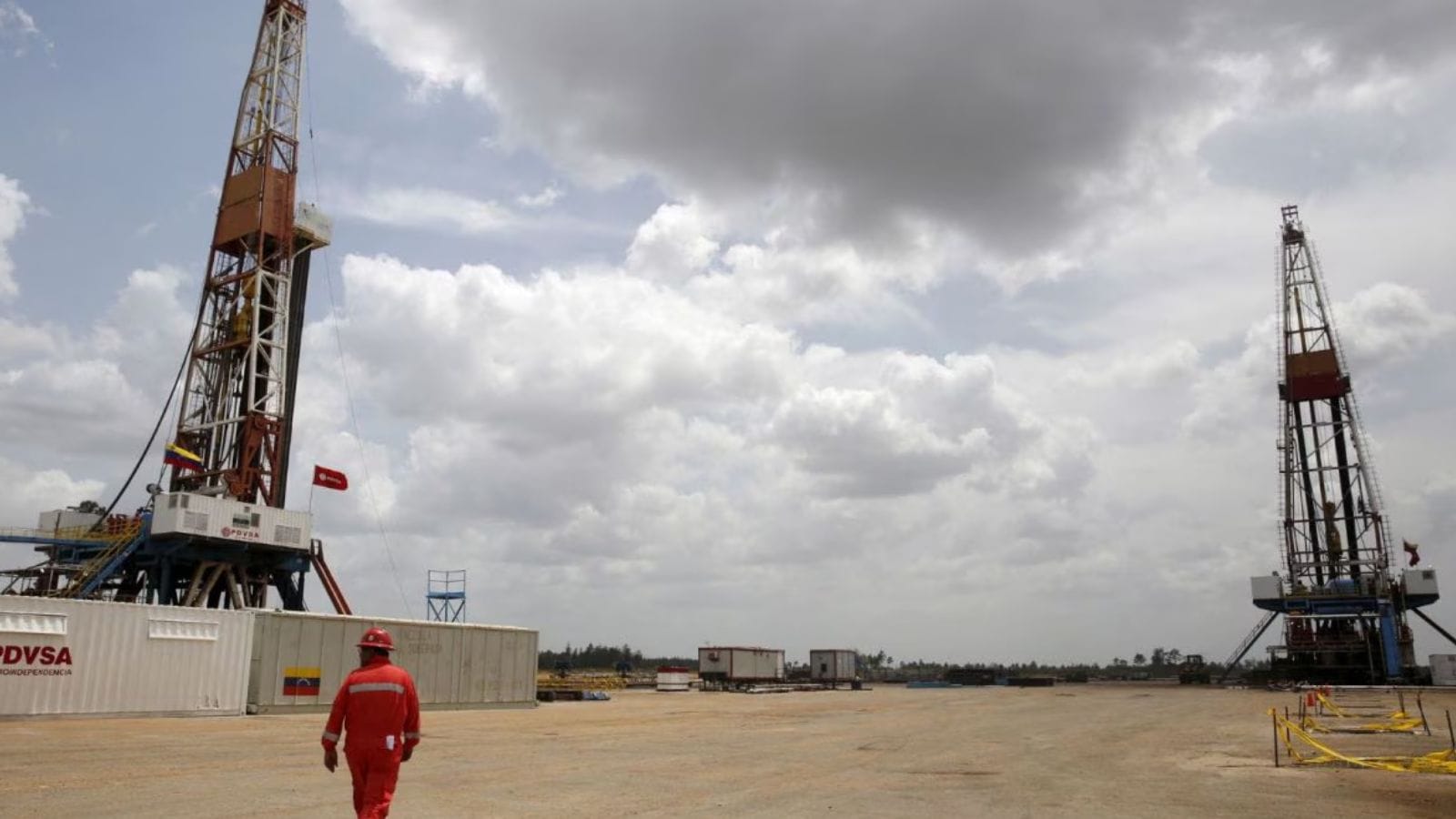
The Western financial press is currently hyperventilating over reports that Venezuela has suspended 19 oil and gas production-sharing contracts. They call it a "setback" for energy stability. They call it "increased risk" for foreign investors. They are fundamentally wrong.
Most analysts are stuck in a 1990s mindset, viewing state-run oil companies as inefficient relics that should bow to the altar of Private Equity and International Oil Companies (IOCs). They see the suspension of these contracts—many signed under the Maduro administration during periods of extreme desperation—as a sign of chaos. In reality, this is a calculated cleanup of "junk contracts" that were bleeding the country dry while delivering zero barrels of actual growth.
The Myth of the Strategic Partner
Let’s be blunt: most of the entities that signed these production-sharing agreements (PSAs) weren't Chevron or Eni. They were shell companies, middle-men, and "service providers" with more lawyers than engineers. These contracts were born out of a survivalist necessity to bypass sanctions, not out of a desire for long-term industrial efficiency.
When a state-owned enterprise (SOE) like PDVSA hands over operations to a third party that lacks capital, the result isn't "production sharing." It’s parasitic. These firms often relied on PDVSA’s own infrastructure and equipment—essentially charging the state to use its own assets.
Suspending these deals isn't an act of aggression against capital; it’s an act of hygiene. If a contract isn't putting oil in a tanker, it is a liability, not an asset. The "risk" isn't in canceling these deals; the risk was in keeping them on the books, cluttering the balance sheet with non-performing partnerships that served as nothing more than legal placeholders for rent-seekers.
Why the Market Misunderstands Resource Nationalism
The knee-jerk reaction to any contract suspension in Caracas is to scream "expropriation." But look at the math. In a high-price or supply-constrained environment, the leverage shifts back to the owner of the molecule.
Venezuela sits on the world’s largest proven crude reserves—approximately 300 billion barrels. For years, the narrative has been that this oil is "stranded" because of political instability. However, the global energy pivot is taking longer than the activists promised. The world still needs heavy sour crude to feed complex refineries in the Gulf Coast and Asia.
By clearing the deck of 19 underperforming contracts, PDVSA is preparing for a "Quality Over Quantity" phase. It is better to have five high-functioning JVs with majors who actually bring technology and cash to the table than 25 "production-sharing" schemes that exist only on paper.
The Cost of Amateurism
I have seen national oil companies across the Global South sign away their sovereignty to "boutique" energy firms that promise the world and deliver a bill. These firms use the contract to raise debt, then use that debt to pay themselves management fees, while the actual oil wells remain clogged with paraffin and neglect.
When you suspend these contracts, you stop the bleeding. You reclaim the right to re-tender those fields to someone who can actually operate a drill bit.
The Fallacy of the Sanctions Excuse
The common wisdom suggests that Venezuela can’t produce oil because of U.S. sanctions. While the sanctions are a massive hurdle, they have also become a convenient rug under which a decade of mismanagement was swept.
If you are a serious player in the energy space, you know that "OFAC-compliant" is the new gold standard. Large-scale operators like Chevron have shown that if the infrastructure is there and the legal framework is clear, a way through the regulatory thicket can be found. The suspended 19 contracts were largely with entities that didn't have the legal or financial muscle to navigate Washington or the technical muscle to navigate the Orinoco Belt.
By flushing these contracts, the Venezuelan government is signaling a desire to return to a more traditional, high-stakes table. They are moving away from the "gray market" operators and trying to professionalize the patch. It’s a brutal, necessary consolidation.
Breaking Down the Production-Sharing Trap
To understand why this move is superior to the "lazy consensus" of keeping the contracts, we have to look at how these deals actually function.
In a standard PSA, the "Contractor" recovers its costs from a portion of the produced oil ("Cost Oil") and then splits the remaining "Profit Oil" with the state.
The Problem: In a dysfunctional environment, the "Cost Oil" becomes an accounting black hole.
- Inflated Costs: Contractors charge $100 for a $10 valve because of "sanctions risk."
- Zero Investment: They don't invest in secondary recovery; they just "milk" the easy oil.
- Debt Traps: The state ends up owing the contractor for "unrecovered costs" even when production is falling.
Imagine a scenario where you hire a contractor to fix your house. They move in, drink your beer, use your tools, and then send you a bill for "consulting" while your roof still leaks. You don't "renegotiate" that contract. You throw them out and change the locks.
The Efficiency of Centralization (For Now)
Is PDVSA a model of efficiency? No. But is a fractured, disorganized cluster of 19 mediocre private operators better? Absolutely not.
In the short term, centralizing control over these assets allows the state to allocate its limited technical resources (the engineers who haven't left for Guyana or Houston) to the highest-yielding wells. It stops the "cannibalization" of parts where one operator steals a pump from a neighbor's field because they can't import a new one.
The industry loves to talk about "decentralization" as a universal good. In a frontier oil environment—which Venezuela has effectively become again—decentralization is just a fancy word for "looting."
Redefining "Investment Climate"
The critics say this move ruins the investment climate. This is the most tired trope in the book.
Institutional capital has a very short memory and a very thick skin when it comes to 300 billion barrels of oil. If Venezuela stabilizes its legal framework and offers clear, enforceable terms to the "Big Oil" players tomorrow, the capital will return in a heartbeat. They aren't going to cry over 19 suspended "production-sharing" deals signed by companies they've never heard of.
In fact, the "Big Oil" players prefer this. They want the riff-raff cleared out. They want to deal with a state that has a firm grip on its assets, not a state that has farmed out its crown jewels to a dozen different shell companies with dubious backing.
The Brutal Reality of the Orinoco
The Orinoco Belt isn't for amateurs. It’s extra-heavy crude. It requires diluent. It requires massive steam injection or complex horizontal drilling. It requires a massive power grid.
The 19 suspended contracts were likely never going to solve the technical challenges of the Orinoco. They were "skimming" operations—taking the easy wins and leaving the hard work for later. By ending these agreements, the state is acknowledging that the "easy oil" era is over.
What the "Experts" Miss
The "experts" are looking at a spreadsheet of "total contracts signed" and seeing a decline. You should be looking at "barrels per dollar of capital expenditure."
If you have 100 contracts and produce 800,000 barrels, but you could produce 900,000 barrels by canceling 50 of them and focusing on the top 10, the "contraction" is actually an expansion of efficiency.
The Next Step for PDVSA
The move to suspend these contracts is only half the battle. The next move isn't to sign 19 more. It is to create a singular, transparent gateway for genuine technical partners.
Stop asking if Venezuela is "opening up." Ask if they are finally cleaning up.
For the serious investor, the suspension of these contracts is the first bit of good news out of Caracas in years. It’s a sign that the adults—or at least the pragmatists—are starting to realize that you can't build an oil industry on a foundation of "survival deals" and handshakes with middlemen.
The "risk" hasn't increased. The reality has just become more honest. If you can’t produce, you don’t get to play. That’s not resource nationalism; that’s just business.
Stop mourning the loss of junk contracts and start watching who gets the keys to those fields next. That is where the real money will be made.