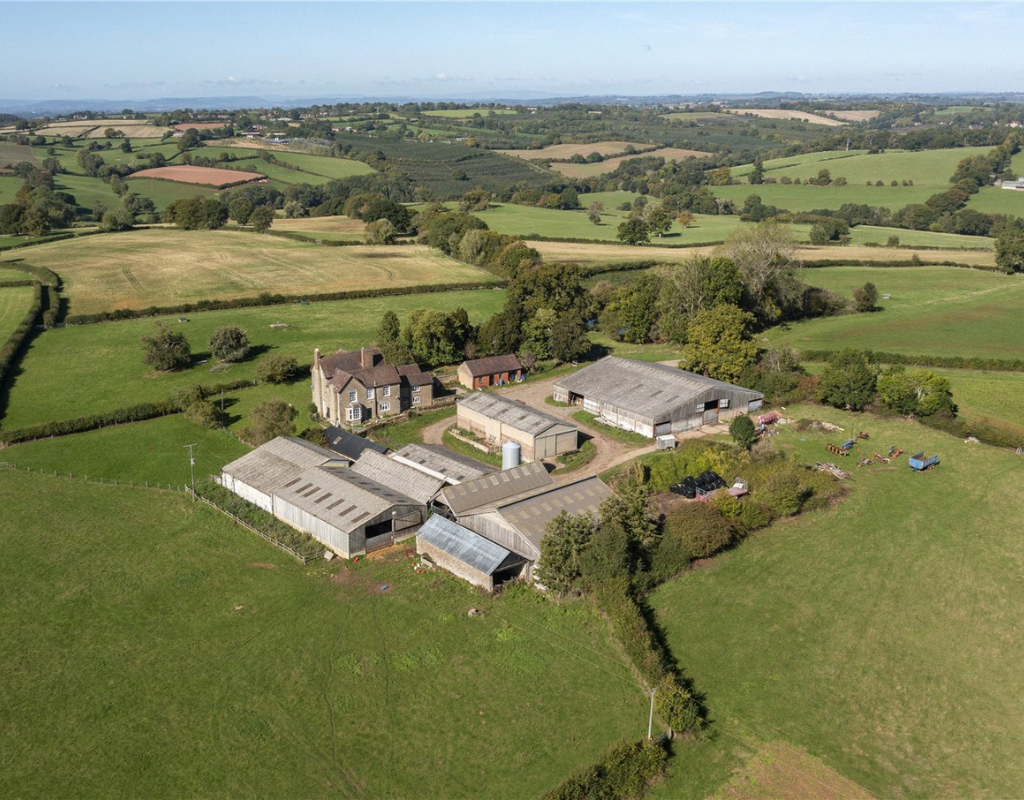
The morning mist over the Duchy of Cornwall does not care about titles. It clings to the damp, rich earth of the English countryside with the exact same stubbornness whether that earth belongs to a tenant farmer or the heir to the British throne. For generations, the relationship between the monarchy and the land has been treated as something immutable, a permanent fixture of the national identity.
Then came the decision that quieted the morning birds.
Prince William made the choice to put a massive, 600-acre estate up for sale. To the casual observer scanning a business headline, it looks like a standard real estate transaction, a routine optimization of a sprawling portfolio. But land in Britain is never just real estate. It is history. It is leverage. It is a physical manifestation of power and stewardship that dates back to the Norman Conquest.
When 600 acres of royal dirt suddenly hit the open market, it signals a massive shift in how the modern monarchy views its role as the nation's ultimate landlord.
The Weight of Six Hundred Acres
To understand the scale of this move, let us step away from the spreadsheets and stand at the edge of a hypothetical boundary line.
Picture a local farmer. We can call him Arthur. Arthur’s hands are calloused, stained with the dark loam of the West Country. His grandfather walked these same hedgerows. For men like Arthur, the Duchy of Cornwall isn't a abstract financial entity; it is the entity that dictates the rhythm of his life. When the Crown decides to sell, the ground beneath Arthur’s boots feels just a little less solid.
Six hundred acres is roughly the size of three hundred football pitches. It is an expanse of fields, drainage ditches, old stone walls, and ancient trees that have witnessed centuries of shifting political tides. In the past, the royal family held onto land with a fierce, almost spiritual tenacity. Giving up land was a sign of weakness, a symptom of a treasury in distress.
This sale is different. The Duchy is not broke. Far from it. This is a deliberate, calculated step toward a new kind of royal efficiency, driven by a prince who looks at tradition through the cold lens of modern utility.
Consider the sheer mechanics of managing an estate of this size. The old way demanded an army of land agents, bailiffs, and traditional caretakers. It relied on a feudal hierarchy that felt increasingly out of step with a twentieth-century economy, let alone the realities of the current day. By cutting this massive parcel loose, the Prince is signaling that the crown is no longer interested in holding onto property simply for the sake of prestige.
The Invisible Modernization
The real story hides behind the numbers. Every year, the Duchy of Cornwall generates millions of pounds in revenue, funding the public and private lives of the Prince of Wales and his family. But the financial machinery required to keep that engine running is changing.
In recent years, the royal estate has faced growing scrutiny over its tax status, its environmental impact, and its relationship with local communities. The public wants transparency. They want to know that the royal landlord is practicing sustainable agriculture, protecting biodiversity, and treating tenants fairly.
Managing 600 acres of traditional farmland requires an immense amount of capital investment to meet modern environmental standards. Think of the cost of upgrading ancient drainage systems, retrofitting historic barns to meet green energy requirements, and transitioning toward carbon-neutral farming practices.
Sometimes, the math simply does not work out.
By selling a significant chunk of the estate, the Prince frees up liquidity. He sheds the immediate, heavy burden of localized agricultural management and positions the Duchy to invest in more versatile, modern assets. It is a corporate restructuring disguised as a property listing. The crown is diversifying its portfolio, moving away from total reliance on the volatile agricultural sector and toward investments that require less hands-on, archaic oversight.
A New Kind of King
This transaction offers a rare glimpse into the philosophy of the man who will one day wear the crown. Prince William has consistently dropped hints that his tenure as the head of the family will look radically different from that of his ancestors. He is a prince who wears a suit more comfortably than a ceremonial uniform, a man who views the monarchy as a functional institution rather than a mystical entity.
The sale of this English farm is a tangible piece of that philosophy.
Traditionalists might view the sale as a loss, a chipping away of the royal estate’s historic integrity. They worry that selling off pieces of the traditional realm dilutes the mystique of the monarchy. If the prince is just another landlord liquidating assets to balance the books, what separates him from any other billionaire property developer?
But the Prince’s allies would argue that this is exactly how the monarchy survives. Institutions that refuse to bend eventually break. By treating the land as an asset to be managed rather than a sacred trust to be hoarded, William is attempting to future-proof the estate. He is shedding the baggage of the past to ensure the financial independence of the future.
The Changing English Countryside
The ripple effects of this sale stretch far beyond the palace walls. The British agricultural sector is facing an existential crisis. Between the fallout of shifting trade agreements, the rising costs of fertilizer and fuel, and the unpredictable weather patterns driven by a changing climate, making a living from the soil has never been harder.
When a massive royal farm goes on the market, it changes the local landscape entirely. Will it be bought by another traditional farmer looking to expand? Or will it be snapped up by an institutional investment firm, a green-energy conglomerate looking to install acres of solar panels, or a developer eyeing the land for luxury rural housing?
This uncertainty hangs heavy over the neighboring communities. The relationship between a royal landlord and a tenant farmer was often paternalistic, governed by long-standing customs and a mutual understanding of continuity. A corporate buyer brings a different set of priorities. They bring a focus on quarterly returns, optimized yields, and strict adherence to the bottom line.
The sale of these 600 acres is a microcosm of what is happening across the entire United Kingdom. The traditional country estate, once the backbone of rural British life, is being carved up, modernized, and financialized.
The mist eventually burns off the fields, revealing the sharp, clear lines of the hedgerows and the quiet roads that cut through the property. The tractors will still run. The seed will still be sown. But the name on the deed will be different, and with that change, another piece of the old, romanticized Britain quietly slips into the history books, replaced by the unsentimental realities of a new era.