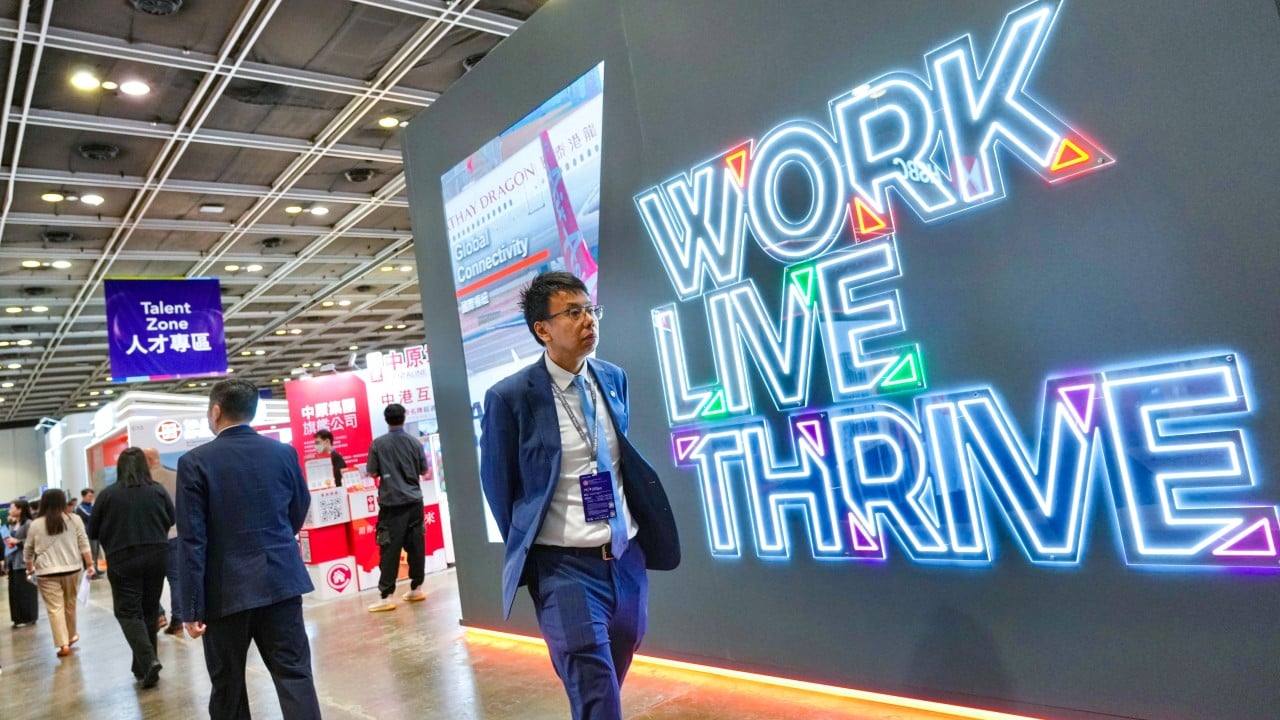
The coffee in a mid-level office in Riyadh tastes exactly like the coffee in a high-rise in Central, Hong Kong. It is bitter, expensive, and necessary. But for a software engineer named Elias—a hypothetical composite of the thousands currently weighing their options—the steam rising from his cup in the Middle East has begun to smell like uncertainty.
For years, the narrative was simple. The Gulf was the new frontier. Massive infrastructure projects, zero income tax, and a bold "Vision 2030" acted as a siren song for the global elite. Money was flowing. Cranes dominated the skyline. However, as the geopolitical thermostat in the Middle East begins to redline, the calculus for global talent is shifting back toward a familiar, neon-lit island on the edge of the South China Sea.
Hong Kong is finding its second wind.
Chris Sun, the city’s labor chief, doesn’t need to shout to be heard. The data speaks with a quiet, persistent authority. While headlines often fixate on the city’s political evolution, the ground reality for a professional moving their family across oceans is dictated by a different set of metrics: safety, stability, and the proximity to the world’s most explosive economic engine.
The Gravity of the East
Imagine the weight of a decision. You are thirty-four. You have a spouse and a toddler. You are an expert in fintech or green energy. When you look at a map, you aren't looking for a vacation; you are looking for a fortress.
The Middle East, for all its ambition, currently carries a high "risk premium." Tensions that simmer today can boil tomorrow. For the talent that powers global markets, unpredictability is the ultimate deterrent. It doesn't matter how high the salary is if the school runs are interrupted by regional instability. This is where Hong Kong enters the frame not as a backup plan, but as a strategic sanctuary.
The city has weathered its own storms. It has been written off by the West more times than a cat has lives. Yet, the Top Talent Pass Scheme (TTPS) has seen an influx of applications that caught even the optimists off guard. We are talking about over 300,000 applications in less than two years. These aren't just numbers on a spreadsheet. These are 300,000 individual decisions to bet on a city that remains the primary gateway to China.
The Invisible Infrastructure of Belonging
Efficiency is Hong Kong’s love language.
When you land at Chek Lap Kok, the train whisks you into the heart of the city in twenty-four minutes. The MTR runs with a precision that borders on the religious. For a high-achieving professional, time is the only currency that cannot be devalued. In the Middle East, life can often feel siloed—luxury compounds separated by vast stretches of desert and multi-lane highways. In Hong Kong, the density is the point.
You walk. You encounter. You network.
Consider the "15-minute life." In Hong Kong, you can finish a board meeting at 5:00 PM and be on a hiking trail overlooking the Pacific by 5:45 PM. This blend of hyper-urbanity and raw nature offers a psychological relief valve that few other global hubs can replicate. It’s a sensory experience: the smell of roasted goose mixing with the salt air of the Star Ferry, the hum of the wet markets beneath the shadow of a Bitcoin-funded skyscraper.
Elias, our hypothetical engineer, isn't just looking for a job. He is looking for a ecosystem. He needs a place where his spouse can find a career, not just a "dependent visa" existence. Hong Kong’s labor market is deep. It is a thicket of opportunity where one job leads to three more.
Bridging the Great Divide
The Middle East and Hong Kong are often framed as rivals, but the reality is more nuanced. They are two different bets on the future of the 21st century. The Gulf is a bet on the creation of something new from the sand up. Hong Kong is a bet on the refinement and resilience of an established titan.
What Chris Sun and the Hong Kong government have realized is that talent is mobile, but it is also fearful. The "Fear of Missing Out" (FOMO) on China’s long-term growth still outweighs the "Fear of Change." When the Middle East experiences tremors, the bedrock of Hong Kong feels that much more solid.
The city is currently hungry. It is facing a labor shortage across the board—from high-end wealth management to the essential services that keep the city breathing. This hunger has led to a pragmatism that is refreshing. The barriers are lowering. The red tape is being cut. The message is clear: if you have the skills, we have the space.
The Human Toll of Hesitation
There is a specific kind of exhaustion that comes from living in a state of geopolitical "wait and see." Professionals in the Middle East are watching the news cycles with a hand on their luggage. In contrast, Hong Kong has already transitioned into its new chapter. The uncertainty that plagued the city between 2019 and 2022 has solidified into a new status quo. For many, a known reality is infinitely more manageable than an unknown threat.
Taxation remains the quiet champion of the Hong Kong narrative. A flat, low salary tax is a powerful incentive, but it is the "hidden" benefits that keep people there. It’s the world-class healthcare. It’s the fact that a child can take the subway across the city alone and be perfectly safe. It’s the sheer, unadulterated energy of a place that never sleeps because it’s too busy making money.
The shift we are seeing isn't a trickle; it’s a realignment. As capital moves, people follow. And as the West looks increasingly inward, the East—with Hong Kong as its grand reception hall—is looking at the rest of the world with an open door.
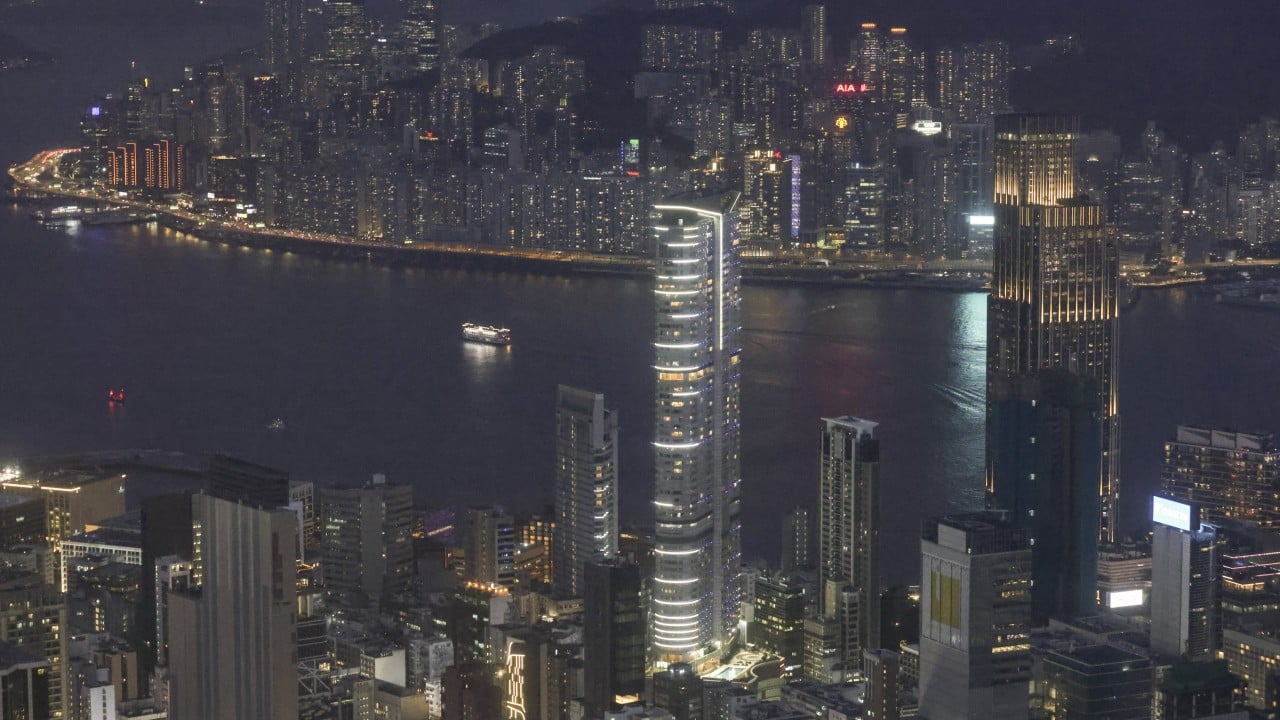
Elias puts down his coffee. He looks at a photo of the Hong Kong skyline on his laptop. He thinks about the humidity, the crowds, and the relentless pace. He also thinks about the stability. He thinks about being at the center of the world's most important trade corridor.
He starts his application.
The lights of the Middle East are bright, but they flicker. The lights of Hong Kong are constant, reflected a thousand times over in the waters of the harbour, beckoning the restless to a place where the future is already under construction.