On a Tuesday afternoon in the heart of a standard market correction, a red digital line dips on a monitor in Manhattan. It looks like a minor cardiac flutter on a medical screen. A fraction of a percentage point drops here. A sudden flurry of sell orders triggers there. To the casual observer, it is standard Wall Street static. But as the algorithm cascades through the tech sector, a phantom ledger recalibrates. In less than six hours, a single human being becomes twelve billion dollars poorer.
Twelve billion dollars. For a different view, consider: this related article.
The number is so vast that the human brain completely fails to process it. We understand the cost of a gallon of milk. We can feel the weight of a monthly mortgage payment. But when wealth reaches the stratosphere, it loses its connection to physical reality. It becomes an abstraction, a high-score screen in a digital casino where the stakes are invisible and the chips are made of light.
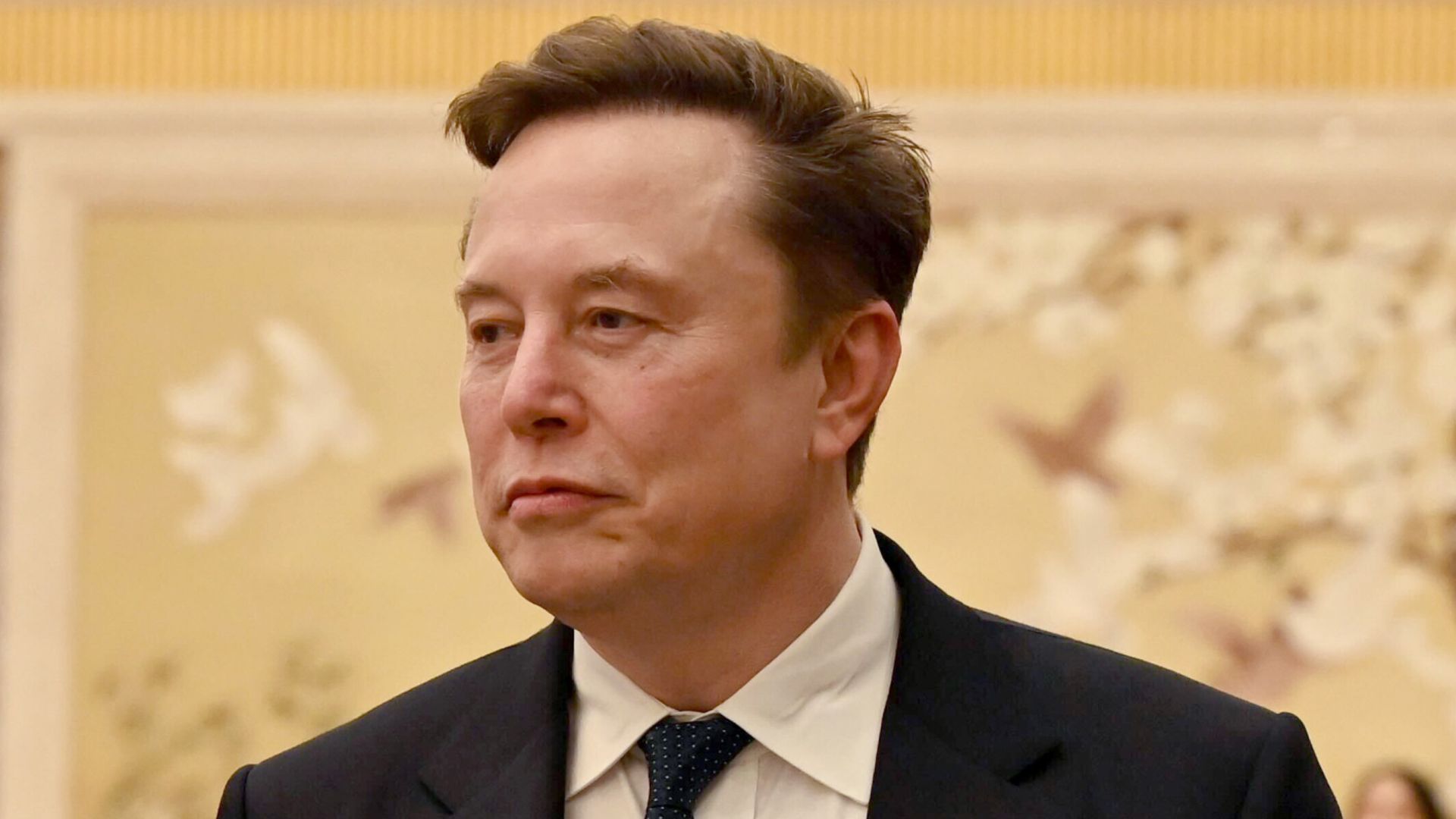
When the headlines flashed across the wires announcing that Elon Musk’s net worth had plummeted alongside a sharp correction in tech stocks and private valuations, the public reaction followed a predictable script. There was the schadenfreude of critics who view the billionaire as a modern Icarus. There was the defensive maneuvering of loyalists arguing it was a temporary blip on the radar. Both sides missed the real story. Similar analysis on the subject has been shared by Business Insider.
The true narrative of modern wealth is not about the money lost. It is about the fragile, terrifying machinery of expectation that holds our entire modern economy aloft.
The Alchemy of the Private Ledger
To understand how a man can lose the equivalent of a small nation’s gross domestic product before dinner, you have to look past the public stock exchanges. Everyone tracks Tesla's daily ticker. It is volatile, loud, and public. The real tectonic shifts, however, happen in the quiet, closed rooms where private equity is valued.
Consider SpaceX. Unlike a public company, its shares do not trade on the open market. You cannot log into a retail brokerage app and buy a piece of a Falcon 9 rocket. Instead, the company's value is determined periodically through funding rounds or secondary market sales, where employees and early investors sell their stakes to massive institutions.
Imagine a hypothetical investor named Sarah. Sarah manages a multi-billion-dollar pension fund. When the broader technology market is booming, Sarah is under immense pressure to find high-growth assets. She looks at SpaceX’s dominant position in satellite launches and the growing footprint of Starlink. She decides her fund will buy private shares at a price that implies the total company is worth $180 billion.
Suddenly, on paper, every share held by founders and early backers is locked into that new, soaring valuation. Wealth is created out of pure belief.
But belief is a highly volatile commodity.
When macroeconomics shift—when inflation worries persist, or the Federal Reserve signals that interest rates will stay higher for longer—the appetite for risk evaporates. Sarah’s peers look at their portfolios and panic. They need liquidity. They start dumping public tech giants like Nvidia, Apple, and Microsoft. The contagion spreads.
When the public tide goes out, the private docks are left stranded. In secondary markets, buyers who were once eager to pay top dollar for a piece of the rocket company suddenly vanish. The bids drop. A share that was worth a certain amount yesterday is suddenly marked down by fifteen percent because nobody is willing to pay the old price anymore.
Musk owns a massive percentage of SpaceX. When that private valuation adjusts downward to match the grim reality of a broader market sell-off, billions of dollars vanish from his net worth statement instantly.
But did anything actually change at the launchpad?
Fire, Steel, and Digital Pixels
This is the great paradox of the modern tech mogul. If you traveled to Boca Chica, Texas, on the day of the market crash, you would have found the air smelling of salt brine and ozone. You would have heard the deafening roar of metal being welded and the low hum of heavy machinery. Engineers were still hunched over blue-lit monitors, calculating orbital trajectories and thermal dynamics.
The rockets did not shrink. The satellites did not fall out of the sky. The physical infrastructure of the company remained exactly as robust as it was twenty-four hours prior.
This reveals the deep disconnect that defines our current era. We have built an economic system where the perceived value of a enterprise has almost nothing to do with its daily physical output, and everything to do with the fluctuating emotional state of Wall Street. It is a psychological tightrope walk.
For the average worker, wealth is tangible. It corresponds to hours spent at a desk, a factory floor, or a steering wheel. It is capped by time and physical capability. For the architects of the digital age, wealth is an elastic band that stretches to infinity based on narrative, then snaps back violently when the narrative faces a moment of doubt.
The danger is not that a billionaire has to cut back on his lifestyle. A loss of twelve billion dollars does not change the number of houses Musk can own or the quality of food he eats. The real problem lies in how these paper fortunes are used to finance the real world.
The Leverage Trap
Modern billionaires rarely hold massive reserves of cash. Cash is inefficient; it loses value to inflation. Instead, their wealth is locked inside the shares of the companies they founded. To buy things in the physical world—whether it is a luxury estate, a social media platform, or a new venture—they do something called securities-backed lending.
They take their massive piles of stock, walk into a mega-bank, and use those shares as collateral for multi-billion-dollar cash loans.
Now, consider what happens when the market slides.
The bank holds the stock as a guarantee. If the value of that stock drops below a specific threshold, the bank's risk management software flashes red. The lenders call the billionaire. They demand more collateral to cover the loan, or they demand that the loan be paid back immediately. This is the dreaded margin call.
To satisfy the bank, the billionaire may be forced to sell off shares of their healthiest companies. When a founder sells a massive block of stock, the public interprets it as a sign of panic. A fresh wave of selling begins. The spiral feeds itself.
The systemic risk is real. The fortunes of thousands of regular employees, whose retirement accounts are tied up in these tech companies, are tethered to the collateral arrangements of a handful of individuals. We are all passengers in a vehicle where the driver is playing a high-stakes game of financial chicken with the ghost of inflation.
It is easy to get lost in the numbers, to view the rise and fall of these astronomical fortunes as a spectator sport. It feels like watching a storm rage on a distant planet through a telescope. It is spectacular, chaotic, and seemingly harmless to the folks on Earth.
But the telescope is an illusion.
We live in the ecosystem these valuations build. When the paper empires shake, the tremors move down the mountain. Venture capital dries up for small startups. Hiring freezes take hold at tech firms. Local economies that rely on the growth of these tech hubs begin to cool. The abstract loss of a billionaire eventually translates into a canceled project or a deferred raise for a software engineer in Austin or a manufacturing technician in California.
The market eventually found its footing that Tuesday evening, as it almost always does. The red lines stabilized. The algorithms stopped shouting. The media moved on to the next cycle, leaving behind the neat summary statistics of a very expensive day.
Wealth, at this scale, is a phantom. It is a collective agreement to believe in a tomorrow that is bigger, faster, and more profitable than today. We trace the fortunes of the men who build these empires because we want to believe that someone has a firm hand on the wheel of progress. We want to believe that the wealth represents something solid.
Yet, as the digital tide ebbed and flowed through the servers, it left behind a quiet reminder of how little holds the whole structure up. The rockets remain on the coast, heavy with liquid oxygen and steel, waiting for the command to break gravity. Meanwhile, the fortunes of the people who built them remain entirely at the mercy of a much more fickle force: the unpredictable, shifting winds of human confidence.