The pre-dawn hours inside a hospital possess a specific, fragile silence. It is the time when the rhythm of life-sustaining machines slows into a steady, comforting hum, and the frantic energy of the daytime wards feels a lifetime away. For the patients tucked into their beds in the northeastern German city of Ludwigslust, this morning was supposed to be no different. They were resting under the watchful eyes of a skeleton crew, waiting for the sun to break.
Then, the roof began to burn.
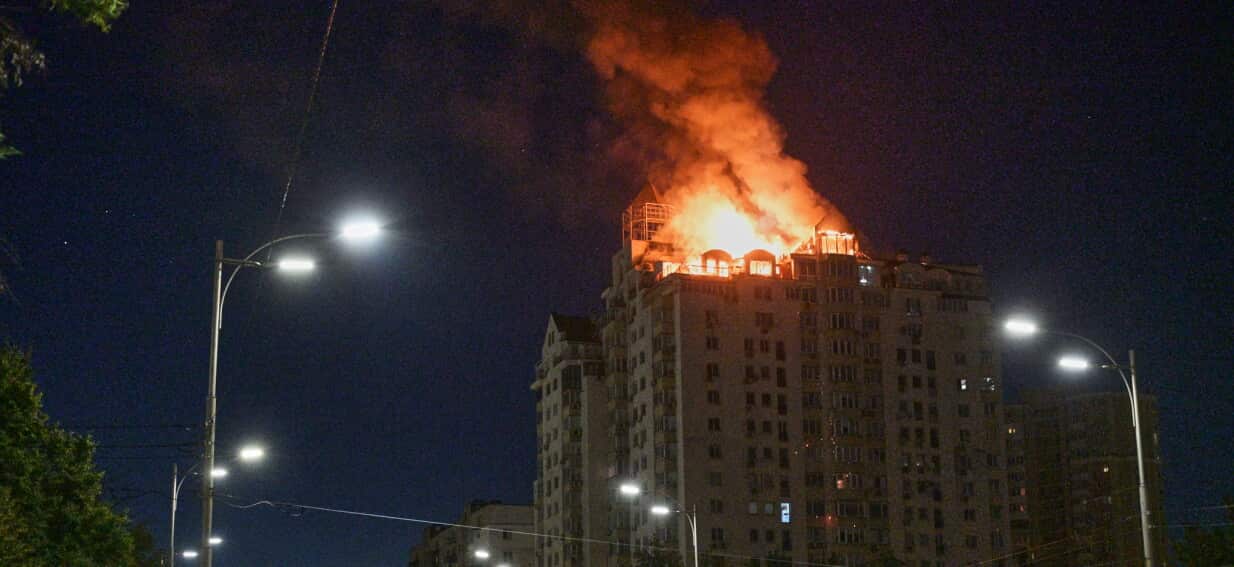
At exactly 4:30 a.m., a fire ignited in the upper structure of the hospital's radiology department. Fire does not care about the vulnerability of its surroundings. It accelerates. Within minutes, smoke began to snake through the corridors, turning a sanctuary of healing into a labyrinth of choking darkness.
The immediate reality of a hospital fire is a logistical nightmare that defies standard emergency protocols. In a typical building, the alarm sounds and people run. They take the stairs. They exit into the street. But what happens when the occupants cannot move?
Consider the ICU patient hooked to a ventilator. Consider the elderly woman recovering from major surgery, unable to sit up, let alone walk. In those terrifying first moments, the burden of survival shifts entirely from the individual to the collective. Nurses, doctors, and orderly staff—people who had spent the night shifts updating charts and checking vitals—suddenly found themselves fighting a war against time and gravity.
They did not flee. They grabbed the metal frames of hospital beds and began to push.
Imagine navigating a heavy, wheeled hospital bed through a narrow doorway while thick, grey smoke fills the corridor. The wheels catch on the threshold. The emergency lights flicker, casting long, disorienting shadows. Outside, the sirens of incoming fire brigades cut through the quiet German morning, but inside, the only sound is the heavy breathing of staff straining against the weight of the beds and the soft, panicked whimpers of patients who woke up to a nightmare.
The evacuation poured out onto the hospital grounds. Dozens of patients, wrapped in thin hospital blankets, were wheeled directly onto the grass, their IV poles rattling over the turf. The lawn became a makeshift triage center under the stars, lit by the flashing blue and red strobes of emergency vehicles.
By the time the fire department brought the flames under control, the toll was heavy. Thirty-four people were injured, suffering from smoke inhalation and the physical trauma of the chaotic escape.
But the truest tragedy lay in the final tally. Two people did not make it out alive.
Their names have not yet been released to the public, but their absence hangs heavily over the city. They were individuals who had come to this place seeking recovery, expecting a return to their normal lives. Instead, they were caught in the cruelest of anomalies.
Investigators are now sifting through the charred remains of the radiology department's roof, searching for the spark that started it all. Was it a faulty wire? A catastrophic equipment failure? The answer will come in time, detailed in a sterile bureaucratic report.
But for the survivors, the staff, and the families of the victims, the mechanical cause matters less than the emotional reality. A place meant for safety broke its promise. As the smoke clears over Ludwigslust, the community is left to reckon with a harsh truth: sometimes, the very places built to save us are the ones that require saving.