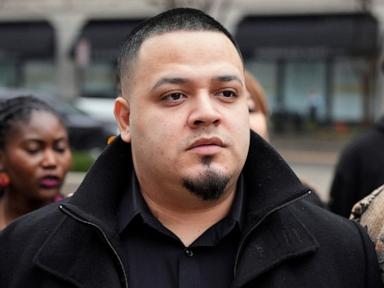
The federal government just took a massive hit in court. On Friday, US District Judge Waverly Crenshaw flatly threw out the human smuggling indictment against Kilmar Abrego Garcia. It wasn't a minor procedural footnote either. The ruling was a scathing, top-to-bottom takedown of the Justice Department, with the judge writing that the evidence "sadly reflects an abuse of prosecuting power."
If you've been following the messy, highly politicized immigration battles over the past year, this name sounds familiar. Abrego Garcia became a household name after being wrongfully deported to El Salvador, sparkinga multi-layered legal war. When the government got forced to bring him back, they suddenly dug up an old traffic stop to slap him with felony charges.
Judge Crenshaw saw right through it. The ruling explicitly states that the prosecution was vindictive, cooked up by high-level Washington officials to punish a man who dared to fight his illegal removal. This case tells us exactly how far the federal government will go when a public relations blunder makes them look bad.
The Retaliation Behind the Smuggling Charges
To understand how we got here, you have to look at the timeline. The federal government claimed Abrego Garcia was a human smuggler based on a traffic stop from November 2022 in Tennessee. State troopers pulled him over, found nine people in his vehicle without luggage, and asked him some tough questions.
But guess what? They let him go with a warning.
The Department of Homeland Security knew about this stop for over two years. They did nothing. They closed the file. It was only after Abrego Garcia won a high-profile civil lawsuit forcing the government to bring him back to America that the Justice Department miraculously decided this old traffic stop was a top priority.
During a six-hour hearing back in February, Abrego Garcia's defense team started digging into the internal communications of the Justice Department. They found that top-ranking officials, including current Acting Attorney General Todd Blanche, were personally tracking the file. Judge Crenshaw noted that the objective evidence showed the government wouldn't have indicted him if he hadn't sued them.
The feds basically used a stale traffic stop as a legal weapon. They didn't reopen the investigation to solve a smuggling ring. They reopened it to fix a PR nightmare and justify kicking him out of the country again. Because the government completely failed to rebut the legal presumption of vindictiveness, the judge had no choice but to throw the indictment in the trash.
A Legacy of "Administrative Errors" and Mega-Prisons
The backstory here is wild. Abrego Garcia is a 30-year-old Salvadoran immigrant who has lived quietly in Maryland for years, working as a sheet-metal apprentice and raising a family with his American wife. He fled El Salvador as a teenager to escape violent gang extortion. In 2019, an immigration judge officially granted him withholding of removal, a legal status recognizing that sending him back to El Salvador would put his life in extreme danger.
Despite that ironclad legal protection, immigration agents picked him up in March 2025. They lied to him about his legal status and shipped him off to El Salvador anyway. The administration later called this a mere "administrative error."
But it wasn't just a flight back home. The government sent him straight to El Salvador's notorious maximum-security Terrorism Confinement Center (CECOT). This is the infamous mega-prison built for brutal gang members, a facility heavily criticized by international human rights groups for its severe, opaque conditions.
To make matters worse, top administration officials immediately hit the airwaves to justify the blunder, labeling Abrego Garcia a member of the MS-13 gang. They used a dropped, years-old domestic protective order and vague accusations to paint him as a dangerous criminal. It was a classic smear campaign meant to cover up an illegal deportation.
When a federal court ordered the government to fly him back to the US, they resisted for months. When they finally relented, they didn't bring him home to his family in Maryland. They flew him straight into federal custody in Tennessee to face the brand-new human smuggling indictment.
What This Means for Due Process
This dismissal is an extraordinary rebuke of a justice system being weaponized for political damage control. The Justice Department quickly released a statement criticizing Judge Crenshaw, calling the order "wrong and dangerous" while promising to appeal.
But the damage to the government's credibility is already done. The ruling proves that "Main Justice" in Washington was pulling the strings, bypassing normal investigative protocols just to target an individual migrant who embarrassed the executive branch.
Abrego Garcia isn't completely out of the woods. The administration is still desperately trying to deport him, even floating bizarre plans to send him to third countries like Liberia or Costa Rica because they legally can't send him back to El Salvador. For now, he remains free and out of immigration custody while his civil cases play out.
If you want to understand where the line between immigration enforcement and government overreach sits, this case is the blueprint. It proves that even in an era of aggressive crackdowns, the federal courts can still act as a vital check on vindictive prosecution.
The next immediate step belongs to the Justice Department, which will try to revive these charges in an appeals court. If you are tracking federal overreach or the breakdown of independent prosecutions, keep your eyes on the filings in the Sixth Circuit. The government wants to prove it can turn a closed traffic warning into a felony whenever it suits their narrative.