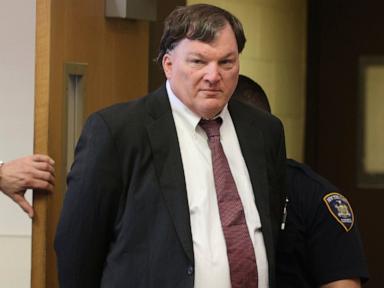
Rex Heuermann is going to spend the rest of his life behind bars, and he'll die there. Everyone knows how this story ends. Today in a Riverhead courtroom, the 62-year-old former Manhattan architect faces a judge to receive multiple consecutive life sentences, plus another century tacked on for good measure. He won't ever breathe free air again.
But don't mistake this final legal rubber-stamp for a neat, tidy ending.
The media loves the word closure. It's a comfortable term that lets everyone pretend a tragedy has a finish line. When Heuermann walked into court wearing dry-cleaned civilian clothes instead of a jail jumpsuit, the cameras captured a monster stripped of his power. Yet, the families standing up to read their victim impact statements aren't experiencing closure. They're facing a raw, open wound that has been festering for over three decades.
You don't just erase thirty years of terror with a judge's gavel.
The Anatomy of a Thirty Year Double Life
Heuermann wasn't just a killer hiding in the shadows. He was a guy living in Massapequa Park, commuting into Midtown Manhattan, running an architecture firm, and coming home to his wife and kids. That's the part that still bugs people. He managed to maintain a completely normal, boring suburban existence while allegedly hunting human beings.
Look at the timeline he admitted to when he blindsided everyone with a guilty plea back in April. His first acknowledged killing goes all the way back to 1993, a year when Long Island was experiencing a massive spike in violent crime. He admitted to killing Sandra Costilla that year. Think about that gap. From 1993 until his arrest in July 2023, he was walking among us.
He didn't just kill these women. He dismembered some of them, scattering parts across Fire Island, the Hamptons, and eventually along the desolate stretch of Ocean Parkway near Gilgo Beach. His victims—Sandra Costilla, Valerie Mack, Jessica Taylor, Maureen Brainard-Barnes, Melissa Barthelemy, Megan Waterman, Amber Lynn Costello, and Karen Vergata—were young women working in the sex trade. He picked them because he thought nobody would look for them. He thought they were disposable.
He was wrong, but it took a shockingly long time to prove it.
The Blueprint of a Monster
When investigators finally raided Heuermann's home and tossed his digital life, they found what prosecutors called a literal blueprint for serial murder. We aren't talking about a guy who snapped. This was meticulous, cold-blooded planning.
His computer files contained checklists. Reminders to limit noise. Notes on how to clean the bodies. Explicit instructions to destroy evidence. He treated human slaughter like a commercial architecture project, managing logistics and minimizing risk.
The evidence that eventually broke the case wide open reveals just how calculated he was:
- The Truck: A witness saw a first-generation Chevrolet Avalanche when Amber Costello disappeared in 2010. It took police twelve years to properly utilize vehicle registration databases to tie that specific, boxy green truck to Heuermann's driveway.
- The Pizza Box: The final genetic nail in his coffin came from a simple lunch. Surveillance teams grabbed a pizza crust Heuermann tossed into a Manhattan trash can. The DNA matched degraded hair fragments found on the burlap used to bind the victims.
- The Burner Phones: He kept a stash of burner cellphones to set up meetings. He even used them to make cruel, taunting calls to Melissa Barthelemy's family after she vanished. Investigators eventually matched his actual cell records and American Express statements to the exact towers and times those burner phones were active.
Honestly, it makes you sick to realize how close he came to getting away with it forever. If the police hadn't renewed the task force in 2022, he might still be riding the LIRR into Manhattan every morning.
What True Justice Actually Looks Like Now
The plea deal Heuermann struck in April means he avoids a lengthy, agonizing trial, but it also forces him into an unusual arrangement. He's got to cooperate with the FBI's Behavioral Analysis Unit. He has to sit down with federal profilers and dissect his own mind to help them understand how serial killers operate and how to catch others like him.
Some people think that's a win. They think leveraging his twisted brain might save a life down the road. Maybe it will. But don't expect the families of the Gilgo victims to find solace in his FBI consultation sessions.
The courtroom today isn't about Rex Heuermann's psyche, and it isn't about his defense attorneys complaining about advanced DNA testing methods. It's about the people left behind. The court allowed two impact statements for each victim. We heard from children who were toddlers when their mothers vanished, sisters who spent decades shouting into a void of police indifference, and parents who died before ever learning where their daughters were buried.
Suffolk County District Attorney Ray Tierney put it bluntly before the hearing, noting that up to this point, the legal system had to focus on safeguarding the defendant's rights and the presumption of innocence. But that's over now.
Now, the spotlight burns directly on the wreckage Heuermann left behind. His ex-wife, Asa Ellerup, refused to attend the sentencing, letting the world know through her attorney that she wants the day to belong entirely to the victims. She recently revealed she sleeps in the very basement where the torture and killings happened. The horror of this case has stained everything it touched.
If you're looking for a clean resolution, you won't find it here. Rex Heuermann will be locked away in a maximum-security state prison, entirely segregated from the general population, reading crime novels until his heart stops. He will be a number in a database. The parkway will stay quiet. But for the families, the silence along Gilgo Beach will always sound like a scream.
If you want to support organizations that protect vulnerable women and ensure no more victims fall through the cracks of the justice system, consider donating to or volunteering with local advocacy groups like the National Center for Missing & Exploited Children or regional sex worker advocacy networks that provide safety resources and legal support.