The sight of a British monarch standing on the South Lawn of the White House is always a calculated performance of "specialness," but the arrival of King Charles III and Queen Camilla in Washington this week carries a weight that transcends traditional pageantry. As the United States pivots toward its 250th anniversary, a milestone rooted in the violent rejection of the British Crown, the imagery of President Donald Trump and Melania Trump hosting the descendant of George III is a study in historical irony and modern desperation. Amidst a backdrop of fractured alliances and the fallout of the Iran conflict, the most curious detail of this high-stakes summit wasn’t found in the Oval Office, but in the garden.
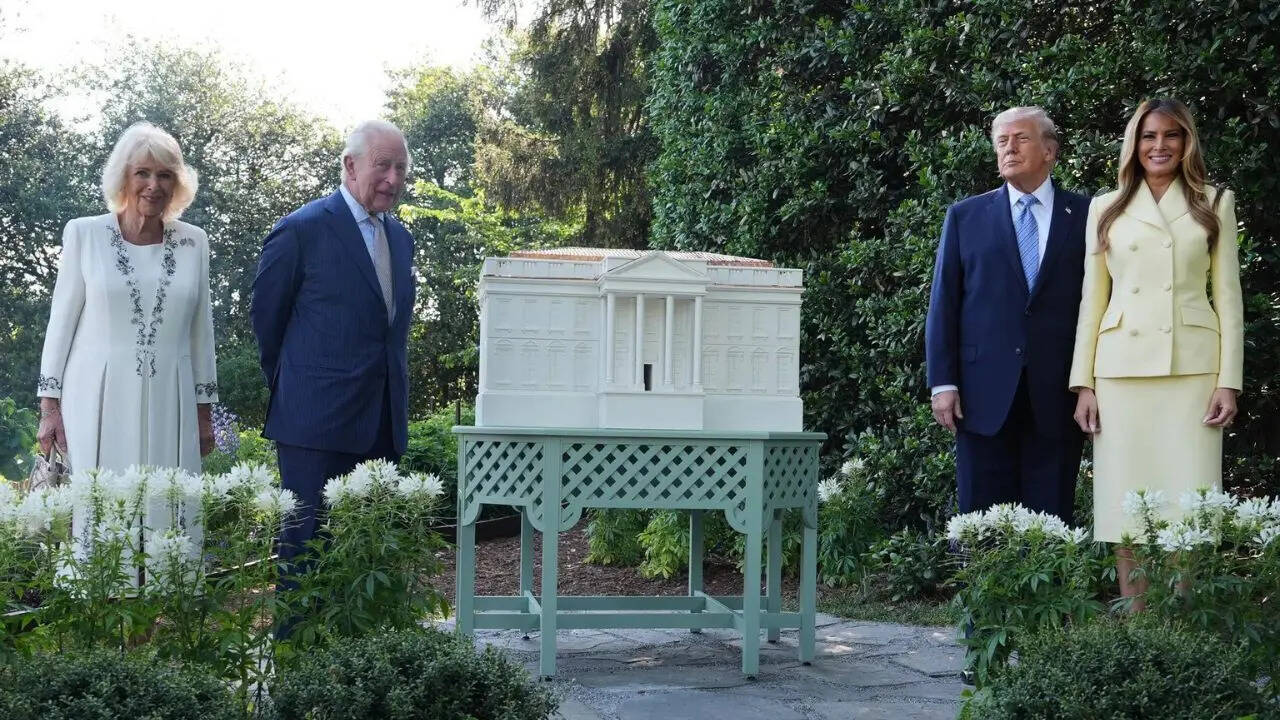
The First Lady’s unveiling of a new, White House-shaped beehive just days before the royal arrival was no mere hobbyist’s flourish. It was a masterclass in "soft power" stagecraft. By leading the King—a man who has spent decades evangelizing for environmental stewardship—to a miniature, buzzing replica of the executive mansion, the Trumps signaled a shared language with the House of Windsor that bypasses the friction of current Downing Street policy. For an alternative look, check out: this related article.
The Diplomacy of the Hive
While the press focused on the handshakes at the South Portico, the real work of the afternoon tea centered on the South Lawn's newest architectural addition. The beehive, hand-crafted by a Virginia artisan and funded through the Trust for the National Mall, serves as a living metaphor for the administration’s current diplomatic strategy. It is industrious, contained, and produces a literal sweetener for a relationship that has turned decidedly sour in the legislative halls of London.
King Charles, who was diagnosed with cancer in 2024 and has limited his international travel, chose Washington for his first state visit as monarch for a reason. He is playing the long game. While President Trump has spent months publicly bruising Prime Minister Keir Starmer over Britain’s reluctance to deepen its involvement in Middle Eastern hostilities, the King is using the monarchy’s "soft power" to bypass the political noise. Related reporting on the subject has been published by Associated Press.
The beehive expansion increases the White House honey yield to an estimated 250 pounds per year. It is a small-scale operation with outsized symbolic value. For Charles, a man who famously talks to his plants and has transformed the Duchy of Cornwall into an organic powerhouse, the White House garden is the only neutral ground left. It is a space where a climate-conscious King and a "drill, baby, drill" President can find a rare, pollinated consensus.
A Fracture Behind the Photos
Beneath the velvet surface of the state visit lies a relationship under more strain than at any point since the Suez Crisis. The 250th anniversary of the Declaration of Independence is a looming shadow. To celebrate a quarter-millennium of separation from the British Throne by inviting the King to tea is a bold, almost cheekily revisionist move by the Trump administration. It suggests that the "special relationship" is no longer about shared democratic ideals or military synergy, but about the personal rapport between two aging, gilded leaders who view themselves as the ultimate arbiters of their respective nations' destinies.
Trump’s derision of NATO and his threats of tariffs against the UK’s digital services tax have left British diplomats in a state of permanent vertigo. They are watching a King perform "crisis management through ceremony." The monarch’s scheduled address to a joint session of Congress—the first since 1991—is an attempt to speak directly to the American institutional heart, bypassing an executive branch that often views traditional alliances as transactional burdens.
The Melania Factor
Melania Trump has frequently been underestimated as a political actor, yet her curation of this visit reveals a sharp understanding of the Windsor psyche. The decision to include the Queen in a cross-cultural event at the Tennis Pavilion, utilizing virtual reality to explore the history of the 13 colonies, is a pivot from the standard "spouse’s program."
By focusing on the garden and the beehives, the First Lady provided the King with a dignified exit from the political fray. It is much harder to discuss troop deployments or trade deficits when you are discussing the citrus notes of clover honey. This "garden diplomacy" isn't just about aesthetics; it's about providing the President with the optics of a world leader who is respected by the most traditional of institutions, even as he upends the modern world order.
The Survival of the Special Relationship
The visit is also shadowed by a security environment that feels increasingly brittle. The attempted shooting at the White House Correspondents’ Dinner just forty-eight hours prior to the royal landing at Joint Base Andrews has turned the capital into a fortress. The King’s decision to proceed with the visit "as planned" was a calculated risk intended to show stability.
However, the "brutal truth" of the 2026 royal visit is that no amount of honey or garden tours can mask the tectonic shifts in the Atlantic alliance. The UK is no longer the primary gateway to Europe for the US, and the US is no longer the guaranteed guarantor of British security. We are witnessing the transition of an alliance from a functional partnership into a historical reenactment.
The bees in the White House garden will continue to produce their 250 pounds of honey, oblivious to the fact that the leaders standing above them are struggling to maintain a hive of their own. If the "special relationship" is to survive another 250 years, it will require more than tea and symbolism. It will require a return to the industrious, collective labor that the bees themselves represent—a prospect that looks increasingly unlikely as the two nations continue to drift into their own separate versions of the future.
Watch the garden, because the Oval Office is currently too crowded with ghosts.