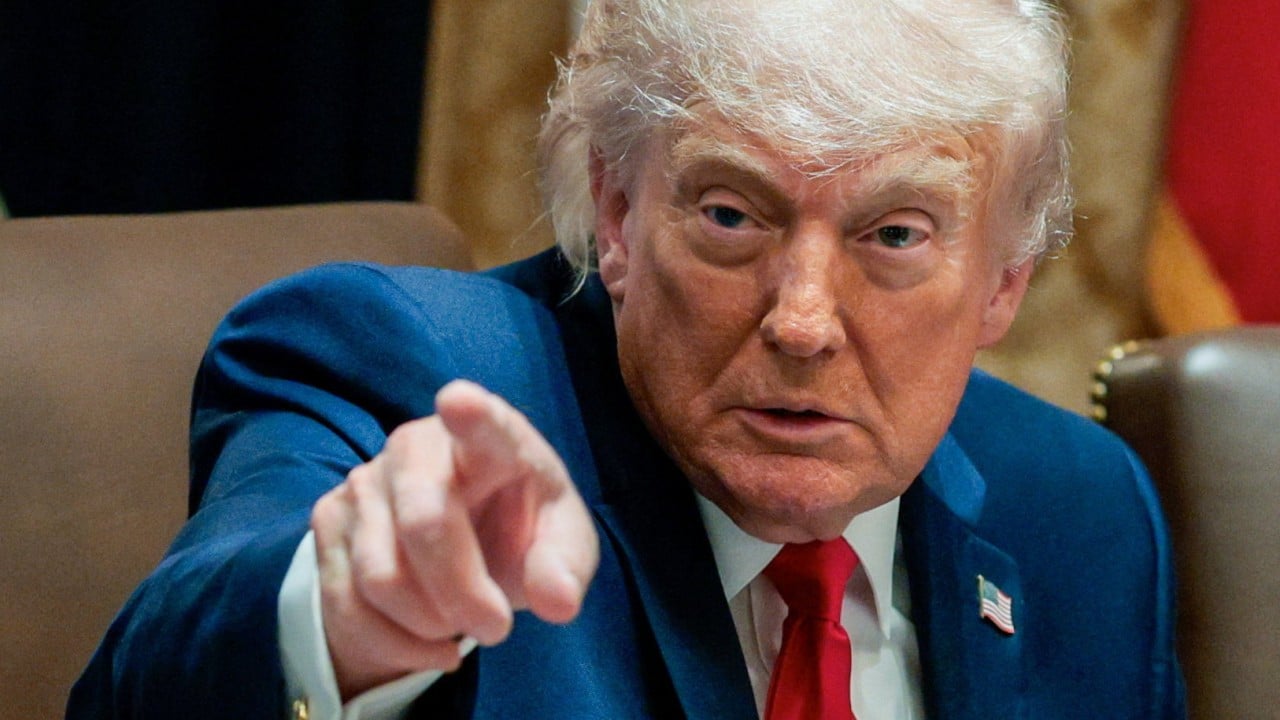
The strategic friction surrounding the Strait of Hormuz cannot be understood through the lens of political rhetoric alone. When US President Donald Trump noted during a May 2027 cabinet meeting that Oman must "behave" regarding the strategic waterway, the statement masked a deeper structural conflict over global supply chains, international maritime law, and financial extraction mechanisms. The core dispute does not center on territorial ambitions, but on a contested economic framework: a proposed joint oversight mechanism between Muscat and Tehran designed to levy transit fees on global shipping.
Understanding this impasse requires isolating the underlying economic variables, the legal boundaries of maritime choke points, and the precise strategic calculations of the involved state actors.
The Economics of the Choke Point: Rent Extraction vs. Free Transit
The global energy supply chain relies on predictable, low-cost transit through geographic bottlenecks. The Strait of Hormuz is the most critical of these corridors, historically facilitating the movement of more than 20% of global petroleum liquids.
[Persian Gulf] ---> [Strait of Hormuz (Choke Point: Shipping Lanes in Omani/Iranian Waters)] ---> [Gulf of Oman / Global Markets]
The current crisis, precipitated by the monthslong military conflict between the US-Israel coalition and Iran, has functionally blockaded the strait, restricting global energy supplies and causing significant inflationary pressure in Western economies.
The emergence of a proposed partnership between Iran and Oman introduces a specific financial model: the transition of an international waterway into a revenue-generating asset via maritime rent extraction. The structure of this proposed mechanism relies on two primary variables.
The Legal Distinction of Fees Versus Tolls
Under the United Nations Convention on the Law of the Sea (UNCLOS), specifically the regime of transit passage through straits used for international navigation, the imposition of a unilateral "toll" for mere passage is illegal. Article 26 of UNCLOS explicitly prohibits the levying of charges upon foreign ships by reason only of their passage through the territorial sea.
However, coastal states are permitted to charge "fees" for specific services rendered, such as traffic separation management, pollution mitigation, navigation aids, and emergency response capabilities. The joint Iranian-Omani strategy seeks to exploit this legal distinction, framing the collection mechanism as an administrative fee managed by Iran’s newly formed Persian Gulf Strait Authority.
Revenue Partitioning and Alliance Shifts
Oman’s diplomatic strategy has historically focused on strategic neutrality, acting as a regional mediator between Western powers and Tehran. The economic incentive structure, however, has altered Muscat's cost-benefit analysis. By participating in a joint fee-collection system, Oman stands to capture a significant percentage of the transactional revenue generated by global shipping traffic.
Muscat’s willingness to leverage its diplomatic capital within the Gulf Cooperation Council (GCC) to legitimize this framework indicates that the projected financial returns outweigh the immediate diplomatic friction with Washington.
The US Security Doctrine: The Choke Point Invariant
The United States foreign policy apparatus operates on a fundamental doctrine regarding global maritime trade: the absolute preservation of freedom of navigation as a non-negotiable global public good. Washington’s pushback against the Omani-Iranian proposal is driven by structural imperatives that govern international trade and domestic political stability.
The Trade Cost Function
Introducing an administrative fee framework on maritime transit shifts the cost curve for global shipping entities. The fee functions as an artificial tariff. For energy-importing nations, this cost is directly passed down to consumers, compounding existing inflationary pressures.
Even though the United States has expanded domestic oil production to minimize direct dependence on Persian Gulf crude, oil is a fungible global commodity. A localized price shock at the Strait of Hormuz immediately drives up global Brent and West Texas Intermediate (WTI) benchmarks, impacting US domestic gasoline prices and dragging down consumer sentiment.
The Precedent Bottleneck
Accepting a short-term or temporary joint oversight agreement between Iran and Oman creates a highly problematic legal and operational precedent. If a coastal state successfully monetizes an international strait under the guise of service fees during a period of conflict, the model will inevitably be replicated.
Similar extraction mechanisms could be deployed at other critical maritime bottlenecks, such as the Bab-el-Mandeb, the Malacca Strait, or the Turkish Straits. The US military presence acts as a enforcement mechanism to prevent the normalization of these sovereignty-based extraction models.
Strategic Asymmetry in Negotiations
The rhetorical escalation from the White House occurs against the backdrop of highly volatile ceasefire negotiations between Washington and Tehran. The friction reveals an asymmetry in how both sides perceive leverage and time horizons.
| Variable | United States Strategy | Iranian Strategy |
|---|---|---|
| Primary Leverage | Total economic isolation, sanctions maintenance, threat of kinetic military escalation. | Denial of access to the Strait of Hormuz, global energy inflation, exploitation of alliance fractures. |
| Vulnerability | Domestic political exposure to high inflation and declining approval ratings ahead of midterm elections. | Extreme domestic macroeconomic instability, including hyperinflation exceeding 250%. |
| Core Objective | Complete denuclearization, permanent capitulation of regional proxies, open maritime transit. | Retention of highly enriched uranium stockpiles, institutionalization of strait transit fees. |
The United States administration is operating under the assumption that severe macroeconomic distress within Iran—marked by systemic currency devaluation and a broken domestic distribution network—will force a rapid capitulation. However, Iran’s negotiation strategy relies on a calculated delay, attempting to prolong the blockade to maximize political costs for the US administration as domestic elections approach.
By involving Oman in the management of the strait, Iran seeks to build a diplomatic buffer. An attack on the infrastructure of the fee system would no longer just target Iranian assets; it would directly impact Oman, a long-standing Western security partner. This calculates a higher geopolitical cost for any potential US military intervention.
Operational Limitations of the Strategy
The current US strategy of applying maximum diplomatic and military pressure to force a "perfect deal" carries distinct structural risks and operational limitations.
The first limitation is the erosion of regional alliance structures. Demanding that traditional partners like Oman, Saudi Arabia, Qatar, and Kuwait unconditionally align with US strategic objectives—such as demanding immediate accession to the Abraham Accords as a prerequisite for security cooperation—overlooks the complex domestic and regional pressures these monarchies face. Forcing absolute compliance risks alienating crucial regional mediators.
The second limitation is the custodial deadlock over Iran's nuclear material. The US administration’s refusal to allow external powers like Russia or China to take custody of Iran’s highly enriched uranium stockpile creates a verification bottleneck. Without a trusted neutral third party to manage the removal of fissile material, any negotiated text remains functionally unenforceable, prolonging the maritime blockade and the associated global economic drag.
The optimal strategic path for Washington requires separating the maritime transit issue from the broader geopolitical demands of regional normalization. Freedom of navigation in the Strait of Hormuz must be enforced through multilateral maritime security coalitions rather than unilateral ultimatums. Simultaneously, the financial incentives driving Oman toward Tehran can be neutralized by offering alternative economic integration frameworks, such as expanded Western infrastructure investment and targeted trade agreements that offset the projected revenues of the proposed maritime fee system. Failing to alter Muscat's economic incentives will keep the strategic choke point vulnerable to ongoing grey-zone monetization schemes.