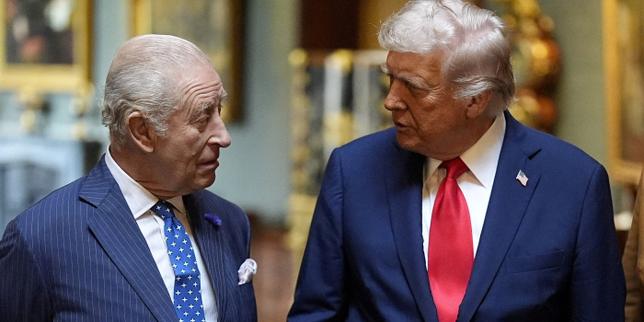
The modern state visit by a British monarch to the United States serves as a high-stakes mechanism for diplomatic signaling rather than a mere ceremonial legacy. While the "Special Relationship" is often framed through the lens of shared history or cultural affinity, a cold-eyed analysis reveals it is a functional asset subject to depreciation. King Charles III’s presence in Washington represents a calculated deployment of "Soft Power Infrastructure" designed to mitigate specific geopolitical friction points that have emerged post-Brexit. The objective is not to reminisce, but to re-synchronize two divergent strategic vectors: London’s need for global market integration and Washington’s pivot toward Pacific-centric security architectures.
The Tri-Pillar Framework of the Royal Diplomatic Function
To understand the efficacy of this visit, one must categorize the monarchy's role into three distinct operational channels.
- The Continuity Buffer: In an era of volatile electoral cycles, the Crown provides a static point of contact. This reduces the "Political Risk Premium" for long-term bilateral agreements. While prime ministers and presidents fluctuate, the sovereign represents a permanent state-to-state bond that transcends partisan shifts in the White House or Downing Street.
- The Soft Power Multiplier: The monarchy accesses spheres of influence—social, cultural, and philanthropic—that are often closed to elected politicians. By focusing on non-partisan issues like environmental sustainability and global health, the King creates a "Neutral Engagement Zone" where shared values can be reaffirmed without the immediate pressure of legislative bargaining.
- The Regulatory Lubricant: Though the King lacks executive power, his presence acts as a high-level endorsement of British stability. This is critical for the "Investment Narrative." In the wake of domestic economic shifts, the King’s visit signals to American capital markets that the United Kingdom remains a Tier-1 partner with institutional integrity.
Assessing the Structural Friction in the Special Relationship
The current Anglo-American bond is under unprecedented strain due to three primary "Stress Factors" that the visit aims to address through symbolic intervention.
The Divergence of Trade Priorities
Since the UK’s exit from the European Union, the pursuit of a comprehensive Free Trade Agreement (FTA) with the US has hit a bottleneck. Washington has shifted toward a protectionist "Buy American" posture, exemplified by the Inflation Reduction Act (IRA). This creates a fundamental misalignment. The UK seeks market access, while the US is prioritizing domestic industrial revitalization. The King’s visit serves as a "Reminder of Interdependence," attempting to position British tech and green energy sectors as essential components of the American supply chain rather than competitors.
The Shift in Defense Proxies
The AUKUS agreement (Australia, United Kingdom, United States) redefined the security architecture. However, it also highlighted a hierarchy. The US is increasingly viewing the UK through the lens of its utility in the Indo-Pacific. This creates a "Strategic Debt" for London: to remain relevant to Washington, it must project power far beyond its traditional Atlantic sphere. The royal visit validates this partnership by emphasizing the shared "Grand Strategy" at a time when American isolationist sentiment is rising in certain political factions.
The Northern Ireland Protocol and Institutional Trust
A significant variable in the Washington-London dynamic is the adherence to the Good Friday Agreement. Previous tensions regarding the Northern Ireland Protocol created a "Trust Deficit" within the US Congress and the executive branch. The monarchy, as the ultimate guarantor of the British constitutional order, provides a symbolic assurance of the UK's commitment to international law and regional stability.
The Mechanism of "Sovereign Diplomacy" as a Market Signal
Economic theory suggests that symbols carry value when they reduce information asymmetry. When King Charles III engages with American leaders, he is executing a "High-Fidelity Signal."
- Reliability Signaling: The sheer logistical and historical weight of a royal visit communicates that the UK is "All-In" on the relationship. It is an expensive, high-effort gesture that signals high switching costs.
- Sector-Specific Validation: By aligning his itinerary with specific industries—such as climate tech or urban regeneration—the King directs the "Gaze of Capital." He isn’t just visiting; he is highlighting sectors where British R&D can integrate with American venture capital.
The Limitation of the Ceremonial Lever
It is a mistake to view the King’s visit as a panacea. The "Diminishing Returns of Pageantry" is a real phenomenon. In a data-driven Washington, sentimentality is secondary to the "Utility Function." If the UK cannot offer specific intelligence sharing, military interoperability, or financial services advantages, no amount of royal ceremony can bridge the gap.
The bottleneck here is the "Policy Execution Gap." The King creates the atmosphere for a deal, but the Cabinet must close it. If the British government fails to follow the visit with tangible policy concessions or trade proposals, the "Halo Effect" of the royal presence will evaporate within a single fiscal quarter.
Quantifying the "Royal Dividend"
While difficult to measure in direct GDP points, the visit’s success can be tracked through "Sentiment Proxies":
- Bilateral FDI Flow: An uptick in American Foreign Direct Investment into the UK following high-level royal engagements.
- Legislative Velocity: A decrease in the time required for security or trade-related memoranda of understanding (MoUs) to move through the US State Department.
- Public Perception Index: Measuring the shift in American public opinion regarding the UK’s status as a "Primary Ally" versus a "Secondary Partner."
The Strategic Path Forward: Beyond the Red Carpet
The re-stabilization of the London-Washington axis requires moving from a "Legacy-Based Relationship" to a "Utility-Based Partnership." The King’s visit is the opening move in a necessary pivot.
The UK must now leverage the diplomatic space opened by the sovereign to secure specific "Deep-Tech" carve-outs in American industrial policy. This involves negotiating specific exemptions for British firms within the framework of the IRA or expanding the defense-industrial integration under AUKUS.
The "Special Relationship" is no longer a birthright; it is a competitive advantage that must be maintained through constant reinvestment. The royal visit is the first installment of that reinvestment. The next phase requires the UK to demonstrate its role as a "Force Multiplier" for American interests in Europe and the Indo-Pacific. Failure to do so will result in the relationship being relegated to a museum piece—historically significant, but functionally irrelevant to the exercise of 21st-century power.
London must utilize the remaining "Royal Capital" to pivot toward a "Sectoral Integration Strategy." Instead of chasing a singular, elusive FTA, the UK should pursue a series of "Micro-Accords" in AI safety, semiconductor supply chains, and intelligence-sharing protocols. These smaller, high-impact agreements will build the "Relational Density" required to survive future shifts in American political leadership. The King has provided the map; the government must now execute the terrain.