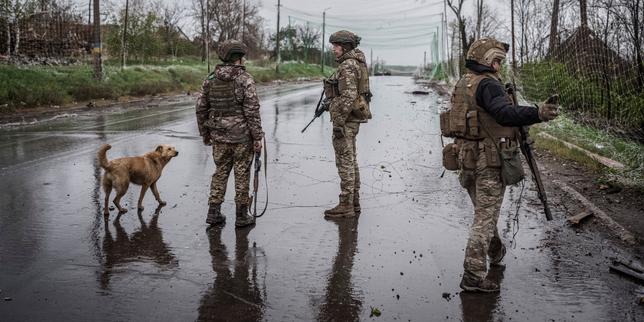
The current phase of the conflict in Ukraine has transitioned from a war of maneuver to a high-density industrial attrition model where victory is a function of three variables: mass-manufactured ammunition cycles, electronic warfare (EW) dominance, and the structural integrity of personnel replenishment. Conventional reporting often focuses on territorial gains measured in meters, yet these are lagging indicators. The leading indicators—the ones that actually dictate the trajectory of the frontline—reside in the logistical throughput of the Suwalki Gap, the production scaling of 155mm shells across the European defense industrial base, and the specific energy density of localized drone interference grids.
The Logistics of Persistent Attrition
The fundamental constraint on Ukrainian defensive operations is the decoupling of Western political cycles from industrial manufacturing timelines. While political discourse operates on a month-to-month basis, the "lead time" for high-explosive ordnance and long-range precision munitions is measured in years. This creates a structural deficit.
The Shell-to-Armor Ratio
The kinetic intensity of the frontline is currently dictated by the Russian Federation's ability to maintain a firing rate that frequently triples that of the Ukrainian Armed Forces (ZSU). This isn't merely a matter of "more guns"; it is a matter of the Elasticity of Supply.
- Domestic Scaling: Russia has transitioned its economy to a "total war" footing, prioritizing the refurbishment of Soviet-era stockpiles while simultaneously ramping up new production of 152mm rounds.
- External Procurement: The integration of North Korean and Iranian supply chains has provided a buffer that allows Russian forces to maintain localized "fire superiority" even when Ukrainian precision strikes target their rear-area depots.
- The Precision Offset: Ukraine’s counter-strategy relies on the Efficiency of Strike. If a Russian battery requires 50 shells to suppress a position, Ukraine aims to destroy that battery with a single GMLRS or Excalibur round. However, precision has a ceiling. When electronic interference degrades GPS-guided munitions, the "Precision Offset" collapses, reverting the conflict to a raw volume game.
Electronic Warfare and the Closing of the Aerial Window
The democratization of FPV (First Person View) drones has effectively ended the era of large-scale armored breakthroughs. The battlefield is now a "transparent" environment where any concentration of force is detected and struck within minutes. This transparency is governed by the Electronic Warfare (EW) envelope.
The Interference Gradient
EW is no longer a theater-level asset; it is a tactical necessity at the squad level. The effectiveness of any offensive action is now inversely proportional to the density of the enemy’s EW grid.
- Localized Jamming: Russian forces have deployed R-330ZH Zhitel and Pole-21 systems to create "dead zones" where Ukrainian drones lose signal or GPS lock.
- The Drone Evolution Cycle: This has forced a rapid hardware evolution. When one frequency is jammed, operators must switch to another, leading to a "cat-and-mouse" engineering race. The side that can reprogram its flight controllers the fastest at the edge of the battlefield gains a temporary 48-to-72-hour window of aerial supremacy.
- Spectrum Dominance: The loss of an EW "shield" leads to the immediate destruction of armored columns. This explains why recent maneuvers have been limited to small infantry groups attempting to infiltrate treelines under the cover of night or heavy precipitation—conditions that naturally degrade optical sensors and drone flight stability.
Human Capital and the Mobilization Paradox
War is an optimization problem regarding human capital. Ukraine faces a dual challenge: the need to replenish frontline units while maintaining the workforce necessary to sustain a domestic economy.
Structural Integrity of the Force
The "attrition rate" is not just a count of casualties; it is the degradation of institutional knowledge. When veteran NCOs (Non-Commissioned Officers) are lost, the efficiency of the entire unit drops exponentially.
- Training Latency: There is a significant lag between the mobilization of a recruit and their transformation into a combat-effective soldier. Sending under-trained personnel to high-intensity zones results in a "Burn Rate" that is unsustainable.
- Demographic Constraints: Ukraine’s demographic pyramid is narrow at the base. Mobilizing younger cohorts (20-25) directly impacts the long-term economic recovery and future population growth. This creates a "Political Friction" point where the government must balance immediate survival against long-term national viability.
Energy as a Kinetic Vector
The targeting of energy infrastructure represents a strategic shift from tactical combat to systemic destabilization. By degrading the Ukrainian power grid, the Russian military aims to achieve three goals:
- Logistical Paralysis: Electric rail systems are the primary artery for moving heavy equipment and ammunition. When the grid fails, the "Time-to-Front" for supplies increases as diesel locomotives must be sourced and deployed.
- Industrial Attrition: Domestic production of drones and repair of armored vehicles require stable power. Rolling blackouts act as a "Force Multiplier" for Russian frontline units by starving Ukrainian defenders of locally produced equipment.
- Civilian Displacement: By making urban centers uninhabitable during winter months, the objective is to trigger mass migration, putting economic and political pressure on European neighbors and potentially weakening the "Unity of Support" within the NATO alliance.
The Economic War of Endurance
The conflict is currently being fought on the balance sheets of central banks as much as on the fields of Donbas.
- The Sanctions Lag: While initial sanctions were intended to be a "shock and awe" economic measure, the Russian economy has demonstrated a high degree of "Autarkic Resilience." By rerouting energy exports to BRICS nations and utilizing "shadow fleets," the Kremlin has maintained the cash flow necessary to fund high military spending.
- The Cost of Defense: It is significantly more expensive to defend an asset than to attack it. A $20,000 Shahed-type drone requires a $2 million interceptor missile to ensure a 100% kill rate. This "Cost Asymmetry" is a deliberate strategy to drain Western magazines and budgets.
Strategic Recommendation for Operational Sustainability
To shift the current stalemate into a favorable position, the Western-Ukrainian alliance must move beyond "Emergency Assistance" toward "Integrated Industrial Defense."
The first priority is the Localization of Maintenance. Shipping damaged Western equipment back to Poland or Germany for repair creates a massive "Operational Lag." Establishing high-security, underground repair hubs within Western Ukraine is the only way to maintain the "Fleet Readiness" of Leopard and Abrams tanks.
The second priority is the Standardization of Drone Frequencies. The current fragmented approach to drone procurement creates a logistical nightmare for EW teams who must distinguish between friendly and enemy signals. A unified communication protocol for all tactical UAVs would allow for the deployment of "Friendly-Fire-Safe" EW bubbles.
Finally, the conflict will be decided by the Scale of the Deep Strike. Unless Ukraine is permitted and equipped to systematically dismantle the Russian logistical "Nervous System"—specifically the oil refineries and railway junctions deep within Russian territory—the Russian military will continue to utilize its depth as a strategic sanctuary. Attrition favors the larger mass unless the smaller mass can increase the "Cost of Participation" to a level that threatens the internal stability of the aggressor. The objective should not be the total reclamation of territory in a single push, but the incremental, high-efficiency destruction of the enemy’s ability to sustain its industrial war machine.