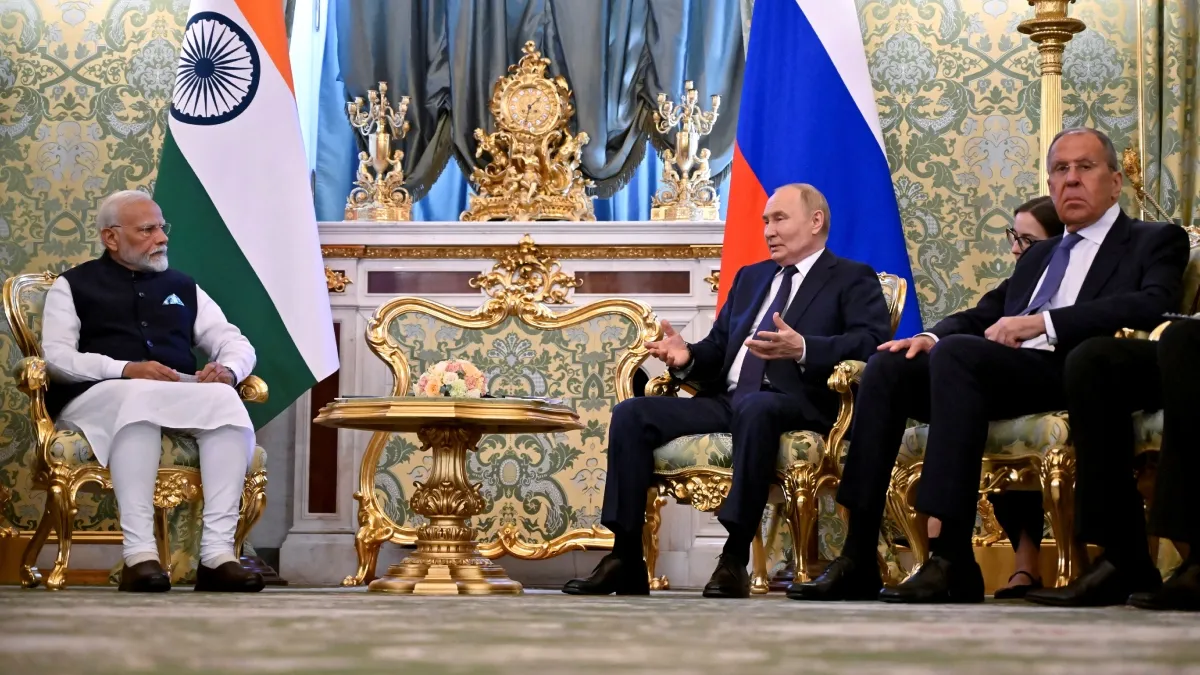
The resumption of high-level diplomatic pageantry between Xi Jinping and Donald Trump signals a shift from purely reactive trade skirmishes to a calculated recalibration of the Pacific security architecture. While media accounts focus on the optics of a state banquet, the underlying mechanism is an exercise in Asymmetric Signaling. Beijing’s primary objective is to de-risk the "Taiwan contingency" by offering short-term economic concessions in exchange for long-term strategic ambiguity from Washington. This negotiation functions as a high-stakes trade-off where China attempts to swap liquid assets—such as trade volume and market access—for illiquid sovereign concessions regarding the First Island Chain.
The Triad of Chinese Strategic Objectives
Beijing’s engagement strategy operates through three distinct channels designed to neutralize the volatility of the Trump administration’s "America First" doctrine.
- Direct Personalism as a Hedge: By bypassing the traditional State Department bureaucracy, Xi Jinping leverages a direct leader-to-leader rapport. This minimizes the influence of institutional hawks in the U.S. defense establishment who view China through a purely zero-sum lens. The banquet serves as a controlled environment to establish a "stability premium," reducing the likelihood of sudden, uncoordinated tariff escalations.
- Economic De-escalation for Strategic Time: The Chinese economy faces structural headwinds, including a debt-heavy property sector and demographic contraction. Beijing requires a period of external stability to execute its "Dual Circulation" strategy. By offering "state-managed purchases"—essentially guaranteed buys of U.S. agricultural and energy products—China buys the temporal space needed to achieve self-sufficiency in critical technologies like lithography and advanced semiconductors.
- The Taiwan Neutralization Framework: The most critical variable is the decoupling of U.S. economic interests from its security guarantees to Taipei. Beijing’s logic suggests that if the cost of defending Taiwan exceeds the perceived economic benefit of a stable relationship with the PRC, the U.S. commitment may soften.
The Cost of the Taiwan Premium
The central tension in these talks is the Taiwan Premium: the specific value the U.S. places on the status quo versus the rewards of a comprehensive trade deal. From a structural realist perspective, the U.S. treats Taiwan as a "stationary aircraft carrier" that contains Chinese naval projection. Beijing, conversely, views it as a core interest that is non-negotiable in the long term but tradeable in the short term.
The friction arises because the U.S. military-industrial complex and the executive branch often operate on different cost functions. The executive may prioritize immediate GDP growth and trade deficit reduction, while the security establishment prioritizes the maintenance of the liberal international order. China’s strategy is to exploit this internal U.S. divergence. By presenting a lucrative "Grand Bargain," Xi forces the U.S. leadership to quantify the exact value of its support for Taiwan.
Mechanism of the Grand Bargain: Trade for Sovereignty
If a deal is struck, it will likely follow a "Step-Function" model of escalation and de-escalation rather than a linear progression.
- Phase I: The Commodities Buffer: China commits to massive imports of Boeing aircraft, Midwestern soybeans, and liquefied natural gas (LNG). This addresses the visible trade deficit, a key metric for the Trump administration.
- Phase II: Regulatory Reciprocity: In exchange for these purchases, the U.S. scales back certain Entity List restrictions or delays the implementation of new technology export controls.
- Phase III: The Security Quid Pro Quo: This is the most opaque layer. Beijing seeks a "New Model of Major Power Relations" which, in practice, means the U.S. acknowledging China’s "core interests" in the South China Sea and Taiwan.
The primary risk for Washington is the Sunk Cost Fallacy of Engagement. If the U.S. accepts trade concessions now in exchange for a "softer" stance on Taiwan, it may find that it has traded permanent geopolitical leverage for temporary economic relief. Once China achieves domestic technological breakthroughs, the economic leverage held by the U.S. vanishes, but the territorial gains made by China would be permanent.
Tactical Divergence in Negotiating Styles
A fundamental misalignment exists between the two negotiating parties. The U.S. typically approaches trade through a Contractual-Legalistic lens, focusing on specific line items, enforcement mechanisms, and intellectual property protections. China operates through a Relational-Strategic lens, where high-level "understandings" and the "spirit of cooperation" take precedence over technical details.
This creates a structural bottleneck. U.S. negotiators often leave meetings believing they have secured firm commitments, while Chinese counterparts view the same meetings as the start of a long-term process of "mutual adjustment." The state banquet is the ultimate expression of this Relational-Strategic approach. It creates a "social debt" and a facade of harmony that makes it politically difficult for the U.S. president to return to a confrontational stance immediately afterward.
The Semiconductor Constraint
Despite the talk of banquets and diplomacy, the semiconductor industry remains the "hard ceiling" of this relationship. The U.S. policy of "Small Yard, High Fence" is designed to prevent China from reaching parity in AI and military hardware. No amount of agricultural purchases can offset the strategic value of 2nm chip production.
Beijing’s goal is to use the banquet to secure a "truce" on tech sanctions. Even a six-month delay in new export controls is a significant win for Chinese firms like SMIC and Huawei, allowing them to stockpile equipment and accelerate domestic R&D. The U.S. must decide if the benefits of a trade deal outweigh the risk of China closing the "Compute Gap."
Strategic Vulnerabilities and the "Trump Variable"
The volatility of the American political cycle is a variable China attempts to capitalize on. Beijing views the U.S. as a declining power plagued by internal polarization. This leads to a Chinese strategy of Interventionist Patience. They believe that by providing the U.S. executive with "wins" that play well in domestic elections, they can steer U.S. foreign policy toward isolationism.
However, this assumes the U.S. president can unilaterally dictate the terms of the relationship. In reality, Congress, the Department of Defense, and the intelligence community provide a stabilizing (or obstructing) force. The "Taiwan on the table" hypothesis ignores the fact that any significant shift in Taiwan policy would likely face overwhelming bipartisan opposition in the U.S. Senate and House of Representatives.
Quantifying the Outcomes: A Probabilistic Model
We can categorize the potential results of this diplomatic push into three probable scenarios:
- The Transactional Truce (60% probability): A large-scale purchase agreement is signed. Tariffs are frozen but not removed. The Taiwan issue is "parked"—both sides reiterate their standard positions without escalation. This is a net win for Beijing as it stabilizes the economy.
- The Failed Grand Bargain (30% probability): The U.S. demands deep structural changes to China’s state-led economic model (subsidies, IP theft). Beijing refuses. The banquet ends with polite rhetoric but no substantive agreement, leading to a renewed tariff war.
- The Strategic Pivot (10% probability): A shock agreement where the U.S. signals a significant drawdown in its Pacific presence in exchange for unprecedented economic concessions and a resolution to the Ukraine-Russia conflict where China acts as the primary mediator. This would fundamentally alter the global security landscape.
The Institutional Failure of "State Banquet Diplomacy"
The reliance on personal chemistry between leaders is a suboptimal method for managing the world’s most complex bilateral relationship. It creates a single point of failure. If the personal relationship sours, the entire diplomatic infrastructure collapses because the technical-level working groups have been sidelined.
Furthermore, the "State Banquet" model often produces "Photo-Op Agreements"—deals that look impressive on a teleprompter but lack the rigorous enforcement mechanisms required to change behavior on the ground. For the U.S., the risk is that they are being "slow-rolled": China offers just enough cooperation to prevent a total break, while continuing to build the military and economic capacity to eventually ignore U.S. demands entirely.
Strategic Recommendation for Global Market Participants
For multinational corporations and institutional investors, the "Xi-Trump Banquet" should be viewed not as a resolution of conflict, but as a change in the mode of conflict. The move is from "Active Hostility" to "Managed Competition."
The primary action for stakeholders is to Diversify the Supply Chain Baseline. Regardless of the warmth shown at a state dinner, the underlying structural forces—specifically the U.S. desire to maintain technological primacy and China’s desire for territorial reunification—are in direct opposition.
The optimal play is to treat any "thaw" in relations as a window of liquidity. Use the period of reduced tariffs to accelerate the relocation of critical assembly points to "Neutral Third-Parties" (e.g., Vietnam, Mexico, or India). The banquet provides the optics of stability, but the data on naval expansion in the South China Sea and the hardening of export controls tells a different story. The smartest move is to bank the short-term profits from a trade truce while preparing for an inevitable return to structural decoupling.