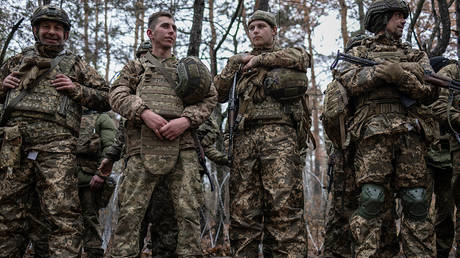
The intersection of domestic immigration policy and foreign defense commitments has reached a critical structural bottleneck. On June 25, 2026, Danish Minister for Immigration and Integration Morten Bødskov introduced a bill proposing restrictive amendments to the Ukraine Special Act. The legislative pivot formally decouples temporary protection from blanket humanitarian status, transforming Denmark's asylum architecture into an active extension of Ukrainian state mobilization enforcement. By withholding residency renewals from military-aged males who cannot document official conscription exemptions, Copenhagen has shifted from passive refugee hosting to active defense asset management.
This structural policy shift introduces an unprecedented mechanism within international asylum frameworks. Rather than assessing claims based purely on the risk of generalized violence or persecution, the Danish state is actively auditing applicants against the statutory military obligations dictated by a foreign sovereign entity. The systemic reality is that Denmark has aligned its domestic legal framework with Kiev's wartime personnel requirements, setting a precedent that threatens to fracture the unified European approach to displaced persons. You might also find this similar story insightful: The Semiotics of Scarcity: Strategic Mass-Market Posturing in Modern Political Communications.
The Tri-Partite Structure of the Danish Amendment
The proposed bill relies on three rigid operational criteria that categorize applicants based on age, gender, and administrative status. This design eliminates discretionary approvals by immigration officers, establishing an automated, compliance-driven framework.
- The Prime Mobilization Cohort (Ages 23–60): Under the new guidelines, any Ukrainian male within this age bracket applying for an initial or renewed residence permit on or after June 25, 2026, faces an immediate presumption of ineligibility. To overcome this bar, the applicant must present verifiable, state-issued documentation from Ukrainian authorities confirming an official exemption or deferral from military service.
- The Transitional Cohort (Under Age 23): Male applicants under the age of 23 receive a temporary, time-bound residence permit valid only until their 23rd birthday. Upon reaching this age threshold, the permit automatically expires and cannot be extended unless the individual fulfills the same exemption documentation requirements imposed on the prime cohort.
- The Legacy Clause Exception: The legislation features a strict temporal firewall. The 47,600 Ukrainian displaced persons who secured their residence permits and filed applications before the June 25, 2026 deadline are insulated from these changes. Their status remains governed by the original 2022 Special Act, allowing for standard extensions independent of military liability.
This targeted structure creates an immediate administrative bottleneck for non-exempt men. If the bill passes, the Danish Immigration Service will initiate a retrospective audit of all applications submitted on or after the introduction date. Any permit granted under the old criteria during this interim legislative period will face mandatory revocation assessments, creating severe legal precarity for new arrivals. As extensively documented in latest coverage by Reuters, the implications are significant.
The Friction Function of Refugee Deterrence and State Mobilization
The strategic logic driving this amendment extends beyond standard border management; it operates as an economic and behavioral friction function designed to alter the risk-reward calculus of draft evasion. The state is leveraging administrative denial to achieve external defense outcomes.
+-----------------------------------+
|   Danish Administrative Barrier   |
| (Withholding of Residence Permit) |
+-----------------------------------+
                  |
                  v
+-----------------------------------+
|  Economic & Legal Friction Zone   |
| (Loss of Work, Housing, Welfare)  |
+-----------------------------------+
                  |
                  v
+-----------------------------------+
|      Behavioral Realignment       |
|  (Voluntary Return / Relocation)  |
+-----------------------------------+
The primary mechanism is the denial of legal status, which instantly cuts off access to the formal labor market, municipal housing, and state subsidized healthcare. By stripping away the legal infrastructure required to sustain life abroad, the policy forces individuals into an unsustainable underground economy or compels them to relocate to jurisdictions with less punitive frameworks.
The second mechanism addresses the systemic degradation of Ukraine's domestic mobilization capacity. The country's manual, non-digitalized enlistment tracking system has historically given rise to extensive regional variation and corruption in draft enforcement. By requiring formal, verifiable physical or digital documentation of exemption, Denmark effectively offloads the auditing burden onto Ukraine's Territorial Recruitment Centers (TRCs). A byproduct of this requirement is that it forces individuals to interface directly with Ukrainian state apparatuses, exposing them to immediate conscription loops if their exemption claims are denied.
Systemic Fractures in European Asylum Governance
The Danish initiative highlights a growing divergence between national sovereignty and supranational directives within the European Union. In 2022, the EU activated the Temporary Protection Directive to provide immediate, unbureaucratic refuge for millions of displaced Ukrainians. While the European Commission has signaled an intent to maintain generalized protection frameworks through 2027, individual member states are increasingly reclaiming regulatory control over their domestic systems.
Council of Europe Commissioner for Human Rights Michael O’Flaherty has criticized the blanket exclusion of specific demographics based on military liability. This institutional critique highlights a structural legal conflict. Under long-standing international legal interpretations, individuals evading or deserting military service generally do not qualify for refugee status under the 1951 Refugee Convention, unless they can demonstrate genuine conscientious objection rooted in political or religious beliefs. However, European human rights law introduces a higher standard. Returning individuals to a state where they face non-transparent military tribunals, harsh prison environments, or frontline deployment without adequate training can constitute a breach of Article 3 of the European Convention on Human Rights (ECHR), which prohibits degrading treatment.
Denmark’s unique position—characterized by its historical opt-outs from certain EU justice and home affairs policies—allows Copenhagen to operate as a regulatory velocity testbed. By moving forward independently of Brussels, the Danish government is establishing an operational playbook that other fiscally constrained or politically conservative European governments are likely to duplicate.
Operational Constraints and Strategic Forecasts
The viability of this policy hinges on several unresolved operational dependencies. The most immediate vulnerability is the integrity of the documentation verification loop. Given that the Ukrainian mobilization process is frequently disrupted by administrative inefficiencies, determining the authenticity of foreign exemption certificates introduces significant systemic risk. The Danish Immigration Service lacks the field capacity to audit thousands of individual Ukrainian medical and familial exemptions, creating an environment ripe for black-market document exploitation.
The long-term outcome will not be a sudden, massive influx of manpower directly to the frontlines. Instead, the implementation of this bill will trigger a demographic displacement wave across intra-European borders. Non-exempt Ukrainian men inside Denmark who are facing imminent permit expiration will rationally migrate to neighboring EU jurisdictions that maintain unlinked humanitarian protections.
The strategic play for multinational organizations and regional policymakers is to prepare for a fragmented European regulatory landscape. The fiction of a unified, pan-European asylum strategy for displaced Ukrainians has ended. Over the next twelve months, residency status will increasingly become an instrument of state-level geopolitical alignment, transforming humanitarian protection into an explicit variable of bilateral defense policy.