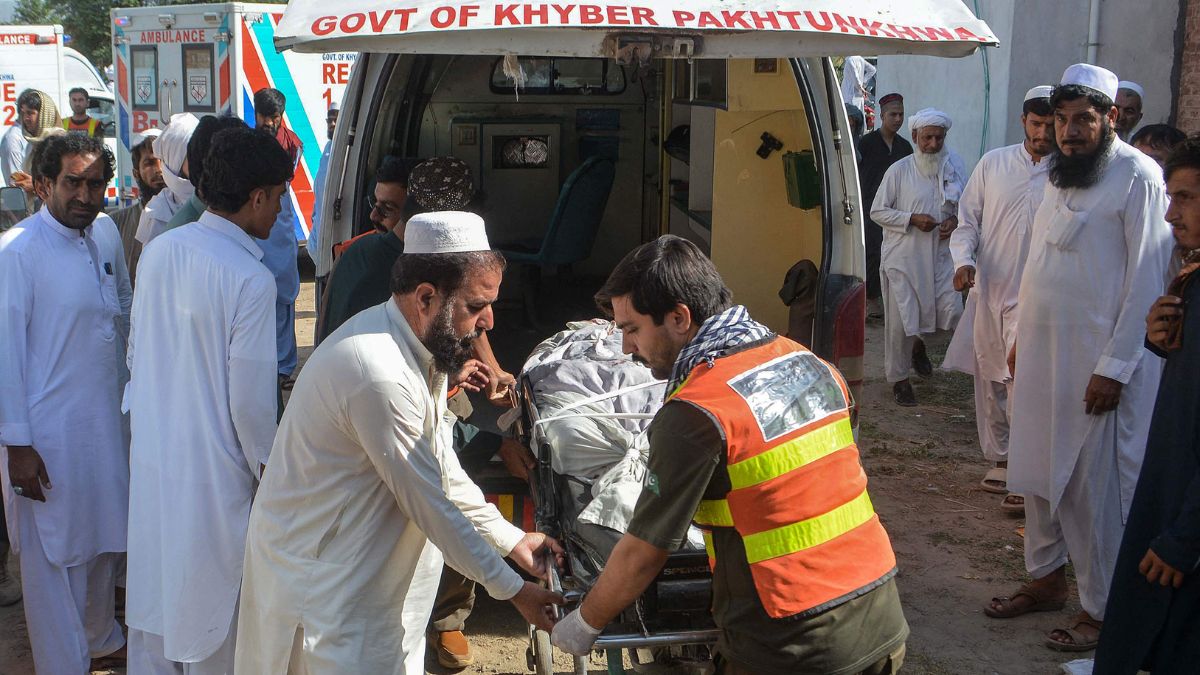
Mainstream media reports on the border regions of Pakistan follow a predictable, exhausted script. A roadside bomb detonates in North Waziristan or Khyber Pakhtunkhwa. Seven people die. The wire services rush to publish a 300-word dispatch tallying the dead, attributing the blast to local militant factions, and moving on.
This is not journalism. It is bookkeeping for a conflict that the international press completely misunderstands.
When two remote-controlled improvised explosive devices (IEDs) detonate near the Afghan border, the lazy consensus treats it as a localized tragedy—a sporadic burst of violence in a vacuum. The security establishment reacts with the standard playbook: condemn the terror, promise retaliation, and reinforce the narrative that this is merely a lingering counter-insurgency cleanup operation.
They are wrong.
By focusing entirely on the body count, analysts miss the broader, systemic reality. These twin blasts are not isolated acts of desperation. They are precise tactical signals in a sophisticated gray-zone war over regional sovereignty, infrastructure control, and the failure of state integration.
The Body Count Fallacy
For two decades, Western and regional think tanks have measured the stability of Pakistan’s northwestern frontier by charting graphs of monthly fatalities. When the numbers go down, the area is labeled "stabilized." When a spike occurs, it is labeled an "escalation."
This metric is useless.
I have spent years analyzing tribal dynamics and insurgent tactical shifts along the Durand Line. Militant groups like the Tehreek-e-Taliban Pakistan (TTP) and its various splinter factions no longer operate under the assumption that they can hold territory through conventional military force. They learned that lesson during the military operations of 2014, which cleared out their physical sanctuaries.
Instead, the modern insurgent strategy relies on low-cost, high-disruption operations designed to achieve psychological dominance. A twin roadside blast that kills seven people requires minimal resources—a couple of artillery shells, some commercial detonators, and a lookout with a mobile phone or radio trigger. Yet, the return on investment for the insurgent is massive.
- Complete disruption of local administration: It signals to local bureaucrats, judges, and police officers that the state cannot protect them.
- Economic paralysis: It halts infrastructure development, specifically transport corridors vital for regional trade.
- Resource diversion: It forces the military to lock down entire districts, tying up thousands of troops in defensive static positions.
When we focus solely on the tragedy of the seven lives lost, we ignore the strategic paralysis inflicted on an entire region. The attack is the symptom; the breakdown of governance is the disease.
The Fused Districts Illusion
The foundational mistake of the current counter-terrorism strategy dates back to 2018, with the merger of the Federally Administered Tribal Areas (FATA) into the mainstream Khyber Pakhtunkhwa province. The political class celebrated this as a historic victory that would extend the constitutional umbrella to a lawless borderland.
It exists purely on paper.
Merging regions requires more than rewriting administrative boundaries in Islamabad. It requires building courts, training civilian police, establishing land registries, and providing basic services. None of this happened effectively. Instead, a legal vacuum was created. The old tribal governance system was dismantled, but a functioning civilian alternative never replaced it.
In this vacuum, the insurgent operates not as a foreign invader, but as an alternative authority. When the state fails to settle land disputes or provide security against local criminals, the shadow courts of militant groups step in. A roadside bomb is simply the enforcement arm of this parallel state.
If you want to understand why these blasts keep happening, look at the lack of clean water, electricity, and functional schools in the border districts, not just the porous nature of the Afghan frontier.
The Geopolitical Echo Chamber
The conventional narrative insists these attacks are purely domestic terrorism, driven by religious extremism. This view is dangerously naive. The borderlands of Pakistan are a chessboard for regional proxy competition.
Since the geopolitical shift in Kabul, the dynamics of the Durand Line have fundamentally altered. The border fencing project, meant to secure the frontier, has become a flashpoint. Insurgent factions utilize sanctuary across the border not because of ideological purity, but because it serves the tactical interests of various regional intelligence actors looking for leverage against Islamabad.
Every IED blast on a Pakistani military convoy or a local peace committee leader is an act of geopolitical communication. It tells Islamabad that its western border will remain unstable until it makes concessions on trade, border management, and regional alignment.
Dismantling the Standard Inquiries
When these attacks occur, the public conversation inevitably circles back to the same flawed questions. Let us address them honestly.
Why can't the military completely secure the border?
Because you cannot conventionalize a response to an asymmetric threat across terrain that defies control. The border region consists of jagged mountains, hidden cave systems, and deep ravines. Deploying more troops or building more fortresses only creates more targets for remote detonations. Security is achieved through intelligence and local trust, both of which are depleted when the state treats the entire local population with suspicion.
Is foreign funding the primary driver of this instability?
Foreign funding provides oxygen, but the grievances of the local population provide the fuel. High unemployment, systemic neglect, and the heavy-handed tactics of security forces during sweep operations alienate the very people needed to defeat an insurgency. Without local informants, intelligence-driven operations fail.
Shifting the Paradigm
The current strategy of retaliation and containment is a proven failure. Stabilizing the northwestern border requires a brutal departure from the status quo.
First, stop treating the borderlands as a military zone and start treating them as an economic priority. The youth in these districts face a choice between economic migration, smuggling, or picking up a rifle for a militant faction. Until the state offers a viable fourth option—real economic opportunity through local industries and cross-border trade infrastructure—the recruitment pipelines will remain open.
Second, decentralize security. The top-down approach managed from distant command centers fails to read the nuances of tribal alliances. Security must be localized, giving communities the authority and resources to protect their own villages, backed by state power when necessary, rather than imposing a heavy military footprint that alienates the population.
The tragedy of twin blasts killing seven people is real, but the way we talk about it is a farce. Stop looking at the scoreboard of dead and wounded. Look at the map, look at the local economy, and look at the governance failure that allows a handful of militants with primitive explosives to dictate the security posture of a nuclear-armed state.