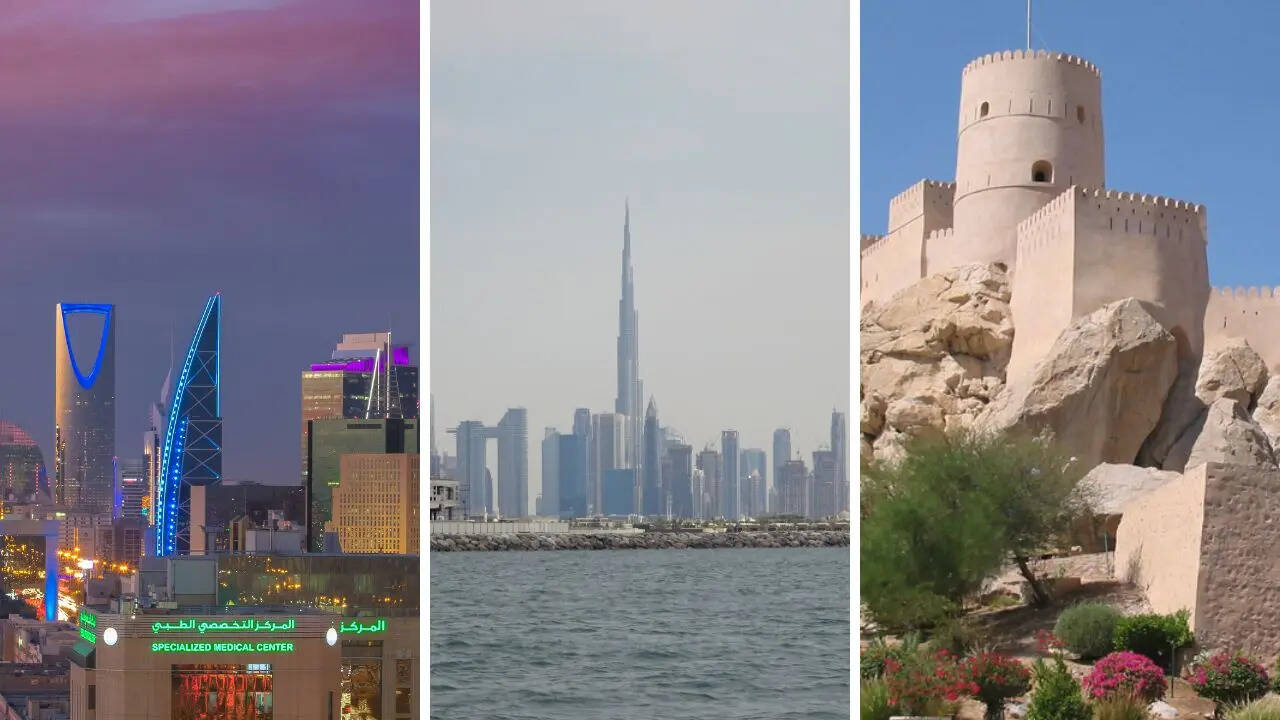
The existence of a nation-state without a permanent natural river system—a non-lotic state—is not a geographical curiosity but a significant infrastructure and existential challenge. While conventional wisdom attributes the absence of rivers solely to low precipitation, the phenomenon is actually a confluence of geological permeability, latitudinal positioning, and the absence of high-altitude orographic lift. For these nations, water is not a renewable surface asset but a high-cost extractive commodity or an industrial output. This analysis deconstructs the mechanisms of water scarcity in these regions and the technocratic strategies used to bypass hydrological deficits.
The Taxonomy of Hydrological Absence
To analyze countries without rivers, one must first define what constitutes a "river" versus a "wadi" or an ephemeral stream. A river, in a lotic sense, requires a perennial flow. When this is absent, nations fall into one of three distinct categories based on their geological and climatic profiles.
1. The Carbonate Karst Model
Small island nations, particularly in the Caribbean and Oceania, often lack rivers despite receiving significant rainfall. This is a function of Lithological Permeability. In islands like the Bahamas or Malta, the surface is composed of highly porous limestone (karst).
When precipitation hits the surface, the vertical hydraulic conductivity exceeds the rate of surface runoff. The water infiltrates the bedrock almost instantly, forming a "Ghyben-Herzberg lens"—a layer of fresh groundwater floating atop denser saltwater. These nations do not have rivers because the ground "swallows" the water before it can channelize.
2. The Hyper-Arid Endorheic Model
Large landmasses, primarily in the Arabian Peninsula (Saudi Arabia, Oman, Qatar, Kuwait, UAE), lack rivers due to a Negative Net Water Balance. Here, the potential evapotranspiration (PET) rate dwarfing the actual precipitation. In the Rub' al Khali, PET can exceed 3,000mm annually, while rainfall remains below 50mm. Any surface water that does not immediately infiltrate is lost to the atmosphere. These states rely on paleowater—fossil aquifers trapped during the Pluvial periods of the Pleistocene—which are non-renewable resources.
3. The Micro-State Enclosure
Nations like Vatican City or Monaco lack rivers simply due to Spatial Scale. Their borders are drawn within a single micro-watershed that does not contain a primary drainage channel. Their water security is entirely dependent on bilateral treaties and transboundary infrastructure from neighboring "host" countries.
The Cost Function of Synthetic Hydrology
For a non-lotic state, water ceases to be a "natural right" and becomes a heavy industrial product. This shift requires a massive allocation of the national energy budget toward three primary bypass technologies.
The Desalination Bottleneck
Desalination is the primary strategic hedge for countries like Kuwait and Qatar. However, the process introduces a critical dependency on energy prices and creates a "Brine Paradox."
- Multi-Stage Flash (MSF) Distillation: High energy intensity, utilizing thermal energy to evaporate seawater.
- Reverse Osmosis (RO): High electrical intensity, using high-pressure pumps to force water through semi-permeable membranes.
The thermodynamic minimum energy required to desalinate seawater is approximately $0.86 kWh/m^3$, but real-world plants operate at significantly higher rates ($3.0$ to $10.0 kWh/m^3$). For a country like the United Arab Emirates, this means water production is inextricably linked to natural gas volatility. Furthermore, the discharge of hypersaline brine back into the Persian Gulf increases the salinity of the intake water over time, creating a feedback loop that requires ever-increasing pressure and energy to maintain output.
The Fossil Aquifer Depletion Curve
Saudi Arabia’s historical agricultural expansion in the 1980s and 90s provides a case study in the mismanagement of non-lotic assets. By tapping into the Saq and Wajid aquifers, the state effectively "mined" water that was 15,000 to 30,000 years old.
The extraction rate peaked at levels that led to a rapid drop in the water table, increasing the cost of extraction as pumps had to work against greater hydraulic head. The cessation of large-scale wheat farming in the Kingdom was not a choice but a mandatory strategic pivot to prevent total aquifer collapse, shifting the burden back to desalination and international land acquisitions (virtual water imports).
The Geopolitics of Virtual Water and Food Security
When a country cannot sustain a river, it cannot sustain traditional irrigation-based caloric independence. This forces a transition to a Virtual Water Strategy.
Virtual water is the volume of water required to produce a commodity. For example, it takes roughly 1,000 liters of water to produce 1 kilogram of wheat. A non-lotic state like Qatar, which imports nearly 90% of its food, is essentially importing trillions of liters of "virtual water" from the river basins of the Americas, Europe, and Asia.
This creates a structural vulnerability:
- Supply Chain Exposure: A drought in the Mississippi River basin or the Black Sea region directly impacts the food security of the Arabian Peninsula.
- Caloric Inflation: As global water scarcity increases the cost of production in lotic states, non-lotic states face compounded inflation.
- Hydro-Hegemony: While these countries lack rivers, they are often downstream of global economic shifts, making their sovereignty dependent on the stability of global trade routes rather than local rain.
Infrastructure Without Channels: The Wadi Management System
In countries like Oman and Yemen, the "missing" rivers are replaced by Wadis—ephemeral channels that carry water only during flash floods. The engineering challenge here is the transition from zero flow to catastrophic flow in minutes.
The strategy involves "recharge dams" rather than storage dams. Instead of holding water behind a wall where it would evaporate, these structures are designed to slow the velocity of flash floods, allowing the water to stay in place long enough to infiltrate the soil and recharge the alluvial aquifers. This is an attempt to turn a destructive surface event into a constructive subsurface asset.
Engineering the Atmosphere: The Rise of Cloud Seeding
Faced with the failure of geological and surface water systems, states like the UAE have moved the theater of operations to the atmosphere. The UAE Research Program for Rain Enhancement Science (UAEREP) represents a shift toward Atmospheric Asset Management.
By injecting salt flares or silver iodide into convective clouds, the goal is to increase the collision-coalescence process of water droplets. However, the efficacy of this is limited by the "Precursor Requirement": you cannot seed a clear sky. Cloud seeding can increase rainfall by 10% to 30% in optimal conditions, but it remains a marginal gain compared to the absolute deficit of a permanent river.
The Strategic Pivot: Wastewater Reclamation
The final frontier for the riverless state is the Closed-Loop Urban Metabolism. If no new water is entering the system via rivers, the existing water must be treated as a reusable asset rather than a disposable one.
In Singapore (which has limited natural river systems) and increasingly in the Gulf states, the "NEWater" model is the gold standard. This involves:
- Microfiltration: Removing particulates.
- Reverse Osmosis: Removing contaminants and salts.
- UV Disinfection: Ensuring biological sterility.
The psychological barrier of "toilet-to-tap" is being dismantled by the economic reality that reclaimed water is cheaper than desalinated water. In a non-lotic environment, the sewage system becomes the functional equivalent of a perennial river.
Mapping the Future of Arid Sovereignty
The survival of non-lotic states depends on their ability to decouple economic growth from water consumption. This requires a three-tier strategic realignment:
- Total Digital Hydrology: Implementing IoT sensors across all distribution networks to reduce "Non-Revenue Water" (leakage). In a riverless state, a 20% leak rate is a national security failure.
- Modular Nuclear Desalination: Transitioning from gas-fired desalination to Small Modular Reactors (SMRs) to stabilize the energy cost of water regardless of fossil fuel market fluctuations.
- Xeriscaping and Hydroponic Mandates: Prohibiting open-air evaporation-heavy agriculture in favor of Vertical Farming and Controlled Environment Agriculture (CEA), which can reduce water usage by up to 95%.
The absence of a river is not a death sentence for a nation, but it is a permanent tax on its development. The states that thrive in the next century will be those that treat water not as a geological gift to be found, but as a high-tech manufactured product to be managed with absolute precision. The move from "extraction" to "circulation" is the only viable pathway for the ten nations currently operating without a single drop of natural, flowing perennial water.