The dirt in Norco doesn't just sit there. It clings. It settles into the creases of white jerseys and finds a home under fingernails, a permanent souvenir of a Tuesday afternoon spent under a sun that refuses to compromise. To an outsider, a 9-0 blowout looks like a mathematical inevitability—a line score that suggests one team simply forgot to show up. But numbers are liars. They hide the tension of the grip, the smell of the grass, and the specific, rhythmic violence of a ball hitting a catcher's mitt at eighty-five miles per hour.
Dylan Seward stood on that mound looking less like a high school senior and more like a scientist conducting a very public experiment. There is a specific kind of silence that descends on a baseball diamond when a pitcher finds the "slot." It isn’t quiet; it’s an absence of hope for the man standing sixty feet, six inches away. Every time Seward broke his hands and drove toward the plate, he wasn't just throwing a baseball. He was solving a puzzle that the opposing hitters hadn't even begun to understand.
Five innings. Two hits. Zero runs.
Those are the facts, the skeletal remains of the performance. But the story lived in the way Seward moved between pitches. He didn't pace. He didn't fret. He occupied the space with the casual authority of someone who already knew how the movie ended. When you watch a dominant performance, you aren't watching a struggle; you’re watching a realization of talent. Seward’s arm worked with a whip-like efficiency, the kind of mechanical grace that parents in the stands watch with a mixture of pride and terror, knowing exactly how many thousands of hours of travel ball and backyard catches it took to produce that effortless motion.
The Heavy Weight of the Lead
In baseball, a big lead is a dangerous thing for the mind. It invites a softening of the edges. You start to swing at pitches you shouldn’t. You lose the "eye of the tiger," as the old clichés go. But Jordan Ayala doesn't seem to play the game with an awareness of the scoreboard.
Ayala stepped into the box three times. He left the box three times having reached base safely every single time.
While Seward provided the defensive foundation, Ayala was the architect of the offensive collapse of their opponents. He drove in three runs, each one a sharp, stinging reminder that Norco wasn't interested in just winning—they were interested in precision. There is a sound a wood bat makes when it finds the sweet spot, a hollow crack that echoes off the metal bleachers. Even with aluminum, that purity of contact translates into a different frequency. Ayala was hitting on that frequency all afternoon.
Consider the hypothetical freshman sitting on the bench, watching Ayala. That kid isn't looking at the batting average. He’s looking at the way Ayala’s front foot plants. He’s watching the hips rotate in a blur of synchronized muscle. He’s seeing the physical manifestation of "the grind." The 9-0 score wasn't a fluke of luck or a series of errors. It was a compounding interest of fundamental excellence.
The Invisible Stakes of a Roundup
We often treat these mid-season roundups as filler—small blurbs in the back of the sports section that parents clip for scrapbooks. We shouldn't.
For the players on that field, this wasn't a "roundup." It was the entire world. Every pitch Seward threw carried the weight of collegiate scouts, the expectations of a town that treats baseball like a religion, and the internal pressure to be better than he was yesterday. When he surrendered those two lone hits, he didn't shrug them off. He adjusted his cap, stared at the runner, and squeezed the ball a little tighter.
That is the human element the box score ignores. It ignores the fact that Ayala probably spent his morning worrying about a math test, only to flip a switch the moment he stepped onto the dirt. It ignores the coach who has seen a thousand 9-0 games but still finds a way to get nervous in the first inning.
The game moved with a relentless pace. While the softball diamonds nearby hummed with their own intensity, the Norco boys were methodical. It wasn't just Seward and Ayala, though they were the twin engines of the victory. It was the collective refusal to let the ball hit the grass. It was the backup catcher shouting encouragement until his voice went raspy. It was the sheer, unadulterated joy of being young, fast, and better than the person across from you.
Beyond the Box Score
People ask why we still care about high school sports in an era of professional dominance and digital distractions. They ask what a 9-0 win in February or March actually changes.
The answer isn't in the standings. It’s in the calloused skin on a pitcher's middle finger. It’s in the way a team walks off the field together, a single unit bound by a shared afternoon of perfection. When Dylan Seward sat down after his fifth inning, he wasn't just a kid who had pitched well. He was a young man who had mastered his environment.
Ayala, with his three RBIs and his perfect day at the plate, wasn't just a stat line. He was the personification of "clutch," the guy you want standing there when the bases are loaded and the shadows are getting long.
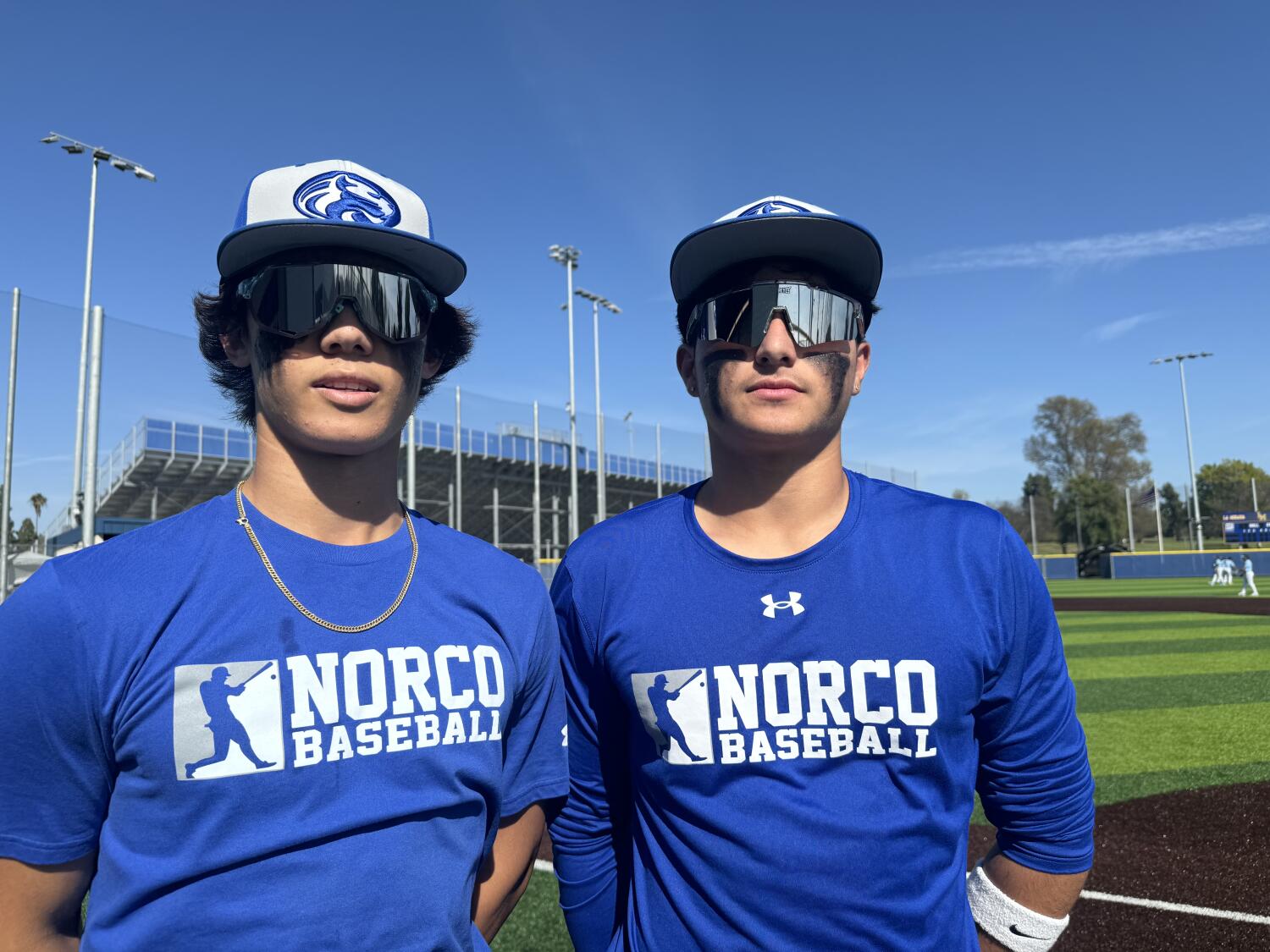
The game ended as most dominant performances do—not with a bang, but with a sense of completion. The final out was recorded, the handshakes were exchanged, and the Norco duo walked toward the dugout. They didn't look like they had just done something extraordinary. They looked like they had just finished a shift at a job they loved.
As the sun began to dip behind the outfield fence, casting long, distorted shadows across the infield, the scoreboard finally went dark. The "9" and the "0" disappeared, leaving only the empty black bulbs. But the dirt remained on the jerseys. The sting remained in the palms.
Tomorrow, there will be another game. Another pitcher will try to find the slot, and another hitter will try to find the gap. But for one afternoon in Norco, the world was exactly sixty feet and six inches wide, and Dylan Seward and Jordan Ayala owned every inch of it.
The bus idling in the parking lot smelled of sweat and old leather, a scent that signifies a mission accomplished. The players climbed aboard, their voices loud and overlapping, recounting the plays that didn't make the newspapers. They talked about the "almost" catches and the "just missed" curveballs. They talked until the stadium lights flickered and died, leaving the field to the quiet, waiting for the next set of cleats to tear it apart.
The dirt stays. The memory fades. But the win is permanent.