The Architect and the Ruins
Mike Johnson didn't come to Washington to be a firefighter. He came to be an architect. In the quiet, early days of his career, he spoke of a "normal Congress" with the reverence a priest might use for a cathedral. He envisioned a place where the gears of democracy turned with a predictable, rhythmic hum—where bills were debated in the light of day, amendments were offered without malice, and the frantic midnight scramble was a relic of a less civilized past.
He wanted order. He found a hurricane.
The Speaker's office is a cavernous space, heavy with the scent of old wood and the weight of history. But lately, it feels more like a bunker. To understand what happened to Johnson’s dream of a functional legislature, you have to look past the C-SPAN cameras and the scripted press releases. You have to look at the math of human resentment.
Congress used to operate on a set of unspoken rules that acted as grease for the machine. If you lost a vote today, you lived to fight tomorrow. There was a sense of institutional permanence. Today, that grease has been replaced by grit. The House of Representatives is no longer a deliberative body; it is a high-stakes arena of performance art where the primary audience isn't the American voter, but the algorithmic gods of social media.
The Shrinking Middle
Imagine a bridge built on two massive pillars. For decades, the weight of the country rested on the center of that bridge. If one side leaned too hard, the other adjusted. But over time, the pillars have moved toward the edges of the canyon. The center hasn't just weakened; it has vanished.
When Johnson took the gavel, he inherited a Republican majority so razor-thin it could be derailed by a single representative’s bad mood or a delayed flight. This isn't just a political hurdle. It is a psychological one. When your margin for error is zero, your capacity for courage evaporates. Every vote becomes an existential crisis. Every compromise feels like a betrayal.
Consider the hypothetical case of a junior congressman from a swing district—let’s call him Miller. Miller knows that the country needs a budget passed to keep the lights on. He knows that his local military base depends on those funds. But Miller also knows that if he votes for a "clean" bill—one without the spicy, partisan riders his loudest constituents demand—he will be roasted on cable news by dinner time. He will face a primary challenger funded by dark money. He will lose his job.
In the old "normal Congress," Miller’s leadership would have protected him. They would have given him the cover he needed to do the right thing for the country. But in the current House, the leadership is as vulnerable as the rank-and-file. The Speaker is no longer the general leading the charge; he is the tightrope walker trying to stay upright while the spectators on both sides are throwing rocks.
The Death of the Regular Order
"Regular Order" sounds like a boring phrase from a dusty textbook. In reality, it is the only thing that prevents chaos. It is the process where a bill goes to a committee, experts testify, members argue over details, and a polished product eventually reaches the floor. It is slow. It is tedious. And it is vital.
Johnson championed this process. He promised to bring it back. He wanted to break the cycle of "omnibus" spending bills—those massive, 2,000-page monsters dropped on desks hours before a shutdown deadline. He wanted to pass twelve individual spending bills, one by one, the way the founders intended.
But the reality of the 118th Congress is a graveyard for such intentions.
The process broke because the incentive structure changed. In a normal system, the reward for a job well done is a stable country and a re-election. In the current system, the reward for a job well done is... nothing. There is no "clout" in a smoothly functioning subcommittee. There is, however, immense reward in a viral clip of a member shouting down a witness. There is profit in the gridlock.
When the process fails, the power migrates. It leaves the committee rooms and the hands of the experts and retreats into the Speaker’s office. This is the ultimate irony of Johnson’s tenure: the man who wanted to decentralize power and return to the "regular order" has been forced to exert more centralized control just to keep the building open. He has become the very thing he criticized, not out of ego, but out of necessity.
The Invisible Stakes
It is easy to dismiss the bickering in the House as a distant soap opera. But the stakes are not abstract. They are written in the lives of people who will never walk the halls of the Capitol.
Think of a small business owner in Ohio waiting on a federal loan that is stuck in a backlogged agency. Think of a researcher in a lab whose five-year study on childhood leukemia is threatened because the grant funding is tied up in a "continuing resolution." Think of the young soldier overseas who doesn't know if his family back home will receive their housing allowance this month because the House is stuck in a procedural loop.
This is the human cost of the "abnormal Congress." It is a slow-motion erosion of trust. When the most powerful nation on earth cannot perform the basic task of funding its own operations without a monthly brush with catastrophe, the world notices. Our allies look on with concern; our adversaries look on with delight.
The erosion is also internal. The people who work in the House—not just the members, but the clerks, the janitors, the aides, and the security guards—live in a state of perpetual "will they or won't they." The stress of constant crisis management burns out the best minds. The institutional memory of the House is leaking out of the building as seasoned professionals decide that the drama simply isn't worth it.
The Weight of the Gavel
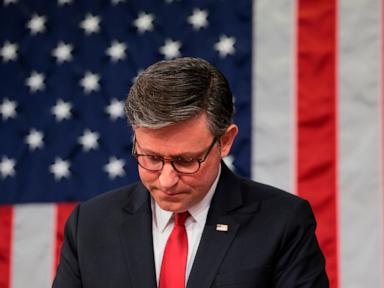
Mike Johnson’s face often betrays the strain. He is a man of deep faith and strong convictions, yet he spends his days negotiating with colleagues who view compromise as a sin. He is trying to lead a party that is increasingly defined by its refusal to be led.
The problem isn't just a lack of "normalcy." It's a lack of shared reality. In the House today, members are often working from entirely different sets of facts, fueled by media silos that reinforce their worst impulses. You cannot have a "normal" debate when there is no agreement on the parameters of the problem.
Imagine trying to play a game of chess where your opponent believes the bishops move like knights, and the spectators are screaming that the board is a conspiracy. You can try to play by the rules. You can try to explain the rules. But eventually, you realize you aren't playing chess anymore. You're just trying to keep the pieces on the table.
The Quiet Room
There is a small, quiet room off the House floor where members go to escape the noise. It is one of the few places where the cameras don't follow and the posturing stops for a moment. In that room, away from the microphones, members from both sides often admit the same thing: this isn't working.
They miss the "normal Congress" too. They miss the days when you could have a fierce debate on the floor and then grab a drink with your opponent afterward. They miss the feeling of actually solving a problem instead of just creating a talking point.
But the exit ramp from this cycle is hidden. To return to normalcy requires a collective act of courage that the current political environment actively punishes. It requires members to value the institution more than their primary polls. It requires a Speaker to risk his job almost every single day.
Johnson is still holding the gavel. He is still making the rounds, still trying to find the 218 votes needed for even the most basic functions of government. He speaks less now about the "cathedral" and more about the "day-to-day survival." The architect has become a salvage diver, searching for anything useful in the wreckage of a broken system.
The House is quiet tonight, but it is the silence of a held breath, not the peace of a job well done. The ghost of a normal Congress still wanders the halls, a reminder of what was lost and a warning of what happens when a nation’s leaders forget how to speak to one another. The lights stay on in the Speaker’s office, flickering against the dark, as the man inside prepares for another day of trying to build something lasting in a house made of sand.