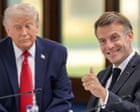
The mainstream media is suffering from a collective, predictable bout of myopia. The standard narrative rolling out of Washington and Brussels regarding the latest G7 summit is already carved into stone: a volatile American president, buckling under the weight of escalating domestic criticism, reluctantly falls in line with traditional allies to sign a unified statement on Iran.
It is a comforting bedtime story for institutionalists. It suggests that the old rules of international diplomacy still apply, that peer pressure works on a nationalist executive, and that a piece of paper signed in a European resort town represents a meaningful pivot in global geopolitics.
It is also entirely wrong.
The consensus view treats the G7 joint statement as a concession. In reality, it is a masterclass in strategic neutralization. Assuming a president signs a multilateral consensus document out of weakness misunderstands how modern executive power operates on the international stage. I have spent years analyzing trade flows and sanctions architecture behind closed doors, and if there is one constant in economic warfare, it is this: never confuse a diplomatic ceremonial gesture with a shift in structural policy.
The G7 statement is not a retreat. It is a smokescreen.
The Lazy Premise of Domestic Pressure
To understand why the current analysis is flawed, we have to look at what the mainstream press calls "growing domestic criticism." The prevailing theory assumes that a flurry of negative editorials and partisan pushback in Washington forces an administration’s hand abroad. This assumes a baseline of political vulnerability that simply does not exist in the current polarized environment.
Domestic criticism on foreign policy rarely moves the needle for an administration whose brand is built on defying the coastal foreign policy establishment. When the think-tank circuit and the Sunday morning talk shows harmonize in their disapproval, it usually hardens an administration's stance rather than softening it. The idea that a joint communiqué was signed to placate domestic critics attributes a desire for mainstream validation to a presidency that actively thrives on its absence.
Instead of looking at domestic polling, look at the text of the statement itself. What did the United States actually give up?
Nothing.
A standard G7 declaration on non-proliferation and regional stability is a collection of high-minded platitudes. It commits the signatories to "dialogue" and expresses "shared concern." It contains zero enforcement mechanisms, zero timelines, and zero rollbacks of unilateral American sanctions. Signing it costs the administration exactly zero dollars and yields zero policy changes.
What it does achieve, however, is tactical silence. By giving the French, British, and German delegations a symbolic victory to take home to their respective press corps, the administration buys itself months of operational runway to continue its unilateral maximum pressure campaign without facing active, coordinated resistance from Europe. It is the diplomatic equivalent of patting an ally on the head so you can keep walking in the opposite direction.
The Mechanics of Asymmetric Sanctions Power
The fundamental misunderstanding at the heart of this coverage is the belief that the G7 is a council of equals. In the modern financial system, it is not. The European allies can demand compliance with the spirit of multilateralism all they want, but the structural plumbing of global commerce tells a completely different story.
When the United States enforces secondary sanctions, it does not need a G7 consensus to make them bite. It relies on the absolute dominance of the US dollar and the clearing power of the New York banking system.
Imagine a scenario where a major European petrochemical conglomerate wants to buy Iranian oil under the protection of a G7 diplomatic agreement. The French or German government might tell that company that its trade is perfectly legal under international frameworks. But the compliance department of that company looks at a different reality:
- If the company processes a single transaction that touches a US-linked correspondent bank, it faces billions in fines.
- The executive board faces immediate asset freezes and travel bans.
- The company loses access to the US consumer market, which dwarfs any potential upside from Middle Eastern trade.
No corporate board on earth risks exclusion from the American financial system for the sake of a diplomatic principle championed by Paris or Berlin. Therefore, the administration can sign every polite G7 statement put in front of it while its Treasury Department continues to quietly tighten the economic noose via the Office of Foreign Assets Control (OFAC). The diplomatic text says "cooperation," but the financial reality remains total insulation.
Dismantling the De-escalation Myth
The immediate question generated by the competitor's reporting is obvious: Does this backing of the G7 statement mean the US is ready to return to the negotiating table?
This is the wrong question to ask. The premise assumes that negotiation is the ultimate goal of the administration's Iran strategy. It is not. The goal is structural containment and economic depletion.
The conventional foreign policy apparatus believes that sanctions are a tool used to force a adversary to sign a better contract. This is a linear, outdated view of economic warfare. In the current framework, sanctions are the policy itself, not the prelude to a meeting. They are designed to create a permanent state of economic siege that forces the target state to consume its own domestic resources just to survive, limiting its ability to project power regionally.
By appearing to back the G7 statement, the administration signals a false willingness to engage, shifting the burden of inflexibility onto Tehran. It is a classic chess move: you offer a toothless rhetorical compromise that you know your opponent cannot accept in practice because their internal domestic politics forbid it. When the adversary rejects the hollow overture, you turn to the world and say, "We tried diplomacy, but they refuse to cooperate," thereby legitimizing the next round of unilateral escalation.
The Real Cost of the Multilateral Illusion
There is an undeniable downside to this approach, and it is not the one the critics are talking about. The risk is not that the administration looks weak; the risk is the long-term degradation of Western institutional trust.
When you repeatedly use multilateral forums to sign agreements you have no intention of structurally supporting, you accelerate the decoupling of the global financial system. European capitals are not blind. They know they are being outmaneuvered by the asymmetric power of the dollar. Every time they are forced to bow to American financial diktats despite a signed G7 agreement, the incentive to build an alternative financial architecture grows.
We are already seeing the early, clumsy iterations of this with frameworks designed to bypass the SWIFT banking network. They are currently inefficient, illiquid, and largely ineffective. But you cannot run this playbook forever without forcing your closest allies to eventually figure out a way to cut the dollar out of their strategic supply chains. That is the real vulnerability—not a drop in domestic poll numbers, but the gradual erosion of the structural hegemony that made the maximum pressure campaign possible in the first place.
Stop reading the communiqués. Stop analyzing the body language of world leaders in group photos. The G7 statement is a bureaucratic tranquilizer designed to keep the European Union quiet while the real policy continues to be executed through the weaponization of the global financial system. The administration didn't back down; they just signed a piece of paper that changes absolutely nothing.